
Men’s Winter Shaving Survival: Avoid Razor Burn and Irritation
Men’s Winter Shaving Survival: Avoid Razor Burn and Irritation
Winter air strips moisture from your face faster than you’d think. Shave at night instead of morning. Your skin repairs itself while you sleep. Use warm water to soften whiskers, then finish with cold to seal pores. Skip alcohol-based products—they’re basically skin poison in winter. Apply pre-shave oil with aloe vera. Shave with the grain, not against it. Replace blades more often since dry hair dulls them quickly. Master these basics and discover advanced techniques that’ll keep your face comfortable all season.
Main Points
- Shave at night after a warm shower to soften facial hair and allow skin overnight recovery from cold air exposure.
- Use pre-shave oil with Aloe Vera and shave with the grain using minimal pressure to prevent irritation and razor burn.
- Apply thick, creamy lathers with natural oils while avoiding alcohol-based products that strip moisture from winter-dried skin.
- Replace razor blades more frequently and take fewer passes, letting blade weight do the work on softened whiskers.
- Follow immediately with aftershave balm and moisturizer while skin is damp to lock in hydration and soothe irritation.
Understanding Winter’s Impact on Your Skin
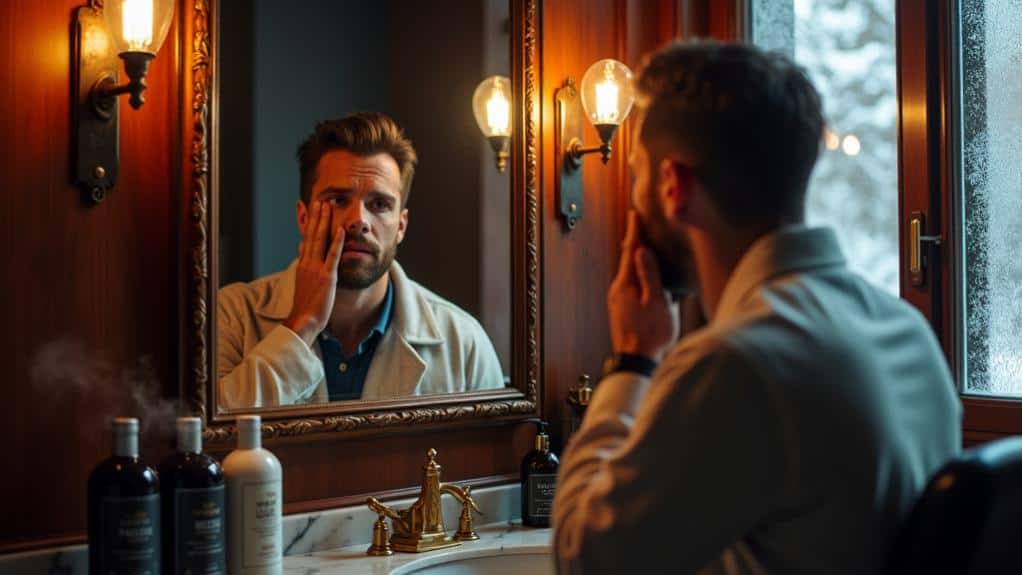
Winter turns your skin into sandpaper. Cold air strips moisture from your face. Indoor heating makes it worse. Humidity drops below 20%. Your skin barrier weakens fast.
Winter dryness hits men differently than women. You’ve got more oil production naturally. Testosterone helps your sebaceous glands work overtime. But don’t get cocky about it.
Your testosterone gives you an edge with natural oils, but winter dryness doesn’t care about your biology.
Your cheeks suffer most. Thinner skin there. Less fat underneath. Cold wind targets these spots first. Your nose and forehead handle winter better. More oil glands there.
Temperature swings mess you up. Going from heated car to freezing air. Your skin can’t adjust that fast. Your skin retains memory of this seasonal damage, building up problems over time. When your skin barrier is compromised, hyaluronic acid becomes essential for restoring proper hydration levels.
83% of people notice their skin feels different. You’re not imagining it. Winter genuinely changes everything. Your regular shaving routine won’t cut it anymore. Fabrics like wool can irritate your already compromised skin barrier even further.
This leads to symptoms like flakiness and tightness across your face, making every shave a potential disaster. Sensitive skin requires even more careful attention during these harsh winter months.
Essential Pre-Shave Preparation Techniques
Your skin needs prep work before the blade touches it. Dead skin cells clog your razor and create bumps. Softening your beard prevents painful tugging and razor burn. Start by washing your face with a gentle cleanser to remove dirt and oil that can interfere with your shave. Avoid cleansers containing alcohol-based ingredients as these can cause skin irritation before you even begin shaving. Use warm water to splash your face or shave after a warm shower, as this softens facial hair and opens pores for a smoother experience. Apply pre-shave oil containing ingredients like Aloe Vera and Vitamin E to create a protective barrier that reduces inflammation and maintains hydration. Consider incorporating salicylic acid cleansers into your pre-shave routine to help unclog pores and prevent razor bumps from forming. Always shave in the direction of hair growth to minimize irritation and reduce the risk of razor burn.
Exfoliate Dead Skin Cells
Before your razor touches skin, you need to clear the way. Your face sheds 30,000 dead cells daily. That’s debris clogging your razor and improves razor efficiency by targeting only facial hair.
Winter makes this worse. Dead skin builds up faster in cold air. Use gentle exfoliation techniques before every shave. A basic scrub works fine. Skip the fancy stuff.
Scrub in circles for thirty seconds max. Focus on your jawline and chin. These spots collect more dead skin. Rinse thoroughly with warm water.
This lifts trapped hairs. Gives your blade a clean surface. Reduces razor burn considerably. Your shave gets smoother and faster. Regular exfoliation prevents ingrown hairs that often develop after shaving.
Consider your skin sensitivity though. Sensitive skin needs milder products. Exfoliate once weekly instead of daily. Over-scrubbing creates more problems than it solves. Aloe vera ingredients can help soothe and hydrate sensitive skin during winter exfoliation routines. Always conduct a patch test before using any new exfoliating product to avoid adverse skin reactions. Look for scrubs with bamboo beads instead of harsh plastic microbeads that can damage your skin.
Hydrate and Soften Beard
Once you’ve cleared dead skin, it’s time to soften your beard. Hard whiskers fight back against razors. They cause nicks and irritation. Smart beard hydration changes everything.
Start with a hot towel for two minutes. Heat opens hair cuticles. Makes whiskers pliable. Follow with quality beard oil. Jojoba and argan work best. Don’t cheap out here.
Your winter routine should include:
- Hot towel press – Steam rising from damp cloth, beard hairs relaxing under warmth
- Oil massage – Fingers working golden drops through coarse whiskers until they glisten
- Balm seal – Thick protective layer coating each strand like armor against winter air
Moisture retention beats razor burn every time. Apply products to slightly damp hair. It absorbs better. Cold weather strips essential moisture from your beard, making proper hydration even more critical. Remember to limit your beard washing to two to three times weekly to prevent stripping those essential oils your skin desperately needs. Indoor heating compounds the problem by creating additional dryness that makes whiskers even more brittle. Use lukewarm water during your cleansing routine to avoid further drying out both your facial hair and the sensitive skin beneath. When you do wash, consider using a specialized beard shampoo that’s formulated specifically for facial hair rather than regular hair shampoo which can be too harsh. Your face will thank you later.
Mastering Cold-Weather Shaving Methods
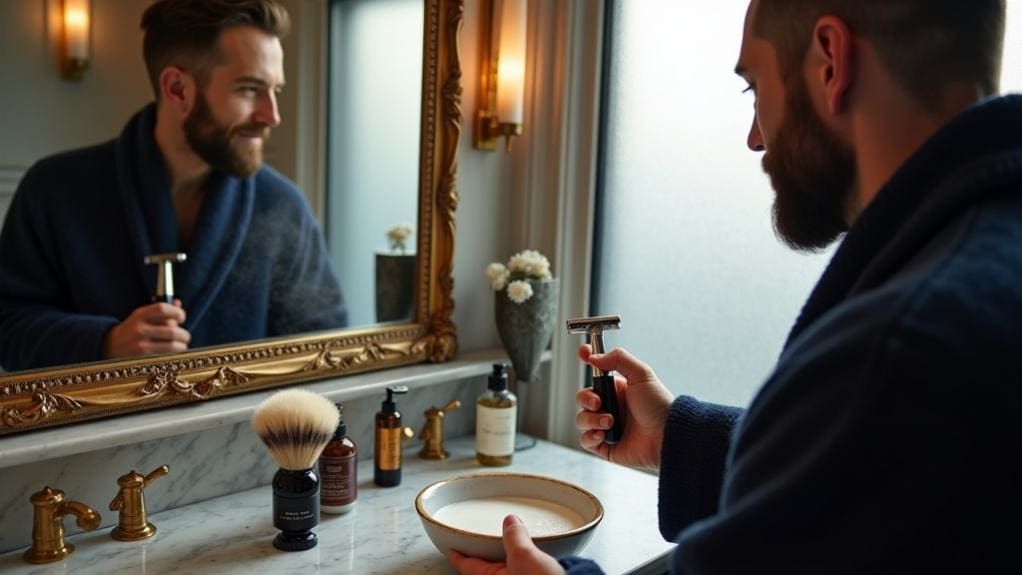
Winter turns your face into sandpaper. Time to ditch shaving myths that wreck winter skin.
Shave at night. Your skin repairs itself while sleeping. Cell turnover peaks after midnight. Less irritation tomorrow.
Use lukewarm water only. Hot water strips protective oils. Cold water keeps whiskers stiff. Lukewarm softens hair without dehydration.
Hot water strips away your skin’s natural defenses while cold water makes shaving harder—lukewarm hits the sweet spot.
Replace blades more often. Winter air makes skin fragile. Dull blades tug and scrape. Sharp blades glide smoothly.
Take fewer passes. One good stroke beats three mediocre ones. Shave with the grain. Down your neck. Sideways on cheeks. Choose mildly scented shave cream for better glide and fewer required passes.
Skip the pressure. Let blade weight do the work. Heavy hands remove skin layers. Light touch preserves moisture. Quality shaving cream provides essential lubrication that prevents razor drag on sensitive winter skin.
Pat dry gently. Rough towels damage winter skin. Cold water reduces skin irritation and prevents post-shave dryness. Apply post-shave balm to create a protective barrier against dry winter air. Winter’s low humidity affects hydration levels and increases skin’s susceptibility to razor burn irritation. Moisturize immediately after. Seal in hydration before it evaporates.
Choosing the Right Winter Shaving Products
While summer products focus on cooling, winter demands hydration above everything else. Your product ingredient selection should prioritize moisture over everything fancy. Skip alcohol-based creams. They’ll dry you out worse than desert wind.
Look for these winter essentials:
- Thick, creamy lathers that coat your face like protective armor against razor drag
- Natural oils and butters (shea, mango, cocoa) that actually feed your skin nutrients
- Minimal ingredient lists without synthetic junk that irritates already-sensitive winter skin
For winter fragrance options, stick with warm scents like sandalwood. They won’t clash with cold air sensitivity. Essential oils beat artificial fragrances every time. Your face will thank you when it’s not burning red afterward. The right cream creates a protective barrier that shields your skin from harsh winter razor contact. Consider products with chamomile and witch hazel for their proven soothing properties during harsh winter conditions.
After your morning shave, complement your routine with a quality night cream to repair and hydrate your skin while you sleep. Always shave in the direction of hair growth to minimize irritation and prevent razor burn during winter months. Quality shaving creams require less product per shave, making them economical over time while delivering superior performance during harsh winter conditions.
Optimal Timing and Frequency for Winter Shaves

Frequency matters more than perfection in cold months. Your skin gets drier. More sensitive too. Daily shaving becomes punishment, not grooming.
Cut back your shaving frequency during winter. Every other day works better. Some guys go three days between shaves. Your skin will thank you.
Time it right. Shave after hot showers. Steam opens pores. Softens stubble. Makes everything easier.
Evening shaves beat morning ones. Gives your face overnight recovery time. No immediate cold air exposure.
Skip mid-day touch-ups completely. Fresh-shaved skin plus winter wind equals misery. Those 150 strokes per shave add up fast on sensitive winter skin.
Let facial oils build up between shaves. They’re natural protection against harsh weather. Your beard isn’t lazy grooming. It’s smart winter strategy. Beard oils become essential during winter months to maintain healthy facial hair and protect the underlying skin from cold weather damage. Keep your travel toiletry bag stocked with water-resistant materials to protect your shaving supplies from moisture damage during winter trips. This approach aligns with how 41% of men already skip daily shaving throughout the year. Understanding demographic variations in shaving habits can help you find the routine that works best for your lifestyle and skin type.
Combat Environmental Factors That Cause Irritation
Your skin faces three enemies every winter day. Cold air strips moisture. Environmental pollutants clog pores. UV rays bounce off snow and hit you twice.
Winter destroys your skin’s natural defenses. Heated buildings make it worse. Your face becomes a target for razor burn.
Here’s what actually attacks you:
- Dry air – sucking moisture from your skin like a vacuum
- Toxic particles – settling into your pores and causing inflammation
- Hidden UV rays – reflecting off snow and penetrating clouds
Fight back with cream-based shaving products. They lock in moisture. Use charcoal face wash before shaving. It pulls out environmental pollutants.
Apply SPF 30 moisturizer daily. Even cloudy days damage skin. Natural oils like argan build skin resilience against winter’s assault.
Your skin barrier needs backup. Give it protection, not punishment. Look for products containing ceramides and niacinamide to strengthen your skin’s natural defenses during harsh winter conditions. Consider hypoallergenic formulations if your winter-damaged skin shows signs of increased sensitivity or irritation.
Post-Shave Recovery and Protection Strategies
Once you rinse that razor, your skin needs help. Winter shaving strips away protective oils. Your face is basically raw meat now.
Pat on aftershave balm immediately. Don’t rub. Patting prevents more damage. Look for ingredients like ceramides or shea butter. Skip anything with high alcohol content. That’s just pain in a bottle.
Post shave hydration comes next. Apply moisturizer while skin’s still damp. Glycerine and hyaluronic acid work best. They grab moisture from air. A comprehensive men’s skin care routine becomes even more critical during harsh winter months when your skin faces additional environmental challenges.
Skin barrier repair happens overnight. Shave before bed when possible. Your skin fixes itself while you sleep. Smart timing beats expensive products.
Use SPF the next day. Fresh-shaved skin burns faster. Even winter sun hurts. Drink water too. Hydration works inside and out.
Consider upgrading to an anti-aging moisturizer that can help revitalize your skin while providing the hydration your post-shave face desperately needs.
Professional Tips for Sensitive Winter Skin
You’ve heard warm water softens whiskers. That’s backwards for winter skin. Cold water actually reduces inflammation while still giving you a clean shave.
Cold Water Shaving Benefits
Most guys think hot water equals better shaves. They’re wrong. Cold water actually delivers superior results for winter skin health.
Your skin tightens with cold water. Pores constrict. Whiskers stiffen up. This creates ideal shaving conditions. Hot water makes skin puffy and soft. Cold water keeps everything firm.
Here’s what happens when you go cold:
- Your razor glides over tight, non-swollen skin – cutting whiskers cleanly at the base instead of dragging through puffy tissue
- Natural oils stay locked in your skin – preventing that tight, dry feeling you get after hot water strips everything away
- Nicks and cuts get instant relief – cold acts like nature’s styptic pencil, constricting blood vessels immediately
You’ll need fewer passes. Less irritation. Better moisture retention. Your skin barrier stays intact all winter long.
For men with particularly sensitive skin, electric razors with rounded caps technology can further reduce irritation when combined with cold water preparation, as the gentle blade design minimizes friction against already-tightened skin. When choosing any shaving tool, look for products containing soothing ingredients like aloe vera and chamomile to complement the natural benefits of cold water preparation.
Professional Grooming Service Advantages
While cold water works wonders at home, professional barbers take winter skin care further. They analyze your skin sensitivity first. No guessing games here.
Barbers use alcohol-free products that won’t strip moisture. Their razors stay sharp. Yours probably doesn’t. They adjust techniques for dry winter conditions. You wing it.
Professional grooming benefits include pre-shave oils and post-shave treatments. These create moisture barriers your drugstore foam can’t match. Barbers spot problem areas before they become disasters.
Your beard gets proper hydration too. Not just a quick trim. They recommend products for your specific skin type. Winter hats and heating systems wreck havoc. Professionals know how to counteract both.
Weekly appointments beat daily irritation at home. Sometimes admitting you need help saves your face. Literally.
Professional barbers prioritize SkinSafe technology in their tool selection to minimize nicks and cuts that are more likely to occur on winter-dried skin. They understand that sensitive skin requires specialized formulations with soothing ingredients like Vitamin E and Chamomile to combat winter’s harsh effects.
Frequently Asked Questions
Can I Use the Same Razor Blades Longer During Winter Months?
Winter’s “blade-friendly” conditions won’t greatly extend your razor’s lifespan. You’ll still need proper razor maintenance tips and should consider key blade longevity factors like dryness and debris. Stick to changing blades every 5–7 shaves for best results.
Should I Change My Diet to Improve Winter Skin Hydration?
Yes, you should incorporate hydrating foods and skin friendly fats into your winter diet. Focus on omega-3 rich fish, antioxidant-packed berries, and increase water intake while avoiding processed foods that promote dehydration.
Is It Better to Shave Before or After Exercising in Winter?
always shave *after* exercising. Your post-workout shaving routine benefits from opened pores and softened hair, while proper skin preparation through exfoliation prevents irritation that cold weather amplifies.
Can Wearing Face Masks in Cold Weather Affect Shaving Results?
Yes, masks create moisture buildup that softens your skin, making it more prone to razor burn. Cold irritation worsens when masks trap humidity against freshly shaved skin, increasing sensitivity and delaying healing from shaving.
Do Electric Razors Cause Less Irritation Than Manual Razors in Winter?
Like a gentle winter breeze versus harsh winds, yes, electric razor benefits include reduced irritation on dry skin. Manual razor drawbacks multiply in cold weather—you’ll experience fewer nicks, cuts, and razor burn with electric shavers.
References
- https://www.mintel.com/press-centre/razors-down-41-of-us-men-dont-shave-daily-with-one-quarter-agreeing-beards-are-fashionable/
- https://1924salon.com/winter-grooming-tips-strategies/
- https://www.artofmanliness.com/style/shaving/cold-water-shaving/
- https://pmc.ncbi.nlm.nih.gov/articles/PMC6774642/
- https://www.menshealth.com/style/a19544584/winter-shaving-tips/
- http://institutomedicolaser.com/what-is-the-impact-of-winter-on-the-skin/
- https://pmc.ncbi.nlm.nih.gov/articles/PMC10264749/
- https://skinlogicaesthetics.co.uk/dry-skin-in-cold-weather-understanding-the-impact-of-winter-on-your-skin/
- https://www.usdermatologypartners.com/blog/common-winter-skin-issues/
- https://www.prnewswire.com/news-releases/survey-reveals-itchy-skin-ranks-among-americans-top-winter-troubles-300773073.html