
Men’s Winter Shaving Survival: Avoid Razor Burn and Irritation
Men’s Winter Shaving Survival: Avoid Razor Burn and Irritation
To protect your skin during winter shaving, start with a warm shower to soften beard hairs, then apply pre-shave oil for enhanced lubrication. Use a sharp razor and quality shaving cream, making short, light strokes in the direction of hair growth. Avoid hot water and excessive pressure, which can increase irritation in already-sensitive winter skin. After shaving, rinse with cool water to close pores, then apply an alcohol-free moisturizer containing soothing ingredients like aloe vera or vitamin E. Following these essential steps will help prevent razor burn, but mastering advanced techniques can elevate your winter shaving routine even further.
Understanding Winter Skin Challenges

When winter kicks in, your skin faces a perfect storm of challenges that can make shaving particularly troublesome. The combination of cold temperatures and harsh winds strips your skin's natural protective barrier, while indoor heating systems further deplete essential moisture, creating conditions that can lead to irritation and discomfort during your grooming routine. Individuals with psoriasis and eczema may experience heightened sensitivity during this season. Using hot shower water before shaving can worsen skin dryness and irritation. Using dull razor blades during winter can intensify skin irritation and damage.
Your winter skin becomes increasingly vulnerable to environmental stressors, making effective hydration strategies vital for maintaining healthy skin. As humidity levels drop both outdoors and inside heated spaces, you'll notice your skin becoming drier, duller, and more prone to irritation. This dryness isn't just a surface issue; it affects how your razor interacts with your skin, potentially leading to increased razor burn and cuts. Using products with natural soothing ingredients like aloe vera and chamomile can help calm irritation and reduce redness. A diet rich in omega-3 fatty acids can help reduce inflammation and improve overall skin health during winter months. Choosing non-comedogenic formulas can help prevent clogged pores while maintaining necessary moisture during winter shaving routines.
To understand what you're up against, consider how winter's low humidity levels affect your skin at multiple levels. The outer layer becomes dehydrated and flaky, while deeper layers struggle to maintain moisture balance. This creates a challenging environment for shaving, as dry skin doesn't provide the smooth surface needed for your razor to glide effectively, making proper preparation and aftercare essential for maintaining skin health.
Essential Pre-Shave Preparation Steps
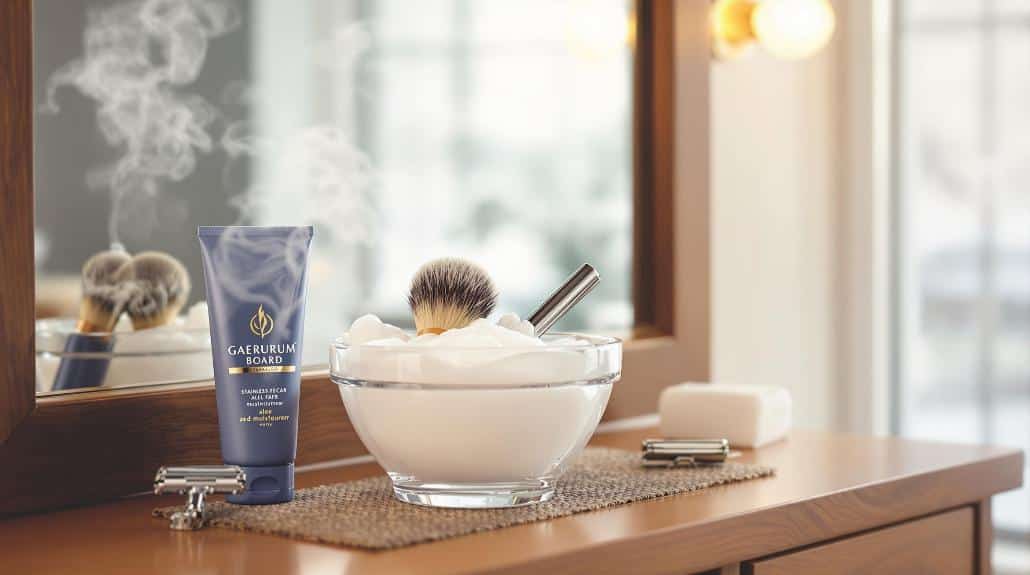
A proper pre-shave routine serves as your first line of defense against winter shaving challenges. Your pre-shave rituals should begin with thorough cleansing using warm water or a gentle facial cleanser to remove dirt and open your pores. After cleansing, pat your face dry with a clean towel, being careful not to irritate the skin. Using a clean, warm towel on your face for 30 seconds will help relax facial hair. Proper preparation enhances the quality of your shave while significantly reducing skin irritation. Taking a hot shower before shaving will ensure your stubble becomes softer and more manageable. Selecting alcohol-free products will help prevent skin dryness and irritation during winter months.
| Step | Action | Benefit |
|---|---|---|
| Cleanse | Wash with warm water | Opens pores, removes debris |
| Moisturize | Apply pre-shave oil | Enhances skin hydration |
| Prepare | Create rich lather | Provides blade protection |
| Execute | Use proper technique | Minimizes irritation |
To maximize skin hydration, apply a quality pre-shave oil or natural moisturizer like coconut oil, letting it sit for two minutes to soften your facial hair. You'll want to create a rich lather using a badger brush and quality shaving cream, which provides an additional protective barrier. When applying the lather, use circular motions to lift the hair and guarantee even coverage. Using triple cushion technology can provide superior razor glide and enhanced hydration during your shave. Products containing Vitamin E and Chamomile are particularly effective for preventing skin irritation. If you're using a traditional razor, remember to flatten areas around your neck and chin without pulling the skin too tightly, as this can lead to irritation during the shaving process.
The Perfect Winter Shaving Technique

During the harsh winter months, mastering the right shaving technique becomes essential for protecting your skin. Focus on using short, light shaving strokes that follow the direction of your hair growth, which helps minimize irritation and maintains peak skin hydration. You'll want to keep the razor moving smoothly while avoiding excessive pressure that could damage your sensitive winter skin. Pre-shave oil application can provide an extra layer of protection during winter shaving. Research shows that re-stroking frequency often exceeds 120 times per shave, which can severely irritate winter skin. Building a complete shaving kit ensures you have all the essential tools for proper winter skin care.
For the most effective technique, start by applying a quality shaving gel or foam to create a protective barrier. As you shave, rinse your blade frequently to prevent clogging and maintain consistent performance. Keep your strokes minimal, avoiding repeated passes over the same area, as this can strip away essential moisture and cause irritation. Taking a 3-5 minute soak before shaving helps your skin retain crucial moisture during the process. Using a water-resistant bag for your grooming supplies helps protect them from bathroom moisture during winter travel. If you're dealing with particularly sensitive areas, consider breaking up your shaving routine into sections to maintain proper lubrication throughout the process. Selecting a cream with glycerin can provide superior lubrication and skin protection during winter shaves.
Once you've finished, close your pores with a quick cold water rinse, then immediately apply a moisturizer to lock in hydration. You'll find that spacing out your shaves during winter can also help maintain your skin's natural moisture barrier, so consider shaving every other day instead of daily.
Choosing Cold Weather Shaving Products
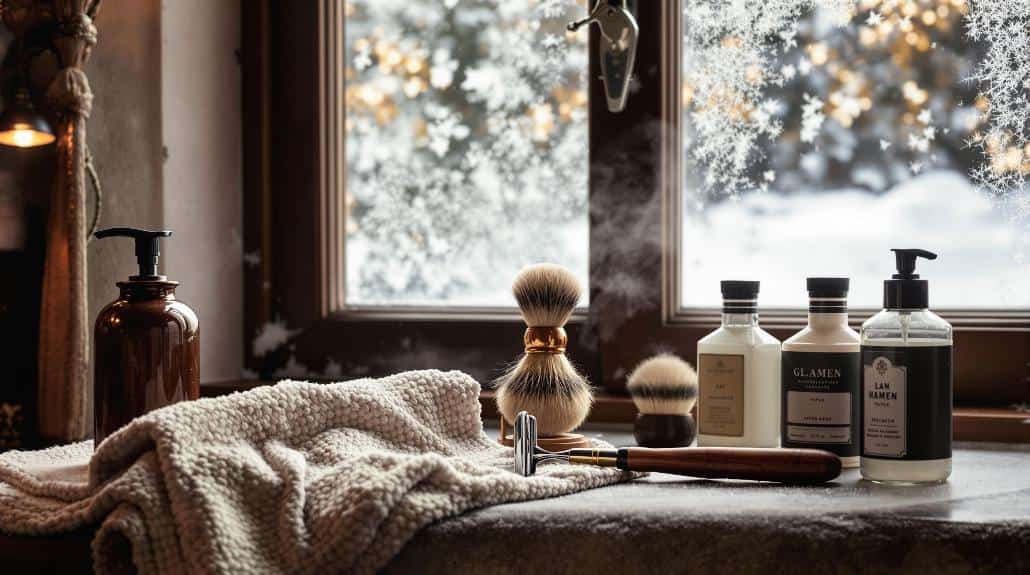
Now that you've mastered your winter shaving technique, selecting the right products can make or break your cold-weather grooming routine. Your shaving product selection should focus on ultra-rich formulas that provide maximum protection against nicks and cuts, while delivering essential moisture to combat winter dryness. Using a dull razor blade can increase skin irritation and require you to apply more pressure when shaving. Tea tree oil helps minimize razor bumps while providing natural anti-inflammatory benefits during winter shaving. Consider using products with aluminum compounds for additional skin protection and comfort during winter months. Safety razor kits offer superior control and less irritation compared to traditional cartridge razors during harsh winter conditions.
When choosing cold weather ingredients, look for natural components that reduce irritation and provide superior hydration. Lab Series Cooling Shave Cream offers excellent glide, while brands like Palmolive and Cyril R. Salter perform exceptionally well in cold conditions. The addition of menthol and peppermint oil provides an invigorating cooling sensation that helps soothe winter-stressed skin. You'll want to complement your cream with a pre-shave oil for additional lubrication, especially if you have coarse facial hair or sensitive skin. For sensitive skin concerns, consider using an After Shave Face Oil that's specifically formulated to soothe post-shave irritation.
Consider your skin type and beard texture when selecting products, and don't underestimate the importance of high-quality shaving soaps made from natural ingredients. If you're using traditional brands, Gillette's shaving creams are specifically designed to maintain hydration and minimize irritation. Remember to prepare your skin thoroughly before applying any product, and make sure you're using fresh, sharp blades to prevent razor burn and irritation during your winter shaving routine.
Post-Shave Winter Skin Care
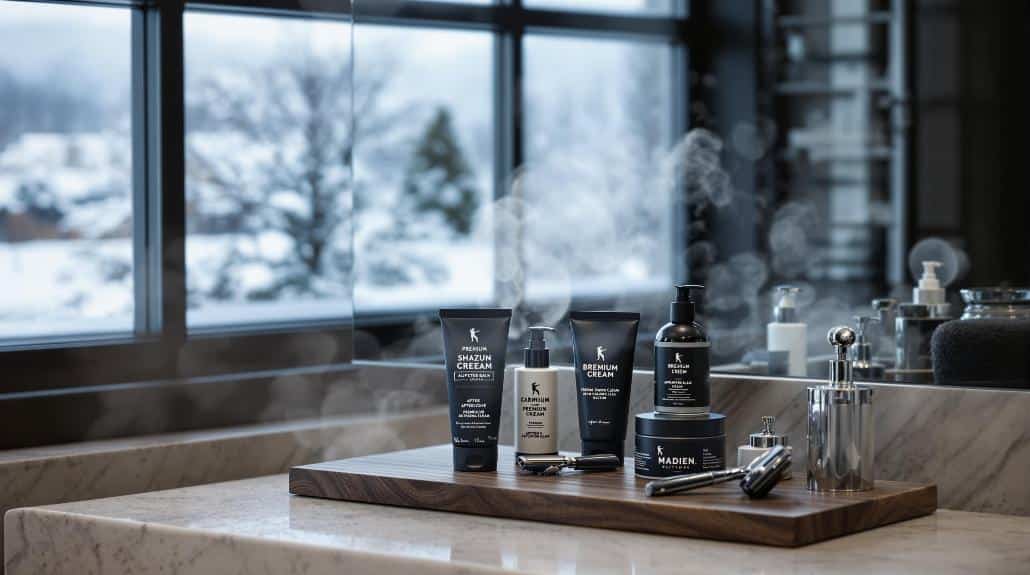
Taking care of your skin after shaving becomes essential during winter months when cold air and harsh winds can leave your face feeling raw and irritated. Start your post-shave routine by immediately rinsing with cold water, which helps close your pores and reduce inflammation while removing any remaining shaving cream residue. Using clean towels to pat skin dry helps prevent additional irritation and bacteria from entering freshly shaved skin. Face cleansing before shaving helps remove excess oils that can clog pores and affect razor performance. Most razor burn symptoms will resolve within days with proper skincare attention.
Follow up with an alcohol-free disinfecting product, such as witch hazel or an alum block, to combat bacteria without drying out your skin. These gentle alternatives provide effective post shave hydration while treating potential razor burn and minor cuts. Next, apply a defensive moisturizer containing soothing ingredients like aloe vera, vitamin E, or shea butter to protect your skin from harsh winter elements. Willow bark extract can provide additional soothing benefits for irritated skin. Consider using a facial moisturizer with SPF to protect your freshly shaved skin from sun damage, even during winter months.
To maintain peak skin health, you'll need to implement preventive measures alongside your daily routine. Exfoliate regularly to remove dead skin cells, always use sharp razor blades, and shave in the direction of hair growth. When selecting products, choose those specifically formulated for your skin type, whether it's dry, oily, or sensitive, and apply moisturizer both morning and night to maintain consistent hydration levels throughout the winter season.
Common Winter Shaving Mistakes

Winter weather brings out the worst in shaving habits, with many men falling into common traps that lead to skin irritation and discomfort. During colder months, increased skin sensitivity requires extra attention to your shaving routine, yet many continue making fundamental mistakes that compromise their results. Taking time for a hot shower pre-shave helps open pores and properly prepare facial hair for shaving. Short light strokes are essential for minimizing winter skin damage.
One of the biggest errors is rushing through pre-shave preparation, especially when you're trying to maintain regular shaving frequency in harsh weather. You'll need to properly clean and hydrate your beard, using warm water and pre-shave oils to soften the hair before touching it with a razor. Using a quality shaving brush will enhance your lather and help lift hair follicles for a smoother shave. Another critical mistake is using dull blades or applying too much pressure while shaving, which can greatly irritate winter-sensitive skin. A single blade razor can provide better control and reduce irritation compared to multi-blade alternatives. Models with SkinGlide coating can improve comfort by reducing friction against sensitive winter skin. Most quality razor blades should be replaced after 3-4 weeks of regular use to maintain optimal performance.
Your technique matters more than ever during winter months. Shaving against the grain, though tempting for a closer shave, greatly increases your risk of razor burn and irritation. Additionally, many men overlook the importance of proper lubrication, using insufficient lather or inappropriate products for their skin type. Remember to replace your razor regularly and maintain it properly, as winter's moisture can accelerate blade deterioration.
Preventing Razor Burn Year Round

Mastering razor burn prevention requires a thorough approach that extends far beyond the winter months. To protect your sensitive skin and maintain a comfortable shaving experience, you'll need to focus on proper pre-shave preparation, shaving technique, and post-shave care. Using a gentle cleanser helps maintain the skin's natural balance of oil and water. Safety razors provide better control and less irritation than multi-blade cartridge razors. Applying a moisturizer with hyaluronic acid can help maintain optimal skin hydration throughout the day. Consider using a glycerin-based soap for additional moisture retention during your shaving routine.
Start by taking a warm shower to soften your beard hairs, followed by thorough cleansing with a facial wash. Your razor should be maintained with frequent blade rinsing to ensure optimal performance. Apply a quality shaving gel to create ideal lubrication, and always use a sharp blade to minimize irritation. When shaving, maintain light pressure and follow the grain of your hair growth, taking care not to repeat strokes over the same area. Remember to rinse your blade frequently to prevent buildup and maintain effectiveness.
After shaving, immediately splash cold water on your face to close your pores, then apply a moisturizer specifically designed for post-shave care. For long-term razor burn prevention, incorporate regular exfoliation with glycolic acid scrubs into your routine, and consider using hyaluronic acid serums to maintain skin hydration. If you have particularly sensitive skin, reducing your shaving frequency and committing to a consistent skincare regimen can greatly improve your results.