
Men’s Winter Lip Care: Protection and Treatment Guide
Men’s Winter Lip Care: Protection and Treatment Guide
Your winter lip care routine needs specific attention to combat harsh conditions that cause dryness and damage. Start by using a moisturizing lip balm with SPF protection, reapplying every two hours and after meals. Keep a humidifier in your space to maintain ideal moisture levels, and drink plenty of water throughout the day. Don't forget to protect your lips from wind with a scarf, and apply a thick, nourishing balm before bed. Natural ingredients like beeswax, coconut oil, and vitamin E can provide effective relief. Discover how professional treatments and lifestyle adjustments can transform your winter lip care game.
Main Points
- Apply a moisturizing lip balm with SPF protection every 2-3 hours, focusing on ingredients like beeswax, hyaluronic acid, and vitamin E.
- Use a humidifier indoors and maintain hydration by drinking at least 64 ounces of water daily to prevent lip dryness.
- Protect lips from harsh winter winds by wearing a scarf and avoiding habits like lip licking or excessive caffeine consumption.
- Exfoliate lips gently once or twice weekly using natural scrubs, followed immediately by a moisturizing treatment.
- Apply a thick layer of lip balm before bedtime, incorporating ingredients like cocoa butter or shea butter for overnight repair.
Understanding Winter Lip Challenges

While winter brings its share of seasonal joys, it also presents unique challenges for lip health. Your lips face a constant battle against harsh environmental conditions that can quickly deplete their natural moisture. Low humidity levels and biting winds strip away essential oils, while extreme temperatures reduce blood flow, making lip hydration particularly difficult during the cold season.
Your daily habits can also impact lip health more severely in winter. Frequently licking your lips, consuming caffeine-heavy beverages, or taking certain medications like decongestants can intensify dryness.
When combined with underlying health factors such as nutritional deficiencies or skin conditions, these challenges make winter remedies essential. Understanding these multiple factors affecting your lips helps you better prepare for the season and maintain healthier, more comfortable lips throughout the colder months.
Essential Lip Care Products
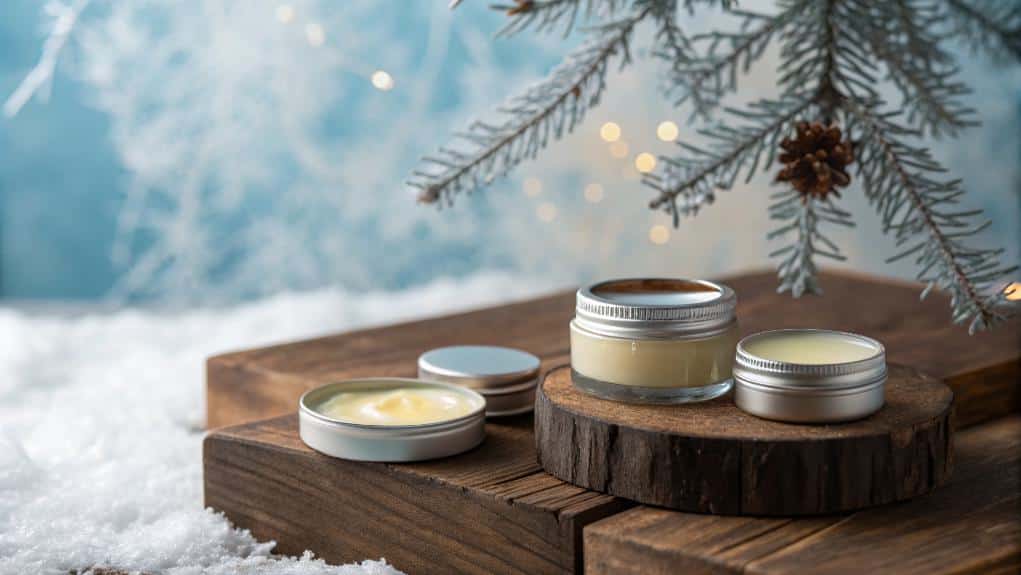
With winter's harsh conditions identified, you'll need the right arsenal of lip care products to combat dryness and damage. When choosing lip balm types, focus on ingredients that deliver deep winter hydration, such as hyaluronic acid, panthenol, and squalane. Since lips lack oil glands, they need extra care and protection during cold months. Thin lip skin makes them particularly vulnerable to environmental damage and cracking.
Products like Palmer's Cocoa Butter Formula and Medik8 Mutiny offer instant relief and long-lasting moisture.
For extensive lip protection, prioritize these essential items:
- SPF-containing balms like Colorescience SPF50 to shield against UV damage
- Exfoliating products such as La Mer's Lip Polish to remove dead skin
- Overnight treatments like PCA Skin Lip Mask for deep nourishment
Remember to select multifunctional products with protective ingredients like Vitamin E and cocoa butter for convenient, on-the-go care throughout your day.
Natural Ingredients That Work
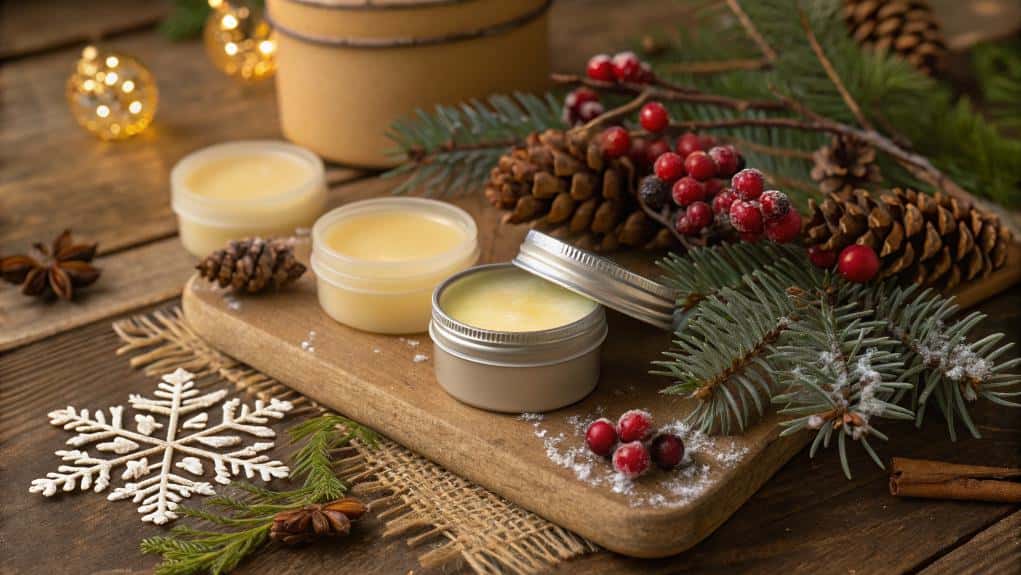
Natural ingredients offer potent solutions for winter lip care without the harsh chemicals found in many commercial products.
You'll find several effective natural lip moisturizers like beeswax, which creates a protective barrier while retaining moisture, and coconut oil, which hydrates with essential fatty acids. For deep nourishment, try shea butter or olive oil, both packed with vitamins and antioxidants.
When your lips need soothing lip treatments, reach for honey or aloe vera to calm irritation.
You can create a gentle exfoliating scrub using sugar or salt mixed with honey to remove dead skin cells. For extra protection against harsh winter conditions, vitamin E oil and green tea extract work wonders, while tea tree oil's antimicrobial properties help prevent infection and inflammation.
Daily Lip Protection Routine
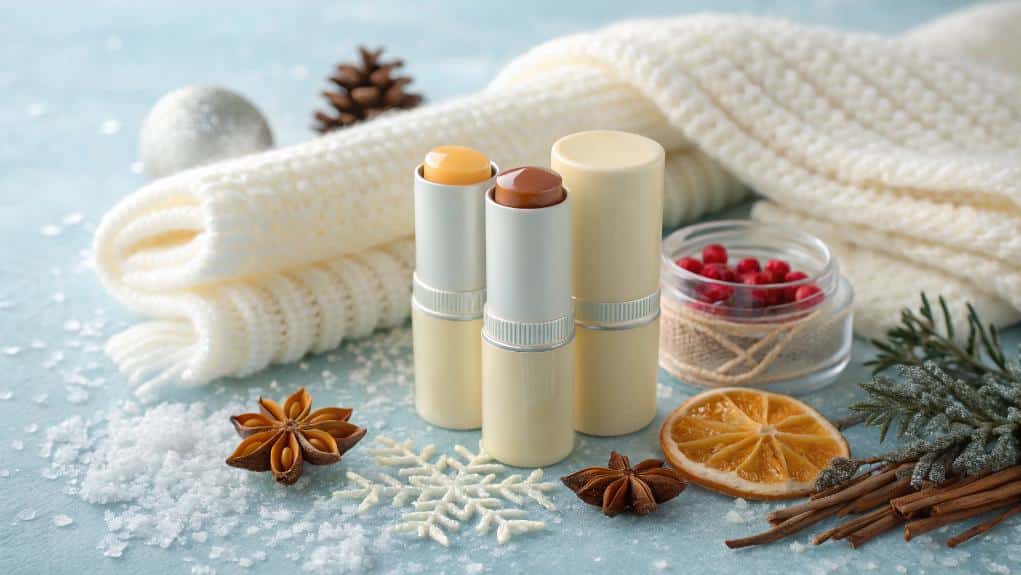
A consistent daily lip care routine forms the foundation of healthy winter lip protection. Your lips need regular attention to maintain moisture retention throughout the cold season.
Start by applying lip balm before heading outside, and reapply every two hours to guarantee continuous protection.
For ideal winter lip protection, follow these essential steps:
- Begin your morning with a moisturizing lip balm application before exposure to cold air.
- Keep lip balm handy and reapply after eating, drinking, or whenever your lips feel dry.
- Apply an extra-thick layer before bedtime to support overnight moisture retention.
Remember to protect your lips from harsh winds by wearing a scarf, and use a humidifier indoors to maintain healthy moisture levels.
When choosing your lip balm, opt for products containing beeswax or petroleum jelly for maximum protection during winter months.
Effective Exfoliation Methods
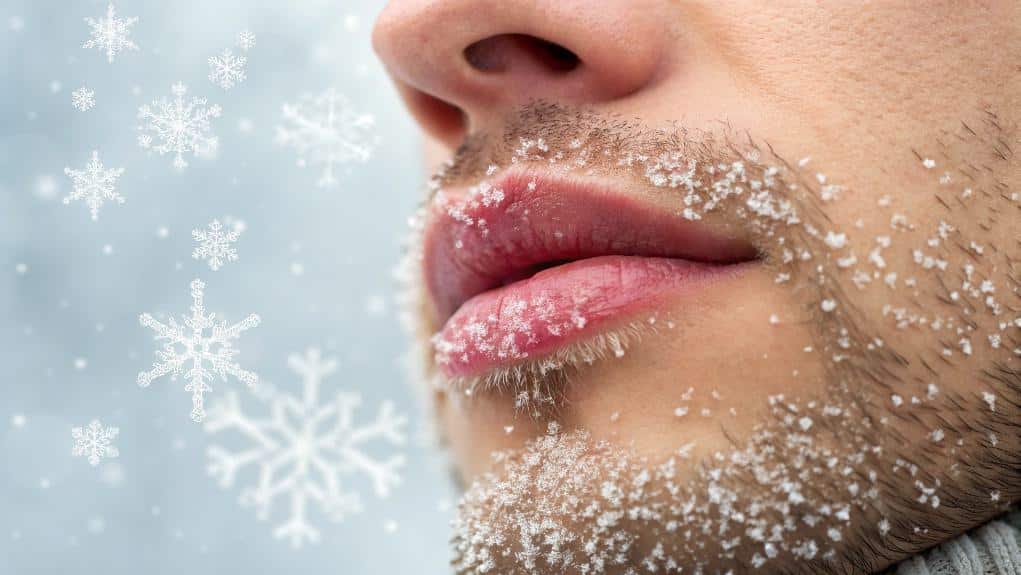
While maintaining a daily lip protection routine keeps your lips healthy, proper exfoliation removes dead skin cells that can interfere with moisturizer absorption.
You've got several exfoliation techniques to choose from, each offering unique benefits for your winter lip care routine.
For physical exfoliation, use a gentle sugar or salt scrub 1-2 times weekly, massaging in circular motions for 10-15 seconds.
If you prefer chemical exfoliation, try products containing AHAs or BHAs at the same frequency, but start with lower concentrations.
Natural methods offer a milder approach – use a soft-bristled toothbrush or mix honey with lemon juice for gentle exfoliation.
Remember your exfoliation frequency shouldn't exceed twice weekly.
Always moisturize before exfoliating, ideally after a warm shower when your lips are most receptive, and follow up with a soothing lip balm.
Common Lip Care Mistakes
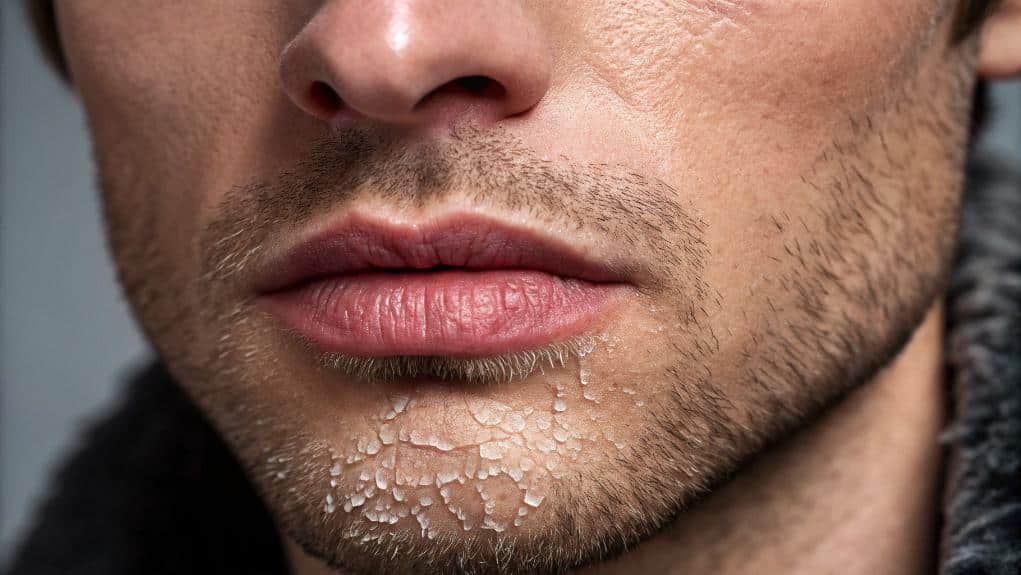
Many men unknowingly sabotage their lip care routine through common mistakes that lead to persistent dryness and discomfort. Your lip balm selection and application techniques play vital roles in maintaining healthy lips during winter. When you choose products with harsh ingredients or ignore your skin type, you're setting yourself up for irritation and ineffective treatment.
Critical mistakes that damage your lips include:
- Not reapplying lip balm after eating or drinking
- Skipping SPF protection in your lip care products
- Ignoring environmental factors like wind chill and dry indoor air
You'll also want to avoid applying too much product, which can create an uncomfortable build-up.
Remember that proper lip care isn't just about the products you use – it's also about addressing underlying health conditions and staying well-hydrated throughout the day.
Emergency Relief Strategies
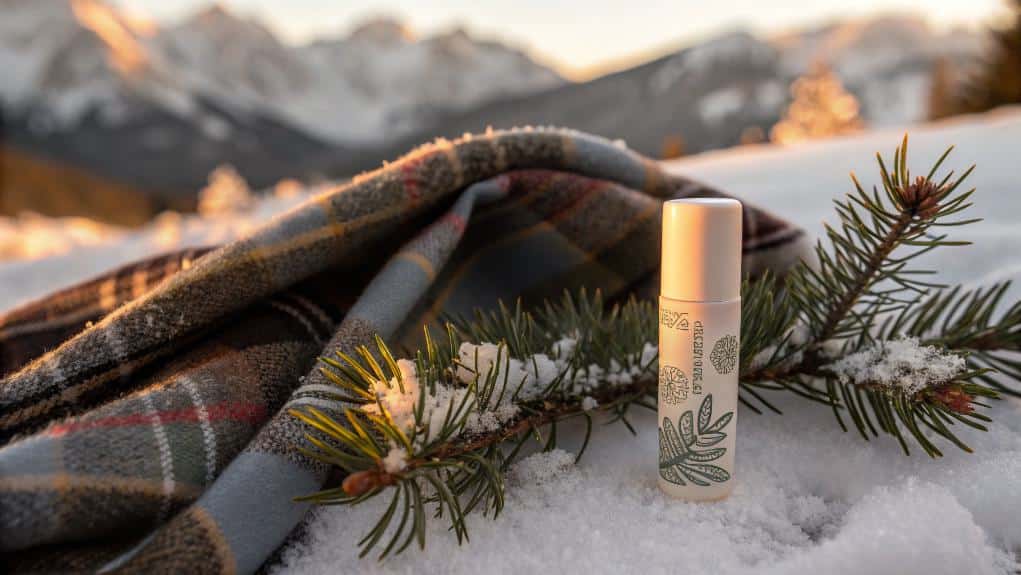
Knowing how to address sudden lip problems can save you from prolonged discomfort during winter months.
When your lips need instant relief, apply a moisturizing lip balm containing beeswax or petroleum jelly immediately. For quick remedies, press a warm compress against your lips to boost blood flow, or use a humidifier in your room to combat dryness.
Natural solutions can provide emergency comfort too. Dab on coconut oil or honey for their antimicrobial benefits, or apply cooling cucumber slices to soothe irritated lips.
If you're experiencing severe pain or bleeding, don't wait – try an OTC medicated lip balm with camphor or menthol. However, if symptoms persist or you notice signs of infection, like significant swelling or cold sores, seek medical attention promptly.
Lifestyle Factors Affecting Lips

Several lifestyle choices greatly impact the health of your lips during winter months. Your daily habits, from smoking to diet influences, can either protect or harm your lips during the cold season.
If you're a smoker, you're putting your lips at particular risk since nicotine reduces blood flow and accelerates aging of lip tissue.
Your eating habits play an essential role in lip health. Make sure you're getting:
- Vitamin B2 and B12 for preventing cracks and dryness
- Omega-3 fatty acids to maintain skin barrier
- Adequate water intake to combat dehydration
Watch out for unconscious lifestyle habits that can damage your lips, like frequent licking or biting.
Keep your hands clean when applying lip products, and always remove lip care products before bed to prevent clogged pores.
Long-Term Prevention Tips
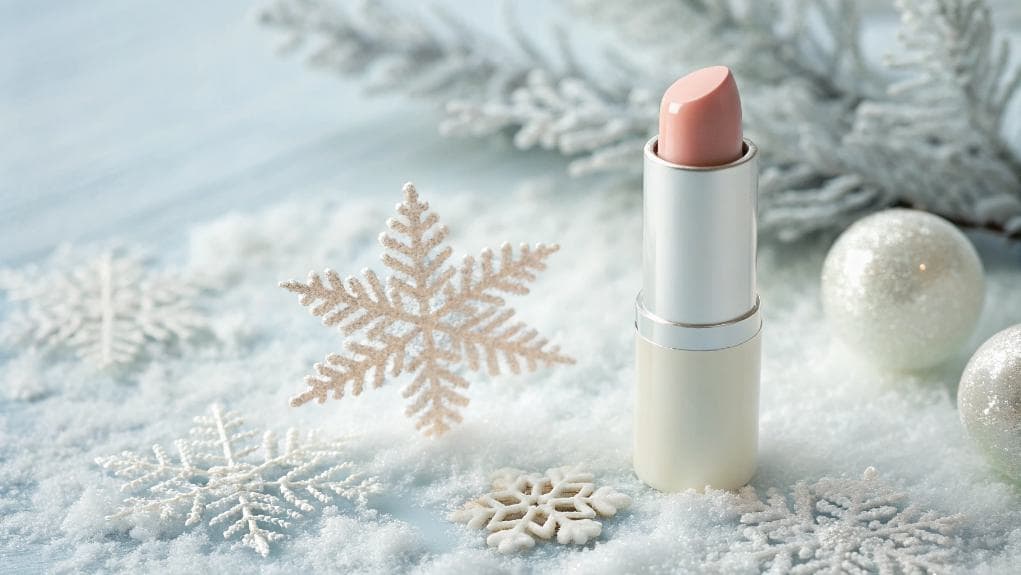
Beyond daily habits, developing a consistent long-term prevention strategy will safeguard your lips throughout the winter season and beyond.
Start by mastering essential hydration techniques: maintain indoor humidity levels between 30-50% using a humidifier and drink at least 64 ounces of water daily. You'll also want to invest in quality protective gear, including scarves and SPF 30+ lip balm for outdoor activities.
Make smart dietary choices by incorporating omega-3 rich foods like salmon and walnuts, while limiting caffeine and spicy foods that can dehydrate your lips.
Don't forget to establish a regular exfoliation routine, doing it once or twice weekly, followed by immediate moisturizing. Choose lip products containing natural ingredients like beeswax and shea butter, and avoid those with harsh chemicals or fragrances.
Professional Treatment Options

When over-the-counter remedies aren't providing enough relief, professional treatment options can offer more powerful solutions for severely dry or damaged lips.
The most effective treatments often include soothing antioxidants like Vitamin E and green tea for enhanced healing.
Through dermatology consultations, you'll receive personalized lip treatments that address specific conditions like severe chapping, allergic reactions, or persistent dryness.
Early consultation with a specialist can help prevent serious complications from untreated conditions.
If your lips don't improve within 2-3 weeks of home care, consider these professional interventions:
- Prescription-strength ointments containing urea or hyaluronic acid
- Topical corticosteroids for inflammatory conditions
- Specialized treatments for conditions like actinic cheilitis
Your dermatologist may also recommend advanced lip treatments using medical-grade products and can identify underlying conditions causing your lip problems.
They'll help you develop a tailored treatment plan that might include prescription medications, professional-grade moisturizers, or specific therapeutic procedures for best results.