
Men’s Winter Beard Care Basics: Prevent Dryness and Flakes
Men’s Winter Beard Care Basics: Prevent Dryness and Flakes
To prevent beard dryness and flaking during winter, you'll need a targeted care routine focused on hydration and protection. Wash your beard only 1-2 times weekly using sulfate-free beard shampoo and warm water, followed by a hydrating conditioner. Apply beard oil while your skin is still damp from showering, focusing on the roots, then seal in moisture with beard balm or butter. Use a boar bristle brush daily to distribute natural oils, and maintain a diet rich in proteins and omega-3s for healthy growth. Regular trimming every 4-6 weeks prevents split ends and breakage. These basics form the foundation for more advanced beard maintenance techniques.
Why Winter Affects Your Beard
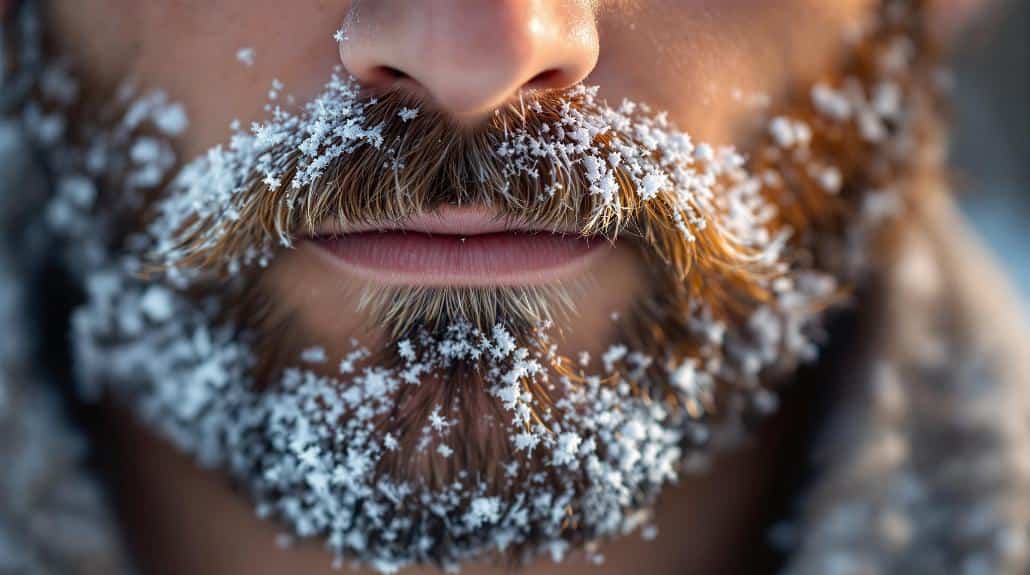
Three major factors make winter particularly harsh on your beard: cold temperatures, low humidity, and indoor heating. These elements work together to strip your facial hair of essential moisture, leading to a cascade of issues that can greatly impact your beard health. When cold air hits your beard, it depletes the natural oils that typically keep your facial hair soft and manageable, while low humidity levels further accelerate moisture loss. Using gentle beard shampoo can help maintain these natural oils during washing. Products containing biotin and castor have shown promising results in promoting healthier winter beard growth. Using argan and jojoba oils can provide deep hydration while preventing irritation during winter months.
The seasonal effects become even more pronounced when you spend time indoors, where heated air creates an environment that's particularly hostile to your beard. Your facial hair responds to these conditions by becoming brittle and prone to breakage, often resulting in beardruff – those annoying white flakes that appear in your beard. Additionally, winter's impact extends beyond just surface-level dryness; the season actually influences your body's hormone levels, particularly testosterone, which can slow down beard growth. The natural oil glands struggle to maintain adequate moisture levels during the cold months. Regular combing and brushing can help distribute these natural oils throughout your beard to combat winter dryness. Maintaining a proper beard care routine becomes essential for protecting facial hair during the harsh winter months. The combination of environmental stressors, including wind exposure and friction from winter clothing, creates a perfect storm that can leave your beard feeling dry, itchy, and difficult to manage unless you take appropriate preventive measures.
Essential Beard Care Products
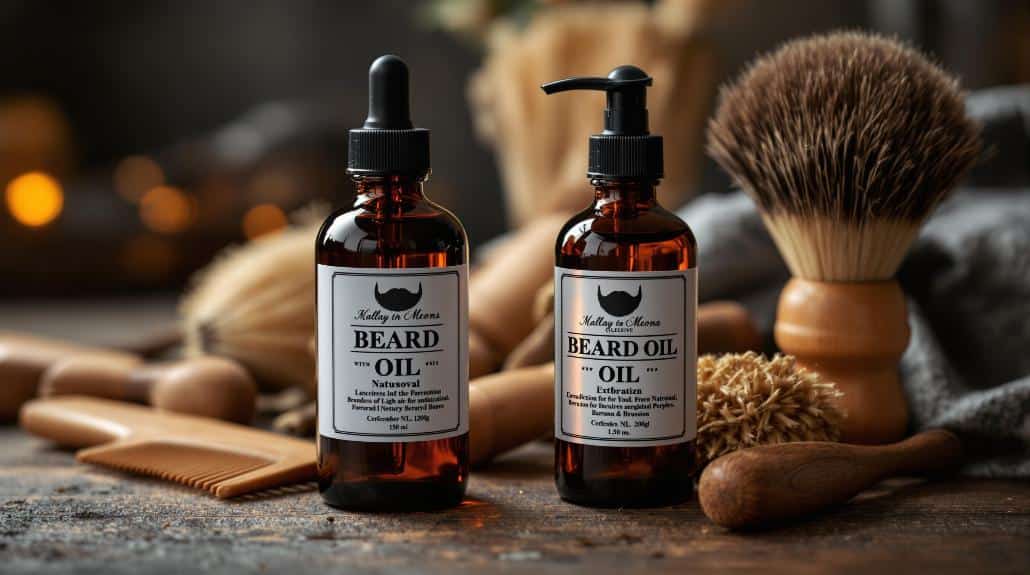
A well-stocked winter beard care arsenal requires four fundamental product categories to combat seasonal challenges. Begin with a specialized beard wash that's formulated to clean without stripping natural oils, using it a few times weekly to maintain proper moisture levels. Look for essential ingredients like aloe vera and panthenol in your wash to prevent irritation and dryness. Regular gentle cleansing supports beard growth naturally. Starting your beard growth in early fall months allows time to establish an effective product routine before winter arrives.
For daily maintenance, you'll need beard oil containing nourishing components such as argan oil, jojoba oil, and vitamin E. Apply a few drops each morning to keep both hair and skin properly hydrated. The lightweight formula absorbs rapidly to reach and nourish the skin underneath your facial hair. Many Viking Revolution products offer boar bristle brushes for optimal oil distribution and skin stimulation. Complement your beard product types with a quality balm or butter, which provides styling hold while adding another protective moisture barrier against harsh winter conditions. Many quality balms contain shea butter for exceptional moisturizing and conditioning benefits. The water-soluble formulas help prevent greasy residue while maintaining all-day shine.
Finally, invest in proper beard combs and brushes specifically designed for facial hair. These tools aren't just for styling; they're essential for distributing products evenly throughout your beard and exfoliating the skin beneath. When selecting these beard care essentials, prioritize natural ingredients and avoid harsh chemicals that can exacerbate winter dryness, ensuring your beard remains healthy and manageable throughout the cold season.
Daily Moisturizing Routine
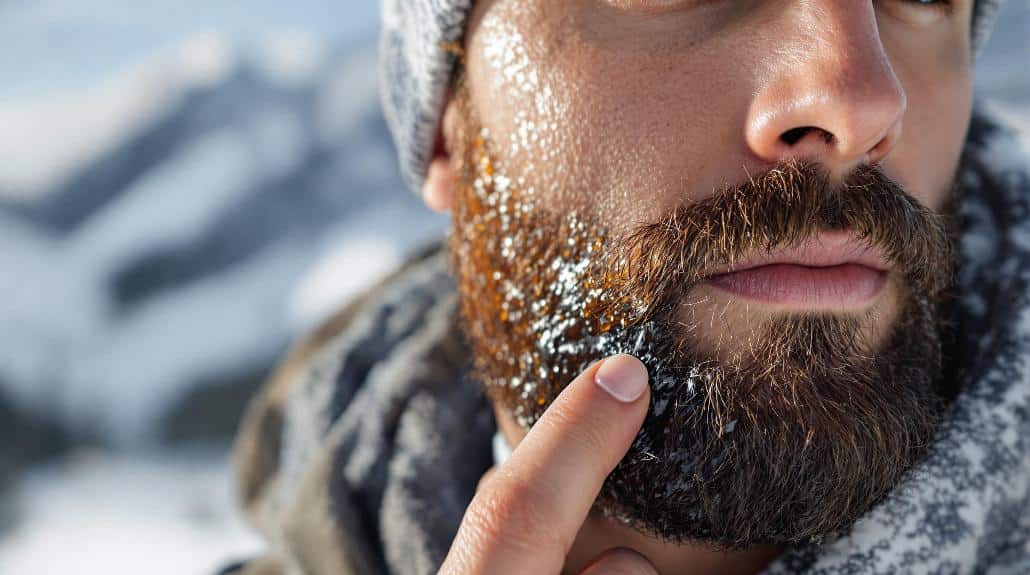
Maintaining your beard's moisture during winter requires a consistent daily routine focused on proper hydration. Start by applying beard oil right after your warm shower when your pores are most receptive to moisturizing techniques. You'll want to use products containing nourishing ingredients like argan, jojoba, or vitamin E oil, which penetrate deeply into both hair and skin. The dry winter air can cause natural oils to vanish quickly, making your beard feel brittle, so daily application is crucial for maintaining moisture levels. For the best winter care, select oils with non-comedogenic formulations to prevent clogged pores during this sensitive season.
As you apply your chosen moisturizer, use gentle massaging motions to guarantee even distribution throughout your beard and the skin beneath. While beard oils work best for daily maintenance, you might consider incorporating balms or butters for additional protection, especially if you've got a longer or thicker beard. For optimal results, consider using unscented options to prevent potential skin irritation during harsh weather. Always pat your face dry with a clean towel before applying products to avoid bacterial buildup. A quality beard conditioner can help lock in essential moisture and improve overall texture. To maximize effectiveness, limit beard washing to just two or three times per week. Don't overdo it though – a few drops of oil are usually sufficient to prevent greasiness.
Remember to adapt your moisturizing routine to winter conditions by paying extra attention to signs of dryness. Complement your routine by using a soft-bristle brush to distribute the products evenly, and finish your shower with cool water to lock in moisture. You'll also want to stay hydrated internally by drinking plenty of water throughout the day.
Proper Washing Techniques

Winter beard washing requires a delicate balance to prevent moisture loss while maintaining cleanliness. During colder months, adjust your washing frequency to 1-2 times per week, using warm water to protect your beard's natural oils. When selecting products, opt for sulfate-free beard washes enriched with moisturizing ingredients like jojoba or argan oil. Active individuals who exercise frequently may need to adopt more frequent washing to maintain optimal hygiene. Using hot water in showers can significantly dry out your facial hair and skin, leading to damage and irritation. Men with thick, full beards should pay extra attention as these styles tend to trap more debris in winter conditions. Using specialized beard shampoo helps maintain proper pH balance while cleansing facial hair effectively. Regular use of beard balm will provide additional nourishment and control throughout the winter season. Natural beard washes containing peppermint-eucalyptus blends can help reduce skin irritation during winter months.
| Temperature | Product | Technique |
|---|---|---|
| Warm water | Gentle beard wash | Massage gently |
| Room temp | Beard conditioner | Pat dry with towel |
| Cool rinse | Beard oil/balm | Apply evenly |
Your washing technique plays a vital role in maintaining beard health. Start by thoroughly wetting your beard with warm water, then apply a quarter-sized amount of beard wash using your fingertips to massage it into the hair and skin beneath. Rinse completely, ensuring no product remains, as residue can cause irritation. After washing, gently pat your beard dry with a clean towel rather than rubbing, which can cause breakage. Follow up immediately with a beard conditioner or oil while your beard is still slightly damp to lock in moisture and prevent winter dryness.
Regular Grooming Steps
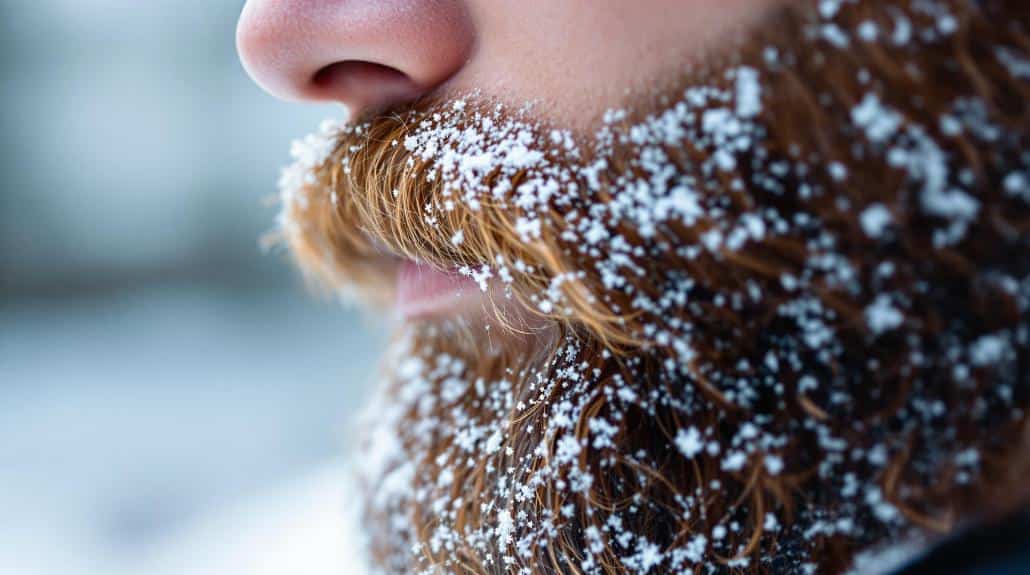
Building on proper washing habits, your daily grooming routine will make or break your beard's winter health. Start by applying a beard-specific shampoo, followed by a hydrating conditioner to maintain softness and manageability. Once you've gently patted your beard dry, it's crucial to lock in moisture with beard oil, focusing on the skin beneath your facial hair. Learning to apply beard oil correctly will maximize its effectiveness in preventing dryness. Incorporating jojoba-based beard oils helps mimic your skin's natural oils for optimal hydration. The addition of Bourbon and Vanilla scented oils can enhance your grooming experience while providing nourishment. Using quality products containing cedarwood and peppermint ensures deep nourishment and improved circulation for healthier growth. Natural ingredients like oatmeal and aloe help calm skin irritation while deeply conditioning facial hair. Applying virgin argan oil can help eliminate greasy residue while providing essential nutrients to your facial hair.
Your grooming frequency should include daily brushing with a boar bristle brush, which helps distribute natural oils and prevent tangles while exfoliating the skin underneath. For ideal beard styling, apply beard balm or butter to provide hold and additional moisture protection against harsh winter elements. You'll want to keep a beard comb handy for quick touch-ups throughout the day, ensuring your style stays neat and controlled.
Remember to maintain regular trimming sessions to prevent split ends and breakage, which can worsen during winter months. When styling, choose a shape that not only suits your face but also provides adequate protection from cold weather. Always finish your grooming routine by applying a protective layer of balm or butter to shield your beard from wind and dry air.
Protecting From Cold Weather

Your beard faces unique challenges during the cold season, as winter air contains considerably less moisture and can quickly strip away natural oils. The drastic shift in temperature from outdoors to indoor heating can cause severe irritation. Quality combs and brushes are essential tools for proper beard maintenance during winter. Maracuja oil is particularly effective for deep hydration during harsh winter conditions. To implement effective beard protection strategies, you'll need to combat both environmental factors and indoor heating systems that contribute to dryness and brittleness.
Start by incorporating essential winter grooming essentials into your routine, including a humidifier in your living space and high-quality moisturizing products. When you're outdoors, protect your beard from harsh winds by using a scarf or beard mask, while ensuring you've applied products containing protective barriers like beeswax-based beard balms. Wide-toothed combs help prevent snags and breakage while detangling winter-dried facial hair. Using a boar bristle brush can help distribute natural oils evenly throughout your beard while removing debris. You'll want to adjust your washing routine by using lukewarm water and gentle, sulfate-free beard washes to prevent further moisture loss.
Maintain your beard's health by applying beard oil or balm daily, focusing on even distribution with a boar bristle brush. Don't overwash your beard, as this can strip away beneficial natural oils, and consider implementing deep conditioning treatments when needed. Regular trimming helps prevent split ends, while choosing natural products without harsh chemicals will support your beard's overall resilience during winter months.
Nourishment Through Diet

Beyond topical treatments, proper beard nutrition starts from within through a well-balanced diet rich in essential vitamins and minerals. Your body needs specific nutrient sources to maintain healthy beard growth, including proteins for keratin production and omega-3 fatty acids for follicle nourishment. Clean drinking water supports nutrient delivery to hair follicles and maintains optimal scalp health.
Focus on incorporating vitamin-rich foods into your daily meals, such as eggs for biotin, salmon for healthy fats, and spinach for vitamins A and C. Adding foods high in vitamin E content can enhance blood circulation to your beard follicles. You'll want to include almonds and flaxseeds, which provide essential nutrients that prevent hair loss and promote growth. While dietary supplements can help fill nutritional gaps, they shouldn't replace whole food sources in your diet. Taking biotin supplements at 10,000 mcg daily can support fuller, healthier beard growth within 3-4 weeks. Using natural oils like jojoba and argan can further enhance nutrient absorption when applied topically alongside a healthy diet.
Pay special attention to zinc-rich foods and selenium sources, as these minerals are vital for DNA synthesis and proper hair growth. Consider adding hydrolyzed collagen to your daily routine, as it contains essential amino acids that support hair strength and growth. You'll need to maintain adequate hydration and avoid processed foods that can deplete your body of essential nutrients. If you're considering supplements to support your beard growth, it's important to consult with a healthcare professional who can assess your specific needs and recommend appropriate options based on your current diet and health status.
Effective Exfoliation Methods

A proper exfoliation routine forms the foundation of winter beard maintenance. To begin, wet your beard thoroughly with lukewarm water and cleanse it with a quality beard wash, preparing the hair and skin for effective treatment. When considering exfoliant selection, opt for products containing natural ingredients like sugar, salt, or fruit enzymes that won't strip your beard of essential oils. Regular beard washing weekly helps eliminate impurities that can cause breakouts and odor. Unclogged follicles promote better air circulation and healthier beard growth. Using firm bristles will help stimulate blood circulation to your facial hair follicles. Using a specialized beard growth kit can help maximize your exfoliation results while promoting fuller facial hair. Having the right grooming tools is essential for maintaining a well-kept beard year-round. A quality body groomer can help trim and shape your beard precisely for optimal results.
Your exfoliation frequency should be limited to 1-2 times per week to avoid irritation. Apply your chosen exfoliant using gentle circular motions, working from the neck upward to guarantee complete coverage. If you're using a soft-bristled brush, move it in a downward direction to train your beard hair while simultaneously removing dead skin cells.
For best results, combine physical and chemical exfoliants, such as a gentle scrub containing salicylic or glycolic acid. After exfoliating, rinse thoroughly with lukewarm water, as hot water can lead to dryness. Remember to follow up with a moisturizer to maintain hydration and prevent itchiness, which is particularly important during winter months when your beard is more susceptible to dryness.
Professional Beard Maintenance Tips

Professional beard maintenance starts with a thorough understanding of daily care routines and expert techniques. Regular barber consultations can help you develop a personalized care plan that addresses your specific beard type and growth patterns. During these sessions, you'll learn proper trimming techniques, product application methods, and solutions for common issues like patchiness or uneven growth. Essential tools like the Big Red Wooden Comb help ensure even product distribution throughout your beard. Growth rates vary significantly across different facial areas, so professional guidance is crucial for achieving an even, well-maintained appearance. Modern lithium-ion trimmers offer up to 3.5 hours of cordless runtime for precise maintenance at home. Utilizing specialized beard shampoo and moisturizing products prevents dryness and promotes optimal beard health. Choose quality beard waxes with natural beeswax formulas to provide additional control and conditioning during winter months. Consider making your own homemade beard butter for a natural approach to nourishing and moisturizing your facial hair.
To maintain your beard between professional visits, incorporate these essential practices:
- Use professional-grade beard products recommended by your barber, including specialized shampoos, oils, and balms
- Schedule regular maintenance appointments every 4-6 weeks for precise trimming and shaping
- Learn proper brushing techniques using quality tools like boar bristle brushes for ideal product distribution
Your barber can demonstrate how to properly apply beard products and maintain your desired shape at home. They'll also help you understand how to adjust your care routine seasonally, particularly during harsh winter months when your beard requires extra attention. Remember to communicate any specific concerns or goals during your consultations, as this information helps your barber provide targeted advice and recommend the most effective products for your needs.