
Men’s Professional Guide: Fighting Winter Hair Loss
Men’s Professional Guide: Fighting Winter Hair Loss
To combat winter hair loss, you'll need a multi-layered approach focusing on both internal and external care. Start by increasing your intake of essential nutrients like vitamin D, iron, and omega-3 fatty acids through diet or supplements. Protect your scalp with daily moisturizing routines, including lukewarm showers and sulfate-free shampoos used 2-3 times weekly. Apply warm oil massages for 5-10 minutes to stimulate circulation, and use a humidifier to counteract dry indoor heating. Consider professional treatments like FUE or medication if shedding persists. Implement these foundational steps to establish a thorough hair care strategy, as proper winter hair protection requires understanding additional key factors that influence seasonal hair health.
Main Points
- Use a sulfate-free moisturizing shampoo 2-3 times weekly to preserve natural oils while keeping the scalp clean and hydrated.
- Supplement with vitamin D (15-20 minutes sunlight) and consume iron-rich foods to combat seasonal nutrient deficiencies affecting hair growth.
- Apply warm oil treatments weekly using coconut or almond oil, massaging for 5-10 minutes to stimulate circulation.
- Install a humidifier in living spaces to counteract dry air from indoor heating systems that contribute to scalp dehydration.
- Maintain proper hydration with eight glasses of water daily and consume omega-3 rich foods like fatty fish twice weekly.
Understanding Winter Hair Shedding Patterns
During the cold winter months, your hair might start falling out more than usual, leaving you concerned about potential hair loss. While normal hair shedding typically ranges from 50 to 100 strands per day, you'll likely notice an increase during winter due to several environmental factors that affect your hair growth cycles.
Choosing the right hair cleansing products can make a significant difference in managing seasonal hair changes.
Understanding winter hair shedding patterns starts with recognizing how cold temperatures and low humidity impact your scalp care routine. These conditions can dry out your scalp and weaken hair follicles, leading to increased shedding.
You're also more susceptible to nutritional deficiencies during winter, particularly vitamin D, due to reduced sun exposure. This deficiency can further contribute to hair loss concerns.
To maintain a healthy environment for your hair, you'll need to adapt your care routine. Start by using a moisturizing shampoo that won't strip your scalp of natural oils.
Pay attention to your hair's natural cycle, especially during autumn and winter when the telogen phase becomes more pronounced. By understanding these seasonal changes and maintaining proper hydration, you can better manage winter-related hair shedding and protect your hair's health.
Key Nutrients for Hair Health

Your body's ability to maintain healthy hair relies heavily on specific nutrients, including iron for oxygen delivery to follicles and vitamin D for proper hair cycling.
Nutrafol's clinical studies show that a blend of 21 key vitamins and minerals can considerably improve hair quality within 3-6 months of consistent use.
Zinc and biotin work together to support keratin production and maintain the oil glands around your follicles, while also promoting tissue growth and repair.
For ideal winter hair health, you'll need to guarantee adequate intake of these essential nutrients, along with omega-3 fatty acids, which help reduce scalp inflammation and support overall hair strength.
Essential Vitamins For Growth
When it comes to battling winter hair loss, keeping up with essential nutrients can make all the difference in maintaining healthy locks. Your body needs specific vitamins and minerals to support hair follicles and promote growth, especially during the challenging winter months.
| Nutrient | Daily Action Plan |
|---|---|
| Vitamin D | Get 15-20 minutes of sunlight or take supplements during winter |
| Biotin | Consume 30mcg through eggs, nuts, and whole grains |
| Vitamin C | Eat citrus fruits and leafy greens for collagen support |
| Zinc | Include 11mg from meat, shellfish, or legumes |
| Omega-3s | Have two servings of fatty fish weekly |
You'll want to focus on getting adequate Vitamin D, which is vital for hair follicle cycling and can be challenging to obtain during shorter winter days. Complement this with Biotin for keratin production and Vitamin C to enhance hair strength through improved collagen synthesis. Don't forget about Zinc, which repairs hair tissue and helps prevent excessive shedding. Finally, incorporate Omega-3 fatty acids into your diet to nourish your scalp and support overall hair health. These nutrients work together to create a foundation for stronger, healthier hair growth.
Minerals That Prevent Shedding
Building on our vitamin discussion, specific minerals play an equally important role in preventing winter hair shedding. Your body relies heavily on minerals to maintain a healthy scalp and promote hair growth, with iron and zinc being particularly vital during the colder months.
To prevent shedding and maintain healthy hair, you'll want to focus on these essential nutrients:
- Iron supports oxygen delivery to your follicles, reducing unnecessary hair loss
- Biotin strengthens hair structure and improves overall thickness
- Zinc maintains your scalp's oil glands for proper follicle function
- Vitamin D regulates your hair's growth cycle, especially during winter
- Omega-3 fatty acids nourish follicles and support scalp health
You can easily incorporate these minerals into your daily routine through dietary choices. Start by adding iron-rich foods like spinach and lentils to your meals, while including zinc-packed nuts and seeds for snacking.
If you're experiencing significant shedding, consider having your mineral levels tested by a healthcare provider, as deficiencies often worsen during winter months when you're less likely to get adequate nutrients from your regular diet.
Scalp Care During Cold Weather
A daily scalp moisturizing routine is essential during winter months, as the combination of cold outdoor air and indoor heating can strip your scalp of essential moisture, leading to flakiness and increased hair loss.
Revitalizing treatments can help combat seasonal hair thinning when implemented early in your winter care routine. You'll want to massage your favorite essential oils, such as almond or coconut oil, into your scalp for 3-5 minutes each evening, focusing on areas where you experience the most dryness or irritation.
Daily Scalp Moisturizing Routine
The harsh winter months can wreak havoc on your scalp's natural moisture balance, making a consistent moisturizing routine essential for preventing hair loss. To maintain a healthy scalp environment during low humidity periods, you'll need to implement a thorough daily scalp moisturizing routine that focuses on hydration and protection.
Start by applying hydrating oils, such as almond or coconut oil, directly to your scalp before bedtime. When washing your hair, use a sulfate-free shampoo 2-3 times weekly to preserve natural oils while keeping your scalp clean.
Here's what your daily routine should include:
- Perform 5-10 minute scalp massages to boost circulation and product absorption
- Use a humidifier in your bedroom to maintain ideal moisture levels
- Apply hydrating oils to your scalp, focusing on dry or flaky areas
- Limit hair washing to prevent stripping natural oils
- Schedule weekly deep conditioning treatments for extra hydration
Remember to be consistent with your routine, particularly during the coldest months when your scalp is most vulnerable.
Combat Dry Flaky Skin
Suffering from dry, flaky scalp during winter can signal deeper issues that require immediate attention. Cold weather, combined with indoor heating, creates a harsh environment that strips your scalp of essential moisture, potentially leading to hair loss if left untreated.
To combat dry flaky skin effectively, you'll need to implement a thorough care routine. Start by switching to hydrating shampoos specifically formulated for winter scalp care, and limit your shower temperature to lukewarm, as hot water can further damage your scalp's protective barrier.
Next, incorporate regular scalp oil massages using essential oils like coconut or almond oil, which will boost circulation and provide deep moisturizing benefits. You should perform these massages at least twice weekly, focusing on areas where you notice the most flaking.
To maintain ideal scalp health, install a humidifier in your bedroom and main living spaces to counteract the drying effects of indoor heating. Additionally, schedule regular trims to prevent split ends from traveling up the hair shaft, and avoid harsh styling products that can exacerbate scalp irritation during the colder months.
Essential Oil Massage Benefits
During winter's harsh months, essential oil massages serve as a powerful defense against seasonal hair loss and scalp issues. By incorporating regular scalp massages with oils like almond or coconut, you'll stimulate blood circulation to your hair follicles, which can greatly reduce hair loss while combating dryness.
To maximize the benefits of essential oils for hair growth, follow these key practices:
- Warm your chosen oil slightly before application to enhance absorption
- Massage in circular motions for 5-10 minutes to stimulate blood flow
- Focus on areas where you're experiencing the most hair thinning
- Apply gentle pressure using your fingertips, not your nails
- Maintain consistency with weekly treatments for best results
The combination of essential oils and proper massage techniques works to improve your hair texture and prevent breakage during winter.
When you use oils like rosemary or peppermint, you're providing your scalp with natural compounds that stimulate hair growth while delivering a soothing effect. This therapeutic approach not only helps combat dryness but also strengthens your hair follicles, making them more resilient against harsh winter conditions.
Essential Hair Protection Strategies
Protecting your hair against winter's harsh elements requires a multi-layered approach to prevent seasonal thinning and breakage. To maintain healthy hair growth and minimize hair loss during colder months, you'll need to adapt your hair care routine with targeted protection strategies. Consider incorporating key hair growth vitamins like Biotin and Collagen supplements to strengthen your hair from within during the challenging winter season.
Start by switching to hydrating shampoos that are sulfate-free, which will help lock in essential moisture while cleansing your scalp and hair. Incorporate deep conditioning treatments weekly, focusing on nourishing oils that penetrate the hair shaft and restore moisture balance.
You'll want to embrace protective styling techniques, such as loose braids or simple twists, which can greatly reduce exposure to harsh winter conditions and prevent excessive hair loss. When heading outdoors, opt for hats lined with silk or satin to protect against cold temperatures while minimizing friction damage.
Inside your home, combat dry air from heating systems by running a humidifier, which will help maintain ideal moisture levels for both your scalp and hair.
These essential hair protection strategies, when implemented consistently, create a thorough shield against winter's damaging effects while supporting natural hair growth patterns.
Professional Treatment Options

While at-home remedies provide a strong foundation for winter hair care, professional treatments offer advanced solutions for those experiencing persistent seasonal hair loss.
You'll find that consulting with hair restoration experts can lead to personalized treatment plans targeting your specific needs, often combining multiple approaches for ideal results. Incorporating natural tea tree formulas can enhance treatment effectiveness while soothing winter-stressed scalps.
When exploring professional treatment options, consider these advanced solutions:
- Follicular Unit Extraction (FUE) for permanent hair restoration with minimal scarring
- Combination therapy using minoxidil and finasteride to promote hair growth
- Scalp micropigmentation for immediate visual improvement of thinning areas
- Regular dermatological consultations to monitor progress and adjust treatments
- Professional nutritional assessments to address underlying deficiencies
Your treatment journey should begin with a thorough consultation to determine the extent of winter-related shedding.
During this evaluation, your specialist will examine your scalp condition, medical history, and lifestyle factors to create an effective treatment strategy. They'll monitor your progress through scheduled follow-ups, making necessary adjustments to guarantee ideal results.
Remember that professional intervention often yields better outcomes than self-directed treatments, particularly when dealing with persistent seasonal hair loss.
Natural Remedies and Solutions

Natural solutions offer powerful defenses against winter hair loss without the need for medical intervention. You'll find that incorporating regular scalp massages with nourishing oils, such as coconut or almond oil, can considerably improve blood circulation and strengthen your hair follicles.
| Natural Remedy | Benefits |
|---|---|
| Scalp Massage | Enhances circulation, stimulates follicles |
| Nourishing Oils | Hydrates scalp, prevents breakage |
| Deep Conditioning | Restores moisture, improves texture |
| Healthy Diet | Provides essential nutrients |
| Hydration | Maintains scalp health |
To combat winter hair loss effectively, you'll need to focus on moisture retention through weekly deep conditioning treatments using natural ingredients like honey and avocado. Maintaining proper hydration by drinking eight glasses of water daily, while using a humidifier indoors, creates an environment that supports healthy hair growth. Your diet plays a vital role, too – incorporate foods rich in biotin, zinc, and omega-3 fatty acids to strengthen your hair from within. By combining these natural remedies with consistent attention to moisture levels in your environment, you'll create a thorough approach to protecting your hair during the harsh winter months.
Lifestyle Changes That Matter
Successfully managing winter hair loss requires strategic lifestyle adjustments that go beyond basic hair care routines. Your daily habits play an essential role in maintaining healthy hair during the colder months, and implementing key changes can greatly reduce winter hair loss. Using nourishing hair oils regularly can help seal in moisture and protect your hair from winter damage.
To combat dryness and support hair health, you'll need to focus on these essential lifestyle modifications:
- Stay hydrated by drinking at least eight glasses of water daily
- Consume a nutrient-rich diet featuring essential fatty acids from fish, nuts, and leafy greens
- Limit heat exposure by air-drying your hair whenever possible
- Perform weekly scalp massages using nourishing oils
- Choose loose-fitting winter headgear to minimize friction
Start by prioritizing hydration, which directly impacts your scalp's health. When you're planning your meals, incorporate foods rich in vitamins D, C, and biotin to strengthen your hair from within.
You'll want to schedule regular scalp massages with coconut or almond oil, preferably in the evening to allow overnight absorption. If you're heading outdoors, select winter headwear that won't strain your hair follicles, and whenever possible, let your hair dry naturally to prevent unnecessary stress on your strands.
Daily Hair Care Habits
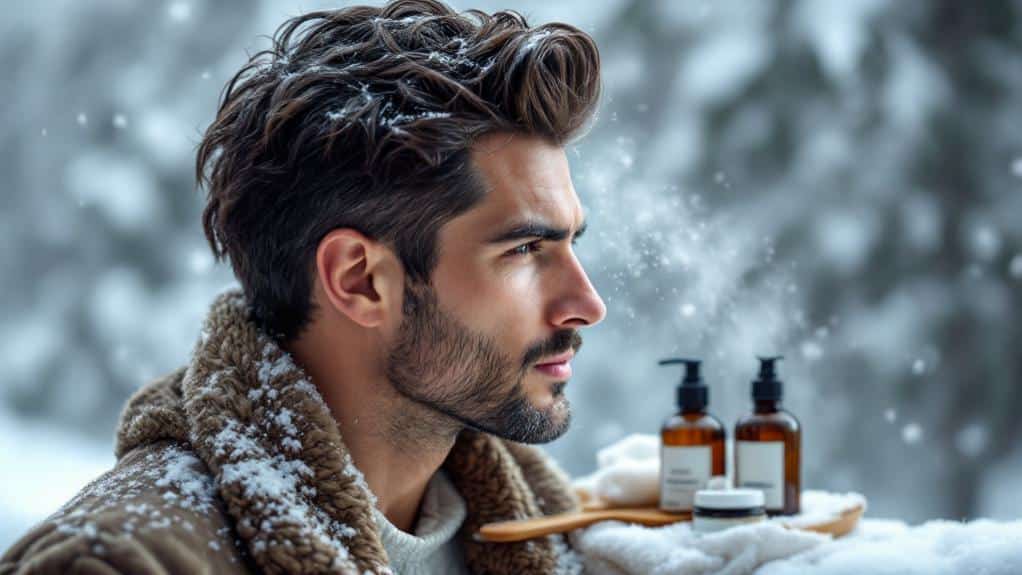
Beyond lifestyle adjustments, your daily hair care routine becomes the frontline defense against winter hair loss. To maintain healthy hair during colder months, you'll need to adjust your hair care tips to combat the harsh effects of winter weather.
Start by limiting your shampooing to just 2-3 times weekly, as overwashing can strip your scalp's natural oils. When you do wash, use a sulfate-free shampoo and conditioner that's specifically designed for hydration.
Professional advice suggests incorporating a weekly deep conditioning treatment with nourishing oils like argan or coconut to restore moisture and strengthen your strands. You'll want to pay special attention to your scalp moisture by regularly massaging essential oils into your scalp, which stimulates blood flow and helps combat hair loss during winter months.
Remember that proper hydration isn't just about external treatments; you'll need to drink at least eight glasses of water daily to support your hair's health from the inside out.
These focused habits, when practiced consistently, create a thorough approach to protecting your hair against winter-related damage and thinning.
Advanced Hair Restoration Methods

The latest advancements in hair restoration technology offer men powerful solutions against winter-related hair loss.
Advanced hair restoration techniques, particularly Follicular Unit Extraction (FUE), provide minimally invasive options for transplanting individual hair follicles with natural-looking results. Your journey begins with a thorough consultation to assess underlying causes and develop personalized treatment plans.
Modern restoration approaches often combine multiple treatments for best results:
- FUE procedures for precise hair follicle transplantation
- Prescription medications like minoxidil and finasteride
- Specialized scalp condition treatments
- Nutritional supplementation when deficiencies are identified
- Regular progress monitoring and treatment adjustments
Your success with advanced hair restoration depends greatly on following post-procedure care instructions.
You'll need to avoid strenuous activities initially and use gentle hair care products to support proper healing. Regular follow-up appointments allow your healthcare provider to track hair growth outcomes and make necessary adjustments to your treatment plan.
This systematic approach, combining cutting-edge procedures with careful monitoring, guarantees you're getting the most effective solution for your specific hair loss concerns.
Frequently Asked Questions
Does Winter Hair Loss Grow Back Male?
Yes, your winter hair loss typically grows back naturally.
Seasonal shedding is temporary, and hair growth usually resumes in spring when environmental conditions improve.
To support regrowth, focus on proper winter care, maintain good scalp health through hydration, and guarantee adequate nutrition.
While genetics influence your hair's characteristics, you can enhance recovery by choosing gentle products and managing stress factors.
Regular moisturizing and avoiding harsh styling techniques will support your hair's natural regrowth cycle.
What Is the New Hair Loss Treatment for 2024?
In 2024, you'll find several innovative solutions for hair loss, including advanced platelet-rich plasma (PRP) therapy and enhanced topical minoxidil formulations.
You can now access personalized treatments based on genetic testing, while improved low-level laser therapy devices offer convenient at-home options.
Clinical trials show promising results with combination therapies that integrate prescription medications, natural remedies, and lifestyle changes.
Expert opinions suggest these latest treatments provide more effective, customized approaches to combat hair loss.
How Can I Stop Excessive Hair Fall in Winter?
To combat excessive hair fall in winter, focus on scalp care by using sulfate-free shampoos and weekly deep conditioning treatments.
You'll need to maintain hydration through proper nutrition, including vitamins D, C, and biotin-rich foods.
Boost blood circulation with regular scalp massages using natural oils, and protect moisture retention by limiting heat styling.
Don't forget to manage stress levels and use a humidifier to counter seasonal changes that affect your hair health.
What Is the Best Hair Loss Pill for Men?
You'll find that Finasteride is the most scientifically proven hair loss pill, showing effectiveness in 90% of men.
While minoxidil benefits include promoting regrowth, it's best used alongside Finasteride for ideal results.
Don't overlook hair growth supplements containing biotin and zinc, but remember that genetic factors and hormonal influences play vital roles.
Consider combining medication with lifestyle changes, proper nutrition, stress reduction, and good scalp care for thorough treatment.
Conclusion
Remember, Rome wasn't built in a day, and neither is a healthy head of hair during winter. You've now got the tools to combat seasonal hair loss through proper nutrition, scalp care, and protective measures. By implementing these strategies consistently and seeking professional guidance when needed, you'll be well-equipped to maintain your hair's health throughout the cold months. Stay committed to your hair care routine, and you'll see lasting results.