
Men’s Professional Beard Grooming: Tools for a Flawless Look
Men’s Professional Beard Grooming: Tools for a Flawless Look
You’ll need five core tools for professional beard grooming. Start with quality electric clippers featuring adjustable guards and 100+ minute battery life. Add precision scissors under 5 inches for detail work. Get a boar bristle brush to distribute oils naturally. Include a fine-tooth comb for short beards, wide-tooth for longer ones. Finish with T-blade trimmers for sharp edge definition. Skip starter kits—individual quality pieces perform better. Master these fundamentals first, then explore advanced techniques.
Main Points
- Electric trimmers with adjustable taper levers and 100-180 minute battery life provide consistent cutting power for professional results.
- Professional-grade scissors under 5 inches with hollow grind design ensure precision cuts for detailed mustache and beard work.
- Straight razors and T-blade trimmers create sharp, clean lines for precise edging and definition around facial hair.
- Boar bristle brushes distribute natural oils while wooden combs eliminate static for proper beard maintenance and styling.
- Quality beard oils, balms, and heated styling tools enhance texture and provide professional hold for flawless grooming.
Essential Electric Trimmers and Clippers for Precision Cutting
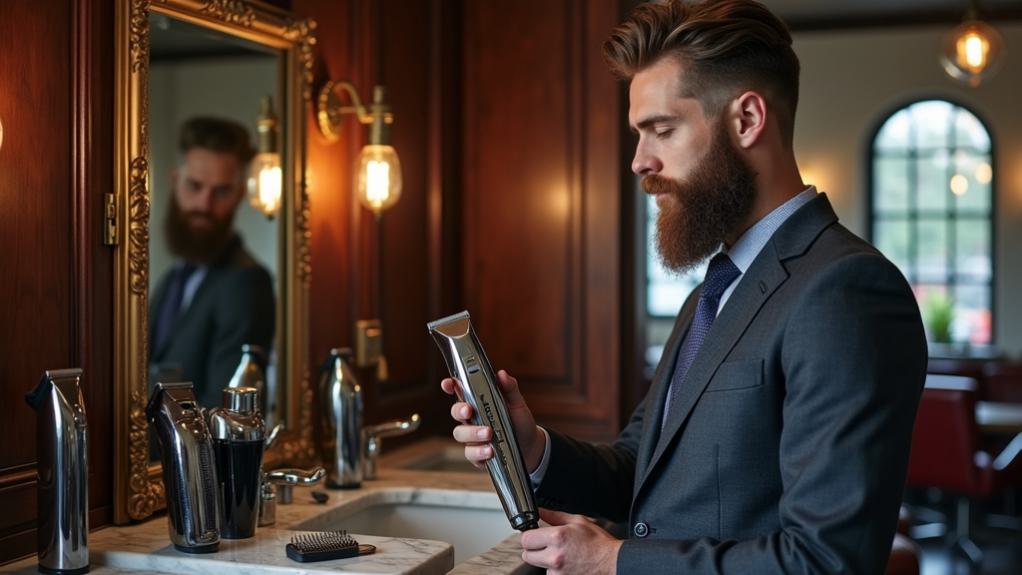
Three things separate amateur beard trimming from professional results. Sharp blades. Consistent power. Proper attachments.
You need stainless-steel or titanium blades. They stay sharp longer. Professional motors hit 5700 RPM. That’s consistent cutting speed through thick hair.
Professional-grade blades and 5700 RPM motors deliver the consistent cutting power needed for thick, coarse facial hair.
Modern trimmer technology delivers adjustable taper levers. Micro-length settings give you control. Up to 19 guard attachments handle any length. Ergonomic grips reduce hand fatigue.
Cordless models run 100-180 minutes per charge. Lithium-ion batteries recharge fast. USB-C charging works anywhere. LED displays show battery status. Some premium trimmers offer 45-day battery life on a single charge for ultimate convenience.
Quality grooming innovations include vacuum trimmers. They catch 90% of clippings. Self-sharpening blades need zero maintenance. Self-sharpening technology eliminates the need for manual blade maintenance between uses. Water-resistant designs clean easily. Built-in vacuum systems eliminate mess during trimming sessions. Professional models include carrying cases for travel and protection. Advanced trimmers feature ceramic blades that provide exceptional durability and reduce hair tugging during grooming.
The Wahl Professional Magic Clip costs $140. It’s barber-tested at 5700 RPM. The Philips Norelco Multigroom includes 12 guards. Both deliver professional results at home.
Professional-Grade Scissors for Detail Work and Mustache Styling
Electric trimmers handle the bulk work. Scissors tackle the fine details. You’ll need proper techniques for clean cuts and sharp mustache lines. Professional beard scissors feature a hollow grind design that ensures precision cuts for detailed grooming work. Quality scissors are hand-forged using German steel for superior cutting performance and industry-standard longevity. Choose scissors under 5 inches in length for optimal control and precision when working on facial hair details. Pair your precision scissors with natural oils like jojoba or argan oil to soften facial hair before trimming, making cuts cleaner and reducing irritation to the underlying skin. After trimming, cleanse your facial hair with beard shampoo to remove loose hairs and maintain proper hygiene in your grooming routine.
Precision Cutting Techniques
Professional-grade scissors transform beard grooming from guesswork into precision work. You’ll finally stop accidentally butchering your mustache.
These scissor techniques require patience, not speed. Comb your beard thoroughly first. This separates long hairs from short ones. You can’t trim what you can’t see.
Keep your skin taut while cutting. Loose skin causes uneven cuts. Trim in small increments only. Big snips create big mistakes.
Trimming precision comes from targeting individual hairs. Cut stray ends selectively. Don’t hack away randomly. Use a magnifying mirror for detail work. Your regular bathroom mirror won’t cut it.
Focus on flyaways around your jawline. These ruin an otherwise sharp look. Work slowly around your mouth and nostrils. Electric clippers are too aggressive here. Rounded safety tips provide extra protection when working near sensitive skin areas around the nose and mouth. Always trim in the direction of growth to maintain your beard’s natural texture and avoid creating an unnatural appearance. Look for high-quality stainless steel construction when selecting your scissors for maximum durability and long-lasting sharpness. Many complete grooming kits feature boar hair brushes that work perfectly alongside precision scissors to achieve professional results.
Apply mustache wax after trimming to achieve specific styles and maintain your desired shape throughout the day.
Mustache Shaping Methods
When your mustache starts wandering into your mouth, scissors save the day. Small, sharp scissors give you control. No accidental massacres. Use them with a comb to lift hairs. Make tiny snips, not broad strokes.
Different mustache types need different grooming frequency:
- Chevron – Trim weekly along lip line
- Handlebar – Shape monthly, maintain daily with wax
- Horseshoe – Weekly edge cleanup prevents messiness
- English – Bi-weekly trimming keeps curls controlled
Start by outlining your mustache area. Skip the upper lip entirely. Alternate between sides while trimming. This prevents lopsided disasters. Cut hair that hangs below lip corners. Clean, dry hair trims most accurately. Good lighting shows every stray hair. Your scissors refine what trimmers started. No mystery here.
After trimming, use a quality beard brush to distribute natural oils and style the hair in your desired direction. Consider applying beard oil to both your mustache and the skin beneath to reduce itchiness and promote healthy growth. For optimal results, allow your facial hair to reach 2 cm length before attempting detailed mustache styling, as this provides the necessary thickness and definition for professional shaping. Apply mustache wax after trimming to hold your styled shape in place and maintain a polished appearance throughout the day. Remember that facial hair grows at an average half-inch per month, so plan your styling timeline accordingly.
Quality Brushes and Combs for Daily Maintenance and Styling

Boar bristle brushes distribute oils evenly. They exfoliate skin beneath your beard. Wooden combs eliminate static and frizz. Ox horn works similarly. Both materials last decades.
| Tool Type | Best For |
|---|---|
| Fine-tooth comb | Short beards |
| Wide-tooth comb | Long, thick beards |
| Boar bristle brush | Oil distribution |
| Mixed bristle brush | All beard types |
Never comb wet beards. You’ll damage follicles. Apply oil first, then comb. Start wide, finish fine. Clean tools regularly. Hair brush cleaners remove debris and help prolong the life of your grooming tools. Regular brushing provides gentle massage to stimulate the underlying skin. For men with particularly stubborn or coarse facial hair, beard straighteners offer an effective solution with ceramic or tourmaline plates designed specifically for facial grooming.
Quality costs more upfront. But you’ll replace cheap tools constantly. Kent and Bossman make reliable options. Your beard deserves better than drugstore plastic. Using the right comb transforms your daily grooming routine into an art form. Using both tools together creates optimal grooming results for maintaining a healthy, well-styled beard.
Razors and Edging Tools for Clean Lines and Definition
Sharp edges separate amateur beards from professional ones. Your neckline and cheek definition make or break the entire look. You need the right tools for proper beard maintenance.
Precision grooming separates weekend warriors from serious beard enthusiasts who demand professional-grade results.
Professional razors handle the heavy lifting:
- Straight razors deliver surgical precision for traditional barber-quality lines
- Safety razors offer single-blade control with less skin irritation than cartridges
- T-blade trimmers create sharp corners and tight definition work
- Detail trimmers with fine adjustment dials provide customizable length control
Cordless trimmers with 100-180 minute battery life won’t quit mid-session. High-torque motors cut through coarse hair without tugging. Titanium blades stay sharp longer than standard steel. Modern trimmers feature 40 precise lengths through built-in adjustment wheels for ultimate versatility. Tools with ergonomic designs facilitate easy grip and control, ensuring precise work even during extended grooming sessions.
These grooming techniques require quality equipment. Your jawline deserves better than disposable razors. Professional results demand professional tools. Quality grooming kits with multiple functions eliminate the need for separate devices while maintaining professional standards. Premium trimmers with lithium technology provide consistent power and extended runtime for professional grooming sessions. After trimming and shaping, natural ingredients in quality beard butters help maintain softness and prevent irritation from frequent grooming.
Specialized Shaping and Styling Equipment for Professional Results

You need more than just razors for pro-level beards. Shaping guides keep your lines straight and even. These tools add volume, texture, and help you apply products like you know what you’re doing. Professional shaping tools work with your existing razors, clippers, and trimmers to deliver salon-quality results from your own bathroom. The innovative design ensures clean, symmetrical lines whether you’re shaping your hairline, beard, or mustache. For men with coarse or curly facial hair, beard straighteners can transform unruly whiskers into a polished, manageable style. A complete grooming kit provides all the essential tools needed to maintain your beard’s health and appearance consistently.
Precision Shaping Guide Tools
When you’re tired of uneven beard lines, precision shaping guides solve the problem. These clear plastic templates let you see exactly where you’re cutting. No more guesswork or crooked lines.
Most guides work with any trimmer or razor. They cost around $20. That beats monthly barber visits. The template customization fits different face shapes and beard styles. Built-in grips keep them steady while you work.
Here’s what makes them effective:
- Clear visibility through transparent plastic shows your progress
- Adjustable curves accommodate various head sizes and facial structures
- Marking pencils let you outline before cutting
- Anti-slip surfaces prevent mistakes during trimming
The user experience improves with practice. Beginners get professional results immediately. Even pros use them for complex geometric designs. Your mirror becomes a barber shop. Proper body grooming extends beyond just facial hair to create a complete, polished appearance. For daily maintenance between major trims, quality beard combs with rounded teeth help distribute oils evenly and maintain your precisely shaped lines.
Volume and Texture Enhancement
Density matters more than length for impressive beards. Your genetics dealt the cards. But you can stack the deck.
Heated straightening brushes tame unruly 3-6 inch beards. The Aberlite Pro works well. Temperature controls prevent frying your face fur.
Round brushes plus blow dryers create lift. Boar’s hair brushes distribute oils naturally. Wide-tooth combs detangle without breakage. Brush from underneath, then curl forward.
Derma rollers might wake sleeping follicles. Castor oil feeds existing ones. Wooden combs distribute oils evenly and prevent snags during styling sessions. Biotin supplements take months to show results. Don’t expect miracles.
Beard balms add weight and hold. Wax provides extra grip for styling. Color treatments darken thin spots instantly. More dramatic than waiting for growth.
Organic beard products with ingredients like maracuja oil and shea butter provide chemical-free nourishment that complements your styling routine.
Volume techniques beat length obsessions. Texture improvement happens with the right tools. Your beard doesn’t need to be massive. Just well-managed.
Professional Styling Product Application
While volume gets attention, application separates amateurs from pros. Your product dispensing techniques matter more than brand names. Precision pump dispensers eliminate waste. They deliver consistent amounts every time. Spray bottles work for liquid treatments. They prevent clumping better than fingers.
Smart application strategies use the right tools:
- Applicator sticks target specific areas without mess
- Small spatulas keep products sanitary in jars
- Professional mixing bowls blend custom formulations consistently
- Heat-resistant combs distribute product during thermal styling
Skip the guesswork with measured dispensing. Your beard deserves even coverage. Thermal gloves protect hands during hot styling. Cool-touch tips prevent burns near skin. Professional blow dryers offer adjustable temperatures. Most guys use too much product. Start small. Add more if needed. Professional balms with shea butter and argan oil provide superior hold while nourishing both beard hair and underlying skin. Fast-absorbing formulations prevent greasy feel and ensure your styling products penetrate effectively without leaving unwanted residue.
Organization Systems and Tool Maintenance for Optimal Performance
Your tools won’t organize themselves. Proper tool organization starts with dedicated storage cases. They protect blades from dust and damage. Wall-mounted strips keep frequently used items visible. You’ll spend less time searching.
Use drawer dividers for scissors and guards. Label each storage slot. Your workflow improves instantly. Do monthly inventory checks. Missing tools kill productivity.
Smart maintenance protocols extend tool life greatly. Clean clippers after every use. Hair buildup degrades performance fast. Disinfect metal tools with alcohol solutions. Weekly deep cleaning prevents bacteria buildup.
Sharpen scissors when they start tugging hair. Oil clipper blades monthly. Replace dull guards immediately. They cause skin irritation. Stainless steel components resist rust and corrosion while providing enhanced durability for long-term use.
Set maintenance reminders on your phone. Check battery levels daily. Track expenses in a simple log. Quality tools cost more upfront. They’re cheaper long-term. Investing in essential grooming tools creates the foundation for consistent professional results at home.
Building Your Complete Professional Grooming Kit
Having organized storage won’t matter if you’re missing key tools. Start with these grooming essentials before adding fancy extras.
Master the fundamentals first—no amount of organization can compensate for a toolkit missing essential grooming equipment.
Your basic kit needs four components:
- Electric trimmer with multiple guards for consistent length control
- Beard oil and balm to hydrate skin and tame flyaways
- Quality scissors for precision work around mustache areas
- Boar bristle brush to distribute oils and train growth patterns
Skip starter kits with cheap plastic tools. They break quickly. Buy individual pieces instead. A decent trimmer costs forty dollars. Good scissors run fifteen. Quality oil ranges from eight to twelve dollars.
Product recommendations matter less than consistency. Pick one oil brand. Stick with it for two months. Your skin adapts to specific ingredients. Switching products weekly creates irritation. For patchy areas, consider adding a derma roller that stimulates blood flow to dormant hair follicles. Build your arsenal slowly. Master each tool first.
Consider adding a dedicated beard conditioner to your routine, as it softens and detangles coarse facial hair while promoting healthier growth patterns.
Advanced Techniques for Different Beard Styles and Lengths
Three beard lengths demand completely different approaches. Short beards need frequent combing for even growth. Medium and long beards require sectioning before trimming. Start with longer guards like #4. Work with the grain first. Step down incrementally to avoid disaster.
Your taper lever becomes essential here. Use it for precise blending between lengths. Descend guard sizes around sideburns smoothly. Start one guard lower for neckline fading. Then drop another guard above that.
Beard contouring techniques depend on your face shape. Round faces need longer chin sections. Square faces require fuller shapes around the chin. Volume control methods involve brushing upward first. Then shape downward for structure. Heat plus tension equals direction with styling tools. Proper beard balm application helps maintain the styled shape and provides lasting hold throughout the day.
For detailed work and precise shaping, scissor grooming provides the control needed to create clean lines and remove individual stray hairs that clippers cannot reach.
Frequently Asked Questions
How Often Should I Replace Trimmer Blades for Optimal Cutting Performance?
You should replace trimmer blades every 6-12 months for peak performance. Follow proper trimmer maintenance tips like regular cleaning and oiling. While blade sharpening techniques exist, replacement’s more effective than attempting to restore dull blades yourself.
What’s the Difference Between Boar Bristle and Synthetic Beard Brushes?
Take Jake’s coarse curly beard – synthetic brushes detangle it easily while boar bristles distribute oils better. Synthetic brush advantages include durability and heat-resistance, while boar bristle benefits offer natural oil distribution and gentler grooming for shine.
Can I Use Regular Hair Scissors Instead of Specialized Beard Trimming Scissors?
You can, but you shouldn’t. Hair scissors vs. beard scissors differs considerably in precision and control. Regular scissors lack proper blade design for facial hair. Smart grooming tool considerations mean investing in specialized beard scissors for better results.
How Do I Prevent Razor Burn When Edging Around Sensitive Facial Areas?
You’ll prevent razor burn by using proper razor techniques: shave with hair growth, apply light pressure, and use fresh blades. Essential skin care includes warm water prep, quality shaving cream, and alcohol-free aftercare moisturizer.
What’s the Best Way to Sanitize Grooming Tools Between Different Clients?
Ironically, you’ll spend more time cleaning tools than using them! Master proper sanitization techniques by soaking razors in EPA-registered barbicide for ten minutes, then follow with thorough tool disinfection using sprays for extensive protection.
References
- https://www.beardbrand.com/blogs/urbanbeardsman/5-beard-tools-you-need
- https://badassbeardcare.com/collections/tools
- https://thebeardclub.com/collections/beard-care-kits
- https://drsilkmans.com/products/grooming-tools
- https://www.zeusbeard.com/collections/grooming-tools
- https://www.myfreebird.com/blogs/grooming/best-beard-trimmers-for-men
- https://www.menshealth.com/grooming/g39284808/best-beard-trimmers/
- https://shavingadvisor.com/beards/best-beard-trimmers/
- https://www.techgearlab.com/topics/health-fitness/best-beard-trimmer
- https://wahlusa.com/grooming-tools/trimmers