
Master the Art of Professional Shaving
Master the Art of Professional Shaving
To master professional shaving, start by understanding your client's skin type and selecting appropriate products. Invest in high-quality tools, including razors, brushes, and creams. Prepare the face with gentle cleansing and warm moisture to soften hair. Apply lather using circular motions for even distribution. Perfect your razor technique by maintaining a 30-degree angle and using short, controlled strokes in the direction of hair growth. Pay special attention to difficult areas like the jawline and upper lip. Finish with a cool rinse and alcohol-free aftershave. Address common issues like razor burn and ingrown hairs through proper technique and product selection. Deeper exploration will reveal the finer nuances of this art.
Main Points
- Understand your client's skin type and conduct thorough analysis to choose appropriate products and techniques.
- Invest in high-quality tools including razors, shaving brushes, and skin-friendly shaving creams and aftershaves.
- Properly prepare the face by cleansing, moisturizing, and using pre-shave products to soften hair and open pores.
- Master lather application techniques and perfect razor strokes, maintaining proper angle and pressure for optimal results.
- Develop specialized techniques for difficult areas like the jawline, neck, and upper lip to ensure a smooth, comfortable shave.
Understanding Your Client's Skin
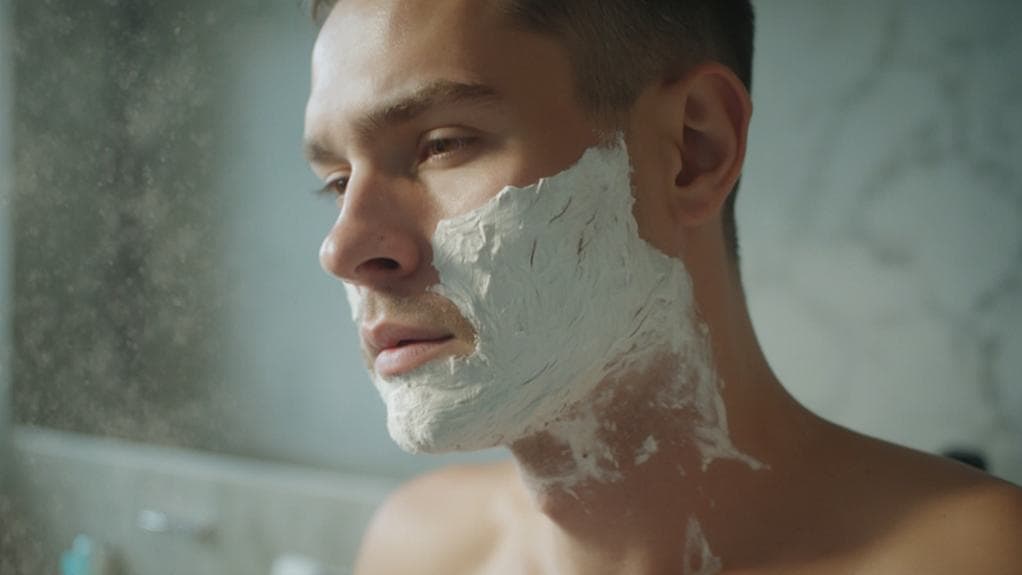
Five key factors are essential when understanding your client's skin for professional shaving. First, identify their skin type—oily, dry, sensitive, or combination—as this determines the appropriate shaving products and techniques to use.
Second, conduct a thorough skin analysis to detect any specific conditions like eczema or acne, which require tailored approaches.
Third, select dermatologist-approved formulas for shaving creams and aftershaves to promote skin health and minimize post-shave irritation.
Fourth, incorporate rich botanicals and pure essential oils into the shaving routine, enhancing the experience while addressing the unique needs of your client's skin.
Fifth, consider recommending alcohol-free products that contain soothing ingredients like aloe vera, chamomile, and witch hazel to reduce irritation for clients with sensitive skin.
Finally, educate your clients on the importance of pre-shave preparation, including proper cleansing and hair softening techniques.
To implement these factors, start by observing and gently touching the client's skin to assess its characteristics. Use a magnifying lamp if necessary to spot any irregularities.
Choose products that match the skin type and condition, explaining your selections to the client.
Demonstrate the correct pre-shave routine, emphasizing its role in achieving a smooth, irritation-free shave.
Essential Tools for Professional Shaving
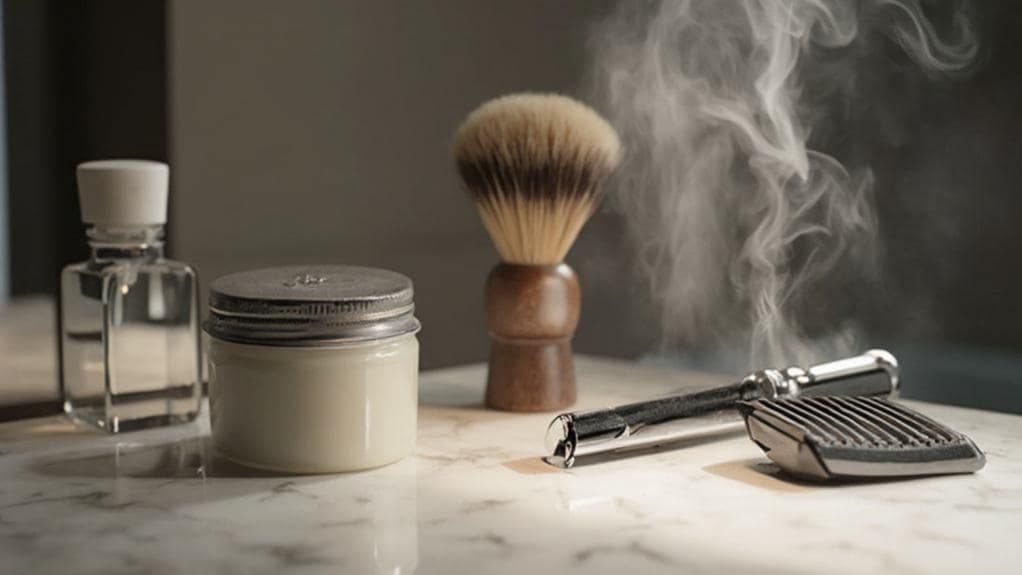
Professional barbers consistently rely on a core set of essential tools to deliver an exceptional shaving experience. At the heart of your toolkit should be a high-quality razor, whether it's a straight razor for precision or a multi-blade cartridge for efficiency. These razors guarantee a close shave while minimizing skin irritation.
To complement your razor, invest in a shaving brush made from badger hair or synthetic bristles. This tool is vital for evenly distributing shaving cream and lifting facial hair, resulting in a more effective shave. Building your kit with these essential tools is key to achieving professional results and guaranteeing client satisfaction.
When selecting a shaving cream, opt for a rich, hydrating formula tailored to your client's skin type. This will enhance razor glide and reduce the risk of nicks and razor burn. Consider incorporating pre-shave oils to soften hair and prepare the skin, leading to a more comfortable shaving experience.
After the shave, apply alcohol-free aftershave balms or moisturizers to soothe the skin and maintain hydration. These post-shave products are essential for preventing irritation and guaranteeing client satisfaction.
Preparing the Face
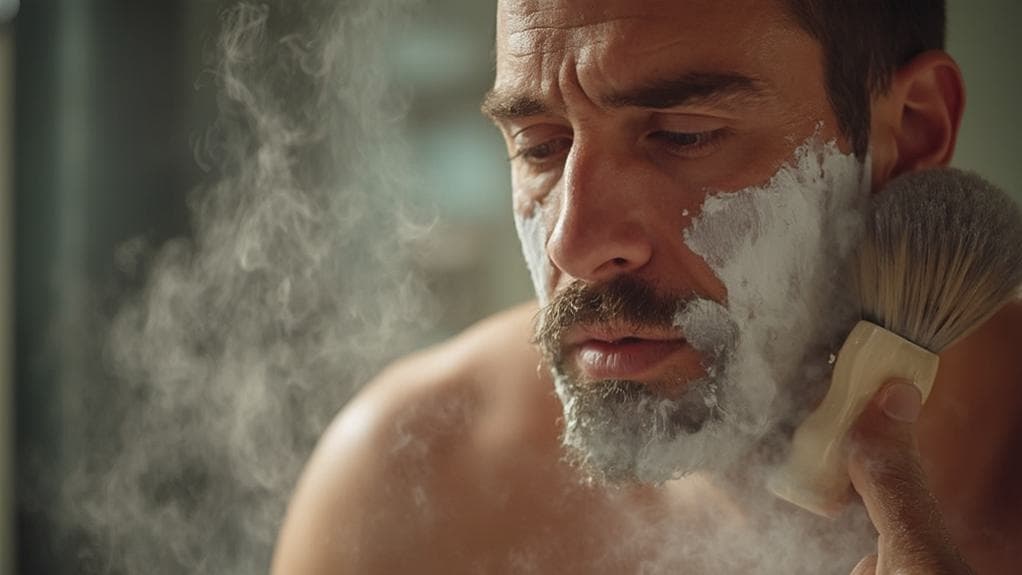
One of the most essential steps in achieving a professional shave is properly preparing the face. Start by washing your face with a gentle cleanser to remove dirt and oil, creating a clean surface for shaving.
Next, use warm water or a warm towel to soften facial hair and open pores, reducing the risk of irritation and razor burn. Consider using a pre-shave scrub containing tea tree oil and aloe vera for added soothing benefits and to promote healthier skin.
For those with sensitive skin, natural ingredients like coconut oil or eucalyptus oil can provide additional protection and lubrication during the shaving process.
To guarantee the best possible shaving experience, follow these vital steps:
- Thoroughly cleanse your face to remove impurities
- Apply warm moisture to soften hair and open pores
- Use a pre-shave scrub for extra skin preparation
Aim to achieve firmer and balanced skin by allowing the warm moisture to relax hair follicles, making the shaving process smoother.
This preparation not only enhances the shave but also contributes to an overall irritation-free experience. By taking the time to properly prepare your face, you're setting the stage for a professional-quality shave with a smooth surface, reduced irritation, and better overall results.
Mastering Lather Application Techniques
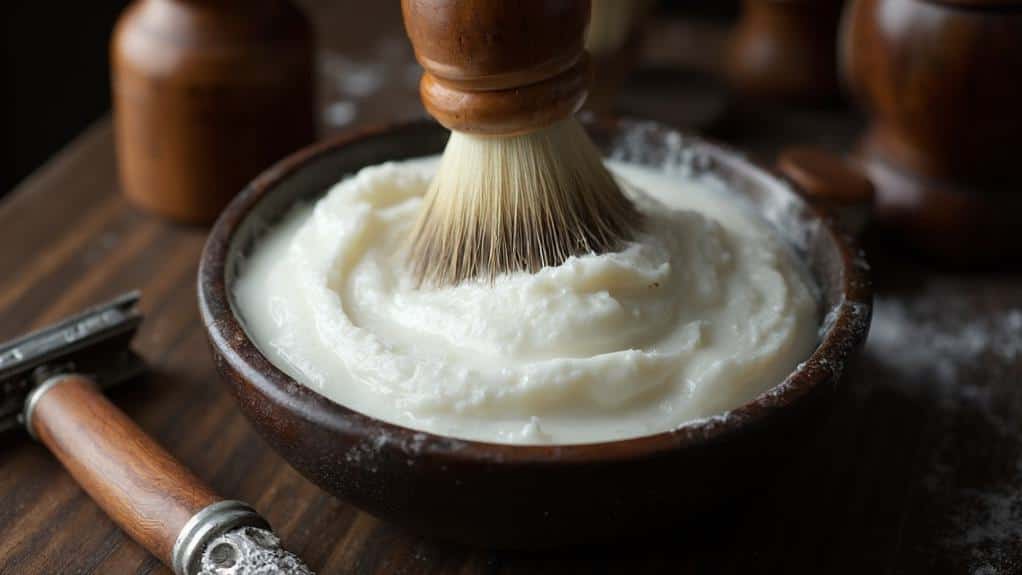
With your face properly prepared, it's time to focus on creating and applying the perfect lather. Start by selecting a high-quality shaving brush, preferably made of badger hair or synthetic bristles. Wet the brush with warm water to activate the shaving cream's ingredients and soften your facial hair. Apply the cream or gel in circular motions, ensuring generous coverage on damp skin. This technique creates a rich lather that lifts hair and reduces friction during shaving.
Pay special attention to areas with thicker hair growth, distributing the lather evenly to prevent irritation. Rinse your brush frequently to maintain lather quality and control application. Remember, a proper lather is key to achieving a close, comfortable shave.
| Brush Type | Lather Quality | Durability | Cost |
|---|---|---|---|
| Badger Hair | Excellent | High | High |
| Synthetic | Very Good | Very High | Medium |
| Boar Hair | Good | Medium | Low |
| Horse Hair | Good | High | Medium |
To create the richest lather possible, use warm water and focus on circular motions. This method activates the cream's ingredients effectively, opening pores and softening hair for a smoother shave. By mastering these lather application techniques, you'll greatly enhance your shaving experience and results.
Perfecting Razor Strokes
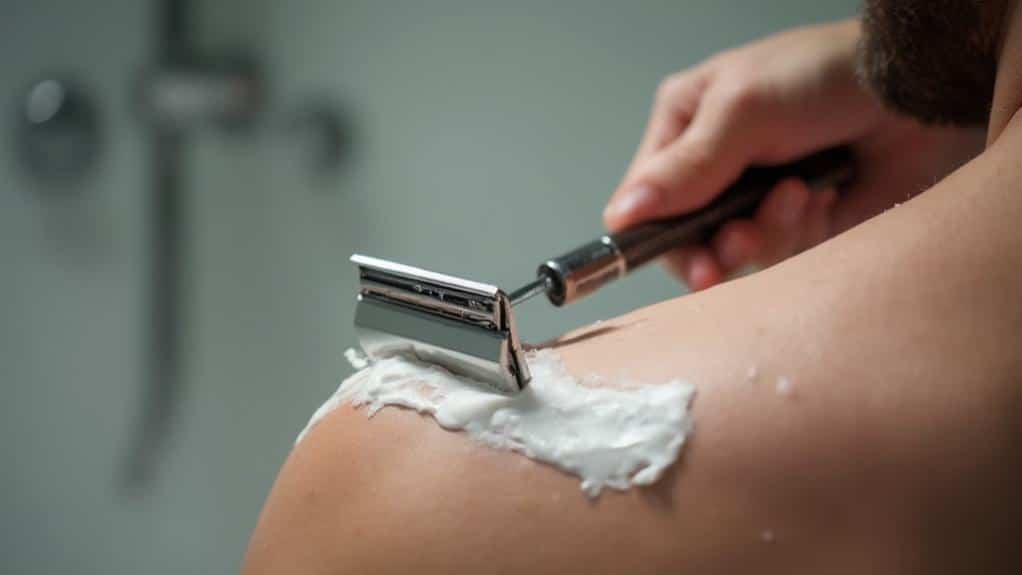
To perfect your razor strokes, you'll need to master three key elements: angle, direction, and pressure.
Hold your razor at a 30-degree angle to your skin, ensuring ideal contact for effective cutting without causing irritation. Safety razors are particularly well-suited for this technique, offering precision and control.
Always shave in the direction of hair growth, using short, controlled strokes to maintain precision and reduce the risk of nicks or ingrown hairs.
Apply gentle pressure, letting the razor's weight do most of the work, and remember to rinse the blade frequently to maintain its efficiency throughout your shave.
Angle for Optimal Results
The art of perfecting razor strokes lies in mastering the correct angle and technique. To achieve ideal results, you'll need to hold your razor at a 30-degree angle to your skin. This angle allows for a close shave while minimizing irritation.
As you shave, use short, controlled strokes in the direction of hair growth. This technique helps prevent ingrown hairs and reduces the risk of nicks and cuts.
Remember to rinse your blade frequently during the shaving process. This removes accumulated hair and cream, maintaining the razor's effectiveness. Apply light pressure as you glide the razor over your skin, which reduces the likelihood of cuts while still achieving a close shave.
To master the angle for ideal results, follow these steps:
- Position the razor at a 30-degree angle to your skin.
- Use short, controlled strokes in the direction of hair growth.
- Maintain light pressure throughout the shaving process.
Direction of Hair Growth
Understanding the direction of hair growth is a key component in perfecting your razor strokes. To achieve a smooth, irritation-free shave, you'll need to map out your facial hair growth pattern. This knowledge will greatly enhance the effectiveness of each stroke, reducing the risk of razor burn and ingrown hairs.
Begin by carefully observing and feeling the direction your facial hair grows. Once you've identified the growth pattern, always shave in that direction. This technique minimizes skin irritation and helps prevent ingrown hairs.
As you shave, use short, controlled strokes that follow the hair growth direction. This approach maintains the blade's effectiveness and reduces the likelihood of nicks or cuts. Remember to rinse your razor frequently during the shaving process to remove cream and hair buildup, ensuring a clean cut with each stroke.
For ideal results, maintain a 30-degree angle between the blade and your skin while following the direction of hair growth. This combination of proper angle and direction will provide you with the most comfortable and precise shave possible, leaving your skin smooth and free from irritation.
Pressure and Control Techniques
Mastering pressure and control techniques is essential for achieving the perfect shave. To enhance cutting efficiency while minimizing irritation, maintain a 30-degree angle between the razor and your skin.
Utilize light pressure during shaving, allowing the razor to glide over the skin rather than forcing it. This approach helps prevent nicks and cuts, ensuring a smoother experience. Use short, controlled strokes to effectively remove hair without overwhelming the blade, reducing the risk of irritation and enhancing precision.
To perfect your razor strokes, follow these key steps:
- Apply gentle, consistent pressure throughout the shave
- Use short, deliberate movements for better control
- Rinse the blade frequently to maintain peak performance
Remember to shave in the direction of hair growth on the first pass, reducing irritation and ingrown hairs. For a closer finish, follow with a second pass against the grain.
Rinsing the blade frequently during your shave prevents cream and hair buildup, ensuring consistent performance and smooth strokes. After shaving, rinse your face with cool water to close the pores and apply an aftershave balm to soothe the skin.
Navigating Difficult Areas
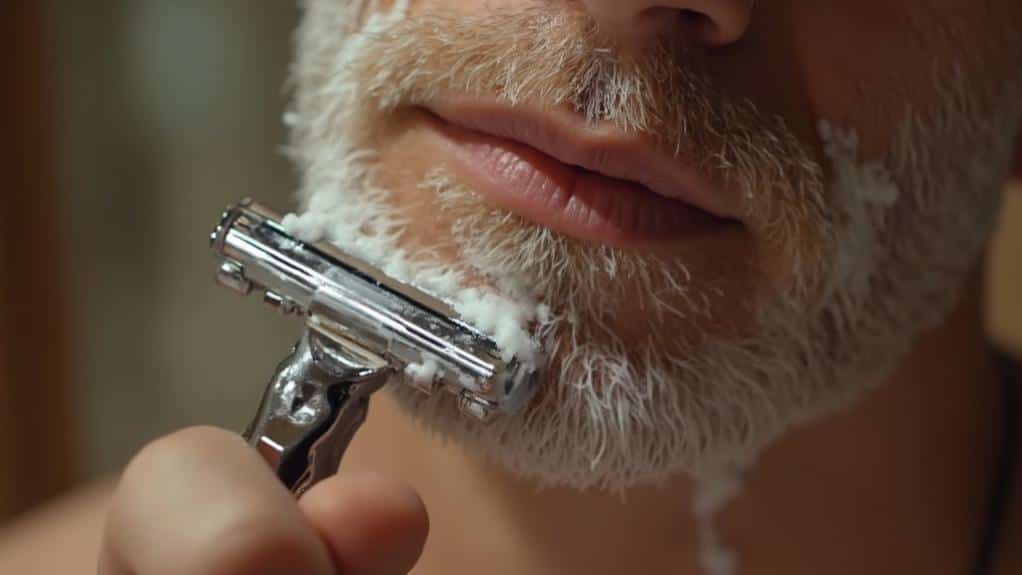
When it comes to maneuvering difficult areas while shaving, you'll need to pay special attention to your jawline, neck, and upper lip.
For the jawline and neck, start by stretching the skin taut with your free hand, then use short, controlled strokes with a flexible razor, moving in the direction of hair growth to minimize irritation.
Consider using a safety razor kit for these areas, as they can provide a closer shave with less irritation compared to cartridge razors.
To tackle the upper lip, pull it down gently to create a smooth surface, and carefully shave with light, downward strokes, being extra cautious around the corners of your mouth.
Jawline and Neck Techniques
As you approach the jawline and neck, you'll encounter some of the most challenging areas to shave. To achieve a comfortable shave along the jawline, hold your razor at a 30-degree angle and use short, controlled strokes. This technique maintains precision and reduces the risk of cuts in this sensitive area.
For best results, stretch the skin taut with your free hand, creating a flatter surface that's easier to navigate.
When shaving your neck, always go with the grain to minimize irritation and prevent ingrown hairs. Consider using a pre-shave oil on thicker hair areas, like the jawline, to soften the hair and enhance glide. Remember to rinse your razor regularly after each stroke to remove buildup and maintain peak performance.
To master jawline and neck shaving techniques:
- Practice patience and precision with each stroke
- Pay close attention to the direction of hair growth
- Take your time to avoid nicks and cuts
Tackling the Upper Lip
Navigate the upper lip area with precision and care, as it's one of the most sensitive regions to shave.
Begin by preparing the skin with a warm towel or steam, which opens pores and softens hair, making it easier to cut and reducing irritation. Apply a high-quality shaving cream or gel designed for sensitive areas, ensuring ideal glide and minimizing the risk of nicks.
When shaving, hold your razor at a 30-degree angle and move gently in the direction of hair growth. This technique helps prevent irritation and ingrown hairs, common issues in this delicate area.
For better control and accuracy, consider using a precision razor or trimmer, which allows you to navigate the contours of the lip more effectively.
After shaving, rinse the area with cool water to close the pores. Apply an alcohol-free aftershave balm to soothe the skin and reduce redness or irritation.
Post-Shave Care and Treatment
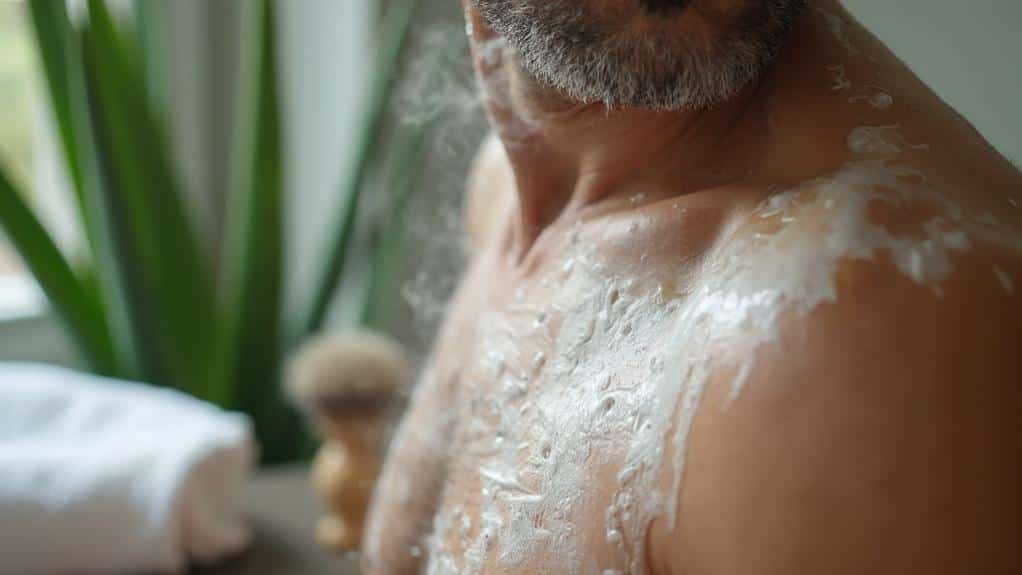
In light of a successful shave, proper post-shave care is vital for maintaining healthy, comfortable skin.
Begin by rinsing your face with cool water to close pores and soothe the skin. Next, apply an alcohol-free aftershave balm or gel containing aloe vera to minimize irritation and keep your skin hydrated. These products help calm the skin and prevent dryness, which is essential for a comfortable post-shave experience.
For best results, consider using anti-razor burn products that contain ingredients like Avena Sativa Peptide or honey, which are known for their soothing properties and effectiveness across various skin types.
Consider incorporating a Post Shave Hydrogel into your routine to reduce rashes and enhance overall skin smoothness. This step can greatly improve your skin's appearance and feel after shaving. Additionally, using natural aftershave balms regularly will provide seasonal protection and promote long-term skin health.
To guarantee the best post-shave care:
- Always use gentle, circular motions when applying products to avoid further irritation.
- Pay extra attention to areas prone to razor burn or ingrown hairs.
- Allow products to fully absorb before getting dressed or applying additional skincare items.
Addressing Common Shaving Issues

When addressing common shaving issues, you'll need to focus on three key areas: preventing razor burn, combating ingrown hairs, and finding solutions for sensitive skin.
To prevent razor burn, always shave in the direction of hair growth using a sharp, clean razor and light pressure, while incorporating a high-quality shaving cream to reduce friction. Choosing the right men's shaving cream is essential for achieving a comfortable and irritation-free shave. Look for products with natural ingredients that provide both lubrication and skin-nourishing benefits.
For ingrown hairs, exfoliate regularly and consider using a single-blade razor, which can help minimize the risk of hair becoming trapped beneath the skin's surface.
If you have sensitive skin, opt for products with soothing ingredients like aloe vera or chamomile, and always follow up with an alcohol-free aftershave to reduce irritation and promote healing.
Razor Burn Prevention Techniques
Razor burn can turn your smooth shaving experience into a painful ordeal. To prevent this irritating issue, start by using a sharp, clean razor and replacing blades regularly. Dull blades cause tugging and irritation, leading to razor burn.
Apply a generous layer of high-quality shaving cream or gel that suits your skin type, ensuring ideal glide and protection. When shaving, use short, controlled strokes in the direction of hair growth, avoiding excessive pressure on the razor.
After shaving, implement a soothing post-shave routine:
- Rinse your face with cool water to close pores and reduce inflammation.
- Apply an alcohol-free aftershave to calm the skin and minimize redness.
- Moisturize with products containing aloe vera or witch hazel to promote healing.
Consistently following these steps will help maintain hydration and encourage skin recovery.
Remember, prevention is key when it comes to razor burn. By adopting these techniques and incorporating them into your daily shaving routine, you'll greatly reduce the risk of irritation and achieve a smoother, more comfortable shave.
With practice and attention to detail, you'll master the art of professional shaving and enjoy consistently irritation-free results.
Combating Ingrown Hairs
Combating ingrown hairs is another vital aspect of achieving a professional shave. To minimize this common issue, always shave in the direction of hair growth, which reduces irritation and prevents hair from curling back into the skin.
Before you begin, exfoliating the skin is essential; use products containing gentle exfoliants like tea tree oil and aloe vera to remove dead skin cells and promote healthier hair growth. When shaving, opt for a high-quality shaving cream or gel with hydrating ingredients to soften hair and create a smoother glide. This helps prevent hair from becoming trapped beneath the skin's surface.
To further combat ingrown hairs, make sure you're using a sharp, clean razor and replace blades regularly. This prevents tugging on the hair, which can lead to irritation and ingrowth.
After shaving, focus on keeping your skin properly moisturized. Apply alcohol-free aftershaves or soothing balms to maintain hydration and reduce inflammation.
Sensitive Skin Solutions
Many men struggle with sensitive skin when shaving, but there are effective solutions to address this common issue.
To start, choose a shaving cream formulated with soothing ingredients like shea butter and chamomile. These components help reduce irritation and calm your skin during the shaving process. Before applying the cream, consider using a pre-shave oil to soften facial hair and create a protective barrier, minimizing razor burn and discomfort.
When shaving, always go with the grain of your hair growth to prevent ingrown hairs and irritation. After you've finished, apply an alcohol-free aftershave balm to soothe and hydrate your skin, reducing redness and promoting a smoother feel. Follow this with a gentle, hydrating moisturizer containing calming ingredients like aloe vera or witch hazel to maintain skin health and prevent dryness.
For those with particularly sensitive skin, consider these additional tips:
- Use a sharp, clean razor to minimize irritation.
- Take your time and avoid applying excessive pressure.
- Rinse your face with cool water after shaving to close pores.
Incorporating Luxury Elements
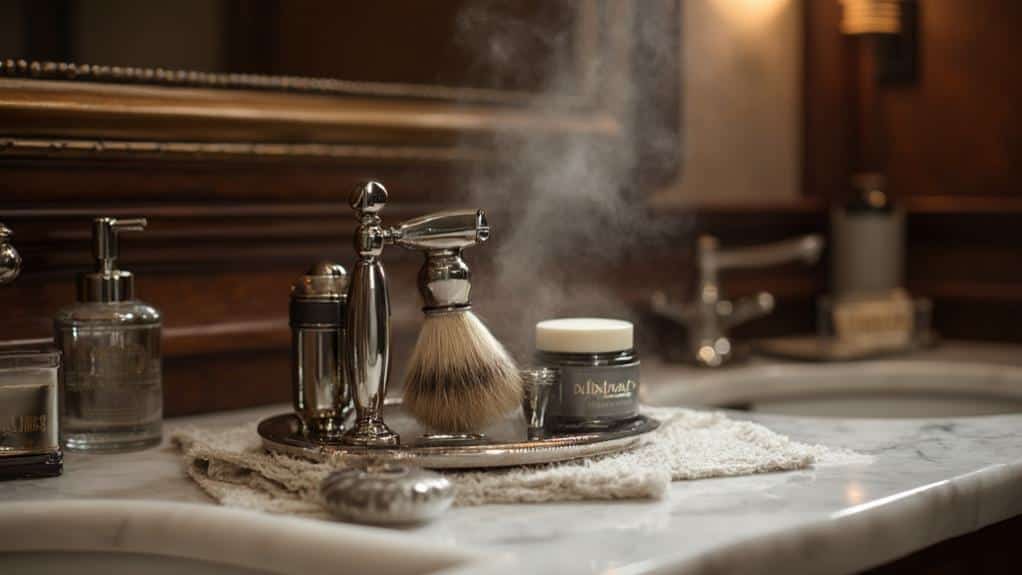
For those seeking to elevate their shaving routine, incorporating luxury elements can transform a mundane task into a pampering experience.
Start by investing in premium shaving creams that are dermatologist-tested, ensuring both skin health and a superior shave. These creams, often infused with nourishing ingredients, provide excellent glide and hydration for smooth skin.
Next, consider upgrading your razor to a luxurious option like the Gillette Heated Razor, which mimics the sensation of a hot towel shave with each stroke. This innovative tool combines traditional barbershop techniques with modern technology for an indulgent experience.
To further enhance your routine, explore Core Elements Bundles, available in fragrances such as Sandalwood or Bergamot & Neroli. These kits offer a unique scent experience while providing high-quality shaving products.
After shaving, complete your grooming ritual with a premium aftershave and moisturizer to soothe and protect your skin.
Building Client Relationships
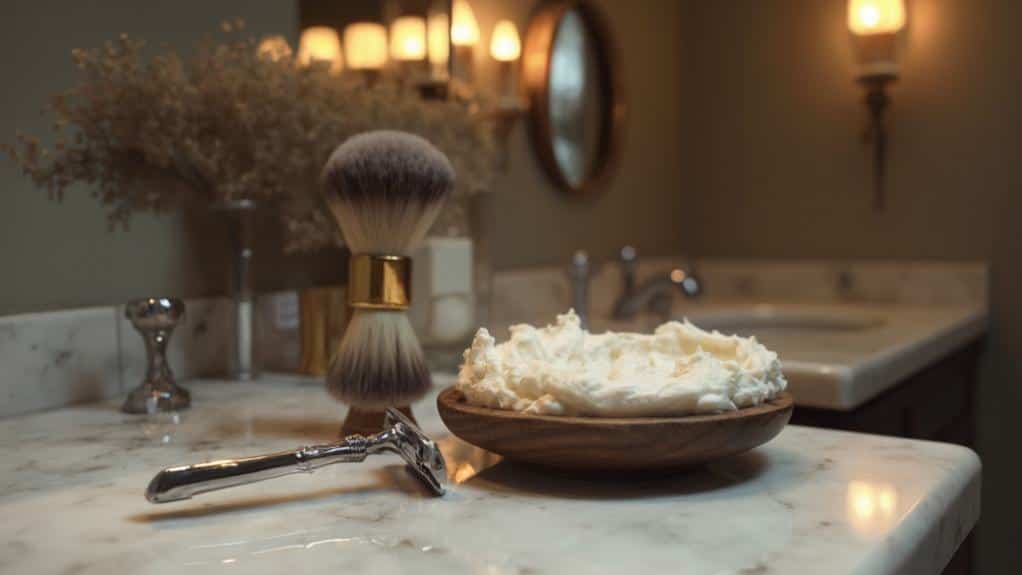
Client trust-building forms the cornerstone of a successful barbering career. To elevate your shaving services and foster lasting relationships, focus on creating personal connections with each client. Start by actively listening to their needs, preferences, and concerns. This attention to detail allows you to tailor your techniques and recommendations, ensuring peak satisfaction with each service.
Building trust goes beyond technical skills. Embrace the intimate nature of shaving to forge strong bonds and loyalty. Many clients value the generational traditions associated with barbershops, often bringing their sons for their first shaves. Recognize and honor these connections to enhance the overall experience.
To master client relationships, consider the following:
- Remember personal details about each client's life and preferences
- Offer honest advice about hair types and realistic style options
- Create a welcoming atmosphere that encourages open communication
Frequently Asked Questions
Is the Art of Shaving Still in Business?
Yes, The Art of Shaving is still very much in business.
You'll find they're adapting to modern grooming trends while maintaining their focus on traditional shaving techniques.
They've expanded their product line to include innovative items like heated razors, catering to evolving facial hair preferences.
You can shop their premium shaving tools, creams, and aftershaves both online and in physical stores.
Their commitment to quality continues to attract customers seeking an elevated shaving experience in today's competitive grooming market.
How Do You Shave Like a Professional?
Properly preparing your skin is paramount for professional-level shaving. Start with a warm shower to open pores and soften facial hair.
Choose the right razor type for your skin sensitivity, and use a quality shaving cream. Hold the razor at a 30-degree angle, shaving with the grain in short, controlled strokes. Rinse frequently and apply minimal pressure.
After shaving, close pores with cold water and apply an alcohol-free aftershave balm to soothe and moisturize your skin.
Why Are Most Professionals Clean-Shaven?
You'll find that most professionals opt for a clean-shaven look due to its numerous benefits in the workplace.
It's often associated with a polished, professional image that can enhance first impressions and perceived competence. Many industries value this appearance as it aligns with their grooming standards and projects attention to detail.
Clean-shaven faces are also seen as more approachable and trustworthy, which can positively impact workplace interactions. Additionally, it's considered more hygienic and comfortable in certain professions, reducing potential skin irritations.
What Is the Art of Learning to Shave Oneself?
Learning to shave yourself is an art that requires mastering various shaving techniques.
You'll need to start with proper skin preparation, using warm water and a gentle cleanser to soften hair and open pores.
Next, focus on blade maintenance, ensuring your razor is always sharp and clean.
Apply shaving cream evenly, then use short, controlled strokes at a 30-degree angle, following the direction of hair growth.
Rinse with cool water and apply a soothing aftershave to complete your routine.
Conclusion
As you've honed your professional shaving skills, you've revealed the secrets to providing an exceptional experience. But don't rest on your laurels just yet. The true test lies ahead: applying these techniques to diverse clients, each with unique skin types and preferences. Will you rise to the challenge? Remember, mastery is an ongoing journey. Stay curious, keep refining your craft, and you'll elevate the art of shaving to new heights, one satisfied client at a time.