
How to Prevent Winter Hair Loss Before Spring Starts
How to Prevent Winter Hair Loss Before Spring Starts
You can prevent winter hair loss by combining proper nutrition with protective hair care practices. Focus on eating foods rich in vitamins C, D, and B complex, while maintaining adequate protein and hydration levels. Protect your hair from harsh elements using silk-lined hats and reduce washing frequency to 2-3 times weekly. Apply weekly deep conditioning treatments and use sulfate-free products to maintain scalp health. These strategies set the foundation for stronger, healthier hair throughout the season.
Main Points
- Maintain proper hydration and use weekly deep conditioning treatments with argan oil or shea butter to prevent winter-related dryness and breakage.
- Consume foods rich in vitamins C, D, biotin, and omega-3s while ensuring adequate protein intake to support hair strength and growth.
- Protect hair from harsh elements by wearing silk-lined hats and reducing wash frequency to 2-3 times weekly with sulfate-free shampoos.
- Combat stress-related shedding through proper nutrition, supplements containing saw palmetto, and regular scalp massage to improve circulation.
- Use lightweight leave-in conditioners and consider humidifiers to maintain optimal moisture levels in hair and scalp.
Understanding the Science Behind Winter Hair Shedding

While many people blame winter for increased hair loss, the science behind seasonal shedding is more complex than you might think. Your hair follicle phases follow a natural cycle of growth, change, and rest throughout the year, with distinct seasonal shedding patterns that peak in late summer and early fall. Studies show that hair shifts into telogen effluvium more frequently during warmer months. The natural cycle typically includes anagen growth phases lasting between two to seven years.
What you’re experiencing in winter isn’t necessarily increased hair loss – research shows that fewer follicles actually enter the resting phase during colder months. These seasonal changes may be an evolutionary adaptation to help protect the scalp during winter. Using medicated dandruff shampoo can help maintain scalp health during harsh winter conditions.
However, environmental factors like dry air, reduced sunlight, and cold temperatures can make existing hair more brittle and prone to breakage. The combination of dry weather and indoor heating systems can significantly increase hair damage during winter months. Studies have shown that biotin supplements can support hair strength during harsh winter conditions. Taking collagen peptides daily can improve hair thickness and strengthen follicles. Elevated stress levels from holiday pressures can further impact your hair’s health and shedding patterns. Taking hair vitamins specifically formulated for men can help maintain healthy hair growth during seasonal changes. Supplements containing saw palmetto extract have been shown to block DHT production and reduce winter-related hair thinning.
Your hormones also play a significant role, as winter’s shorter days affect melatonin production and stress hormones, which can influence your hair’s growth cycle.
If you’re genetically predisposed to hair loss, these seasonal changes may be more noticeable.
Essential Nutrients to Combat Seasonal Hair Loss
When it comes to preventing winter hair loss, proper nutrition serves as your first line of defense. Your hair follicles need specific nutrient sources to maintain strength and health during harsh winter months. Seasonal changes can trigger increased shedding, making proper nutrition even more crucial. Using hair growth products can provide additional support when combined with proper nutrition.
Just as stress can worsen skin conditions and hair health, managing stress levels through proper nutrition becomes essential during winter months. Focus on vitamin combinations that work together, like vitamin C for collagen production alongside vitamin D for follicle cycling. Similar to how L-ascorbic acid promotes skin vitality, it can support healthy hair growth when consumed through diet. Much like retinol benefits skin cell turnover, vitamin A derivatives can improve scalp health and reduce hair loss. The addition of hyaluronic acid can help maintain scalp moisture levels during dry winter months. You’ll want to prioritize protein-rich foods, as your hair is primarily made of protein, particularly keratin. A medium sweet potato delivers 160% daily vitamin A to support sebum production and keep hair healthy. Eggs provide an excellent source of biotin, and consuming them regularly helps prevent hair loss.
Don’t forget essential fatty acids from fish, flaxseeds, and avocados, which keep your scalp hydrated. The B vitamins and niacin improve blood circulation to your scalp while strengthening hair strands. Boost your intake of antioxidant-rich foods like berries and green tea to protect follicles from damage.
Key minerals such as iron and zinc are important too – they support oxygen transport and tissue repair in your scalp, helping maintain healthy hair growth throughout winter.
Protective Measures for Cold Weather Hair Care
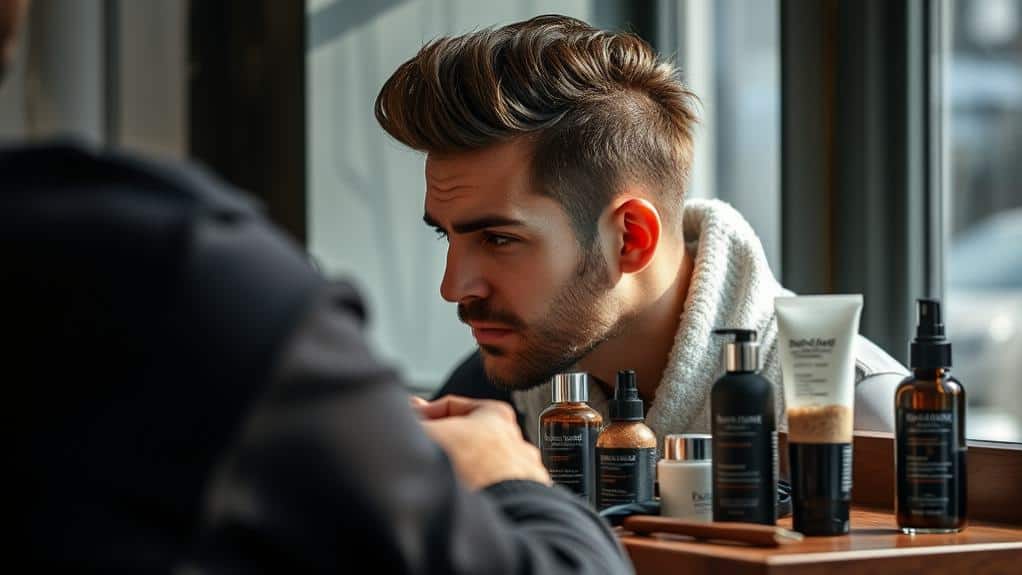
Taking proactive steps to shield your hair during winter can considerably reduce seasonal hair loss and damage. Protective styles like braids, twists, and buns minimize exposure to harsh elements while promoting moisture retention. Using proper cleansing products before installing protective styles helps create a clean foundation for optimal hair health. Regular trimming every six to eight weeks helps prevent split ends from traveling up the hair shaft. You’ll want to pair these styles with proper headwear, such as silk-lined hats and scarves. Cold temperatures cause hair strands to become brittle and prone to breakage. Much like non-comedogenic moisturizers prevent clogged pores, lightweight hair products prevent buildup on the scalp. Consistent application of weekly deep conditioning treatments provides intensive hydration for healthier hair. Consider using hair masks specifically formulated for men to restore and strengthen damaged strands. Adding hydrolyzed keratin to your hair care routine can significantly strengthen hair cuticles and reduce brittleness. Tea tree oil treatments can help combat scalp issues that often worsen during winter months. Massaging men’s hair oil into your scalp can stimulate circulation and promote healthier hair growth.
| Protection Method | Benefit |
|---|---|
| Satin-lined hats | Prevents friction and moisture loss |
| Protective styles | Reduces manipulation and breakage |
| Deep conditioning | Maintains hair hydration |
| Natural oils | Seals in moisture |
| Humidifiers | Adds moisture to indoor air |
Remember to avoid going outside with wet hair and limit heat styling. Instead, focus on moisture-rich treatments and use sulfate-free shampoos when washing. Keep a humidifier running indoors and apply natural oils to seal in hydration throughout the cold season.
Building an Effective Winter Hair Care Routine
Creating a consistent winter hair care routine proves essential for maintaining healthy, resilient locks during the cold months.
Start by reducing your wash frequency to 2-3 times weekly, using sulfate-free shampoos and applying deep conditioning treatments. During those cold showers, use lukewarm water to preserve natural oils. Remember to get frequent trims to prevent breakage and split ends. When your scalp feels particularly parched, use scalp-specific hydration treatments for targeted relief. Combat winter flakes and buildup with salicylic acid shampoo for a healthier scalp environment. Consider using Tea Tree Special shampoo to control excess oil and improve dandruff issues during winter months. To maximize moisture retention, incorporate leave-in conditioners and hydrating masks with argan oil or shea butter. For optimal moisture absorption, apply products while skin is still damp, similar to how fast-absorbing lotions work best on damp skin. Protect your hair from harsh winter elements by wearing protective headwear when outdoors.
Focus on gentle drying techniques by using a microfiber towel and air-drying whenever possible. When you need to style, always apply heat protectant and use the lowest temperature setting. Select a pH balanced shampoo to maintain your scalp’s natural protective barrier. Using men’s hair loss products can provide targeted solutions for thinning concerns. Consider incorporating American Crew Daily conditioner to reduce hair breakage by up to 86% during winter styling.
Support your hydration techniques by sleeping on a silk pillowcase and using a humidifier in your bedroom.
Don’t forget to nourish your hair from within by consuming foods rich in biotin, omega-3s, and essential vitamins, while maintaining regular scalp massages to boost circulation.
Natural Remedies to Stimulate Hair Growth

Natural solutions offer powerful tools for combating winter hair loss, complementing your daily hair care routine. From herbal remedies like ginseng and saw palmetto to potent essential oils, you’ll find nature-based options that can help stimulate growth and protect your locks during harsh winter months. Adding geranium oil to your routine has been shown to promote significant hair growth. Normal daily hair shedding ranges from 50 to 100 strands, so don’t panic if you notice some natural loss. The COVID-19 pandemic has contributed to increased stress-related hair loss in many individuals.
Regular scalp massage can significantly increase circulation to hair follicles and promote healthy growth. Just as retinol serums help rejuvenate aging skin, they can also strengthen hair follicles when applied to the scalp. Using green tea extract can provide antioxidant protection against environmental damage to hair follicles. Maintaining proper water consumption levels throughout winter is crucial since dehydration can lead to brittle hair and increased shedding. Using organic jojoba oil can provide deep nourishment while preventing clogged pores and scalp irritation. Vegan formulations are particularly effective for gentle cleansing while maintaining natural scalp oils. Specialized beard cleansers can help maintain facial hair health while preventing winter dryness.
Try these proven natural approaches to boost your hair health:
- Mix rosemary and peppermint essential oils with coconut oil for a scalp massage that improves blood flow and reduces protein loss.
- Apply aloe vera or onion juice directly to your scalp to soothe irritation and promote follicle health.
- Supplement your diet with natural herbs like stinging nettle and red clover to block DHT and support hair growth.
Remember to combine these remedies with proper nutrition and gentle hair care practices for the best results.
Scalp Care Strategies for Healthy Hair Roots
While winter weather challenges your hair’s health, maintaining a healthy scalp forms the foundation for preventing seasonal hair loss. Regular scalp exfoliation using gentle scrubs or brushes removes dead skin cells and product buildup that can clog hair follicles. Combine this with proper moisturizing techniques, like applying leave-in conditioners and using a humidifier in your home. Similar to Japanese beauty philosophies, scalp massages improve blood flow to hair follicles and promote healthier growth. Daily moisturizing helps prevent common discomforts like itchy and sore scalp during harsh winter months. Using facial moisturizers can help protect the hairline and prevent dryness where facial skin meets the scalp. Reducing exposure to harsh chemicals and excessive heat styling can help maintain optimal scalp microbiome for long-term hair health. Professional salon treatments can provide deep nourishment and revitalization for men experiencing winter-related hair concerns. Following a proper skin care routine helps maintain both facial and scalp health throughout the season. Using gentle cleansers specifically designed for winter can provide extra protection against harsh environmental factors. Applying quality conditioner regularly helps maintain hair moisture and prevents brittleness during cold months.
| Care Strategy | Benefit |
|---|---|
| Lukewarm Water | Preserves natural oils |
| Weekly Scrubs | Removes debris and dead cells |
| Silk Pillowcase | Reduces friction and moisture loss |
You’ll want to limit washing to 2-3 times weekly and use sulfate-free shampoos to maintain your scalp’s natural balance. Support these external practices by consuming foods rich in biotin, zinc, and omega-3 fatty acids to nourish your scalp from within.
Hair-Friendly Lifestyle Changes for Winter Months
During the harsh winter season, implementing targeted lifestyle changes can greatly reduce hair loss and promote stronger, healthier hair growth.
By focusing on hair hydration and moisture retention, you’ll protect your locks from winter damage while strengthening them from within. Just as with beard maintenance, using natural beard oils can help nourish and protect facial and scalp hair during winter. High-quality oils like argan and jojoba work especially well for preventing winter-related dryness. Wearing a thin silk cap under winter hats provides crucial friction protection during cold months. Regular trims every 6-8 weeks help prevent split ends and maintain vibrant hair. Consider incorporating weekly scalp exfoliation treatments to maintain a healthy scalp and promote better hair growth. Using deep conditioning treatments weekly helps reconstruct and repair damaged strands. A quality anti-aging moisturizer can help nourish both skin and hair follicles during winter months. For optimal skin and hair protection, choose products with broad spectrum coverage to shield against harmful UV rays even during winter. Applying products to damp hair and skin ensures maximum absorption of nourishing ingredients.
Make these essential adjustments to your daily routine:
- Switch to lukewarm showers and use a humidifier in your home to maintain ideal moisture levels.
- Boost your intake of protein-rich foods and omega-3 fatty acids through salmon, eggs, and nuts.
- Protect your hair while sleeping by using a silk pillowcase and avoid going outside with wet hair.
Remember to manage stress through regular exercise and adequate sleep, as these factors considerably impact your hair’s health during winter months.
Preparing Your Hair for the Spring Season
As winter fades into spring, your hair needs a thoughtful change to adapt to the changing climate and repair any seasonal damage.
Start your seasonal shift by gradually switching to lighter hair products that won’t weigh down your strands in spring’s humidity. Clarifying shampoos are essential to remove winter product buildup and start fresh. Consider transitioning to Marula and Hemp Oil for lightweight moisture. Different curl patterns require unique product adjustments as the seasons change. Regular scalp massage can stimulate blood flow and promote healthier hair growth during the transition. Using a biotin-rich shampoo can support healthy hair growth during seasonal changes. A high-quality styling powder can add volume without weighing down hair in warmer weather. It’s essential to trim away damaged ends from winter’s harsh conditions and introduce UV protection products before sun exposure intensifies. Just as self-sharpening blades require regular maintenance for optimal performance, your hair needs consistent care during seasonal transitions. Investing in an ionic hair dryer can help reduce frizz and maintain healthy hair during seasonal changes.
You’ll want to adjust your washing frequency as temperatures rise and incorporate volumizing products to combat spring humidity. Natural oils like argan and jojoba work best for maintaining balance during seasonal transitions.
Focus on maintaining your deep conditioning routine while slowly modifying it for warmer weather. Remember to protect your spring hair with preventive measures like silk pillowcases and loose styles.
Don’t forget to boost your hair’s health from within by staying hydrated and maintaining a nutrient-rich diet.
References
- https://www.metropolisindia.com/blog/lifestyle/5-effective-ways-to-deal-with-hair-fall-in-the-winter
- https://www.cloudninehair.com/blogs/hair/seasonal-shedding-guide
- https://njfue.com/blog/effective-ways-deal-with-hair-loss-in-winter/
- https://evaskinclinicpune.com/blogs/winter-hair-loss-why-it-happens-and-how-to-prevent-it/
- https://www.hairdoctors.com.au/blog/tips-on-how-to-prevent-hair-loss-in-winter/
- https://havenmedspa.com/blog/8-tips-to-avoid-seasonal-hair-loss-in-spring/
- https://trichologists.org.uk/chill-out-how-to-keep-your-hair-healthy-this-winter/
- https://www.irishnews.com/life/what-is-winter-hair-loss-and-how-can-you-prevent-it-IB3R3V532NLW5CWOCFUSVEAC4U/
- https://www.mhtaclinic.com/blog/winter-hair-loss-how-to-combat-dryness-and-thinning/
- https://pennyjamestrichologycenter.com/blogs/seasonal-hair-loss-shedding-what-it-is-how-to-manage-it-nyc
- https://www.treatmentroomslondon.com/hair-loss/do-you-lose-more-hair-in-winter/
- https://www.hims.com/blog/seasonal-hair-shedding
- https://dorisdaymd.com/blogs/dr-days-blog/winter-hair-woes-understanding-and-combating-seasonal-shedding
- https://forums.longhaircommunity.com/showthread.php?t=132241
- https://www.rte.ie/lifestyle/living/2024/1115/1481137-what-is-winter-hair-loss-and-how-can-you-prevent-it/
- https://njfue.com/blog/spring-shedding-seasonal-hair-loss-cycle/
- https://www.the-independent.com/life-style/hair-loss-winter-prevent-cold-b2647719.html
- https://www.danielalain.com/pages/seasonal-hair-shedding
- https://www.cloudninehair.com.au/blogs/hair/how-nutrition-impacts-hair-loss
- https://www.healthline.com/nutrition/foods-for-hair-growth