
How to Prevent and Treat Razor Burn in Dry Winter Air
How to Prevent and Treat Razor Burn in Dry Winter Air
To prevent winter razor burn, start with a warm shower or towel to soften hair, then apply pre-shave oil and alcohol-free shaving cream. Use light strokes in the direction of hair growth with a mild razor. After shaving, apply a non-comedogenic moisturizer with soothing ingredients like aloe vera or chamomile. Running a humidifier and staying hydrated will strengthen your skin barrier. Discover more targeted solutions to keep your skin smooth and irritation-free all season.
Main Points
- Moisturize skin with non-comedogenic products before and after shaving to maintain hydration and strengthen the skin barrier.
- Use warm water and pre-shave oil to soften facial hair, then shave with gentle strokes in the direction of growth.
- Run a humidifier in your bedroom to combat dry indoor heating and maintain skin moisture above 40% humidity.
- Apply natural remedies like aloe vera gel or tea tree oil to soothe irritation and reduce inflammation after shaving.
- Switch to a single-blade razor and reduce shaving frequency during winter months to minimize skin irritation.
Why Winter Makes Razor Burn Worse
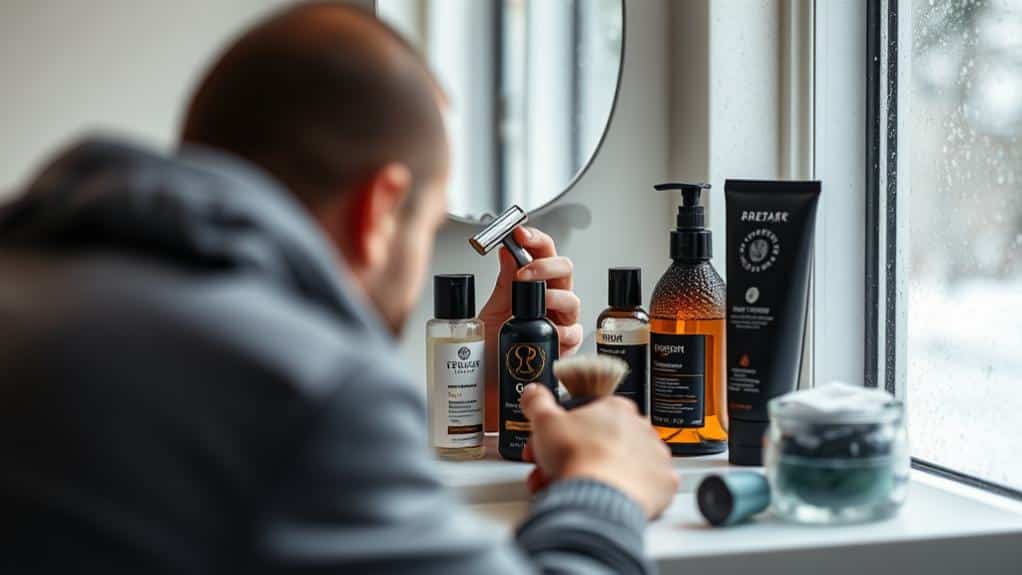
When winter arrives, your skin becomes particularly more vulnerable to razor burn due to the harsh environmental conditions.
The combination of cold winter air and dry indoor heating strips your skin’s natural moisture barrier, leaving it up to 31% more dehydrated. This greatly increases your skin sensitivity and makes it more reactive to the friction and stress of shaving. Switching to laser hair removal can help protect your sensitive winter skin from further damage. Using products with natural soothing ingredients like aloe vera and chamomile can help calm irritated skin during winter months. Regular use of a non-comedogenic moisturizer after shaving can help maintain skin hydration and prevent irritation. Applying ceramide-rich products can significantly strengthen your skin’s protective barrier during harsh winter conditions.
Your compromised skin barrier also triggers the release of inflammatory compounds and increases mast cell activity, making razor burn more likely and intense. When left untreated, these inflamed areas can develop into painful bacterial infections. Applying a broad-spectrum SPF can provide additional protection for irritated skin during winter activities. Consistent sun protection is essential year-round, even during cloudy winter days.
The dry air forces your skin to produce more cells while disrupting their normal shedding process, creating a flaky surface that’s harder to shave smoothly. The affected areas show a significant increase in lamellar bodies and lipids as your skin attempts to repair itself.
When humidity drops below 40%, your skin loses its protective barrier function, making it especially susceptible to irritation from your razor. Using less aggressive blades during winter months can help minimize irritation and prevent severe razor burn.
Essential Pre-Shave Steps for Winter Skin Care
Protecting your skin from razor burn during winter requires a thorough pre-shave routine that addresses both hydration and barrier protection.
Start by cleansing with warm water and a gentle facial wash, then exfoliate once or twice weekly to remove dead skin cells. Natural oils can help prevent bumps and rashes while providing skin-loving protection. For ideal pre-shave hydration, apply moisturizer to damp skin and let it fully absorb. This step is especially important for those with dry skin types who need extra moisture in their pre-shave routine. After showering is the optimal time to begin your shaving preparation. Take the time to prepare properly since rushing your shave can lead to irritation and nicks. A diet rich in omega-3 fatty acids can help reduce inflammation and improve overall skin health during winter months.
Next, strengthen your skin barrier with pre-shave oil, massaging jojoba, argan, or grapeseed oil into your beard area for 30-60 seconds. Using a quality shaving cream can significantly improve your shaving experience and reduce irritation. A proper shaving kit should include both pre-shave oils and moisturizing creams for best results. A few drops of sandalwood oil can provide additional soothing benefits while adding a sophisticated scent. Witch hazel extract can be added to your pre-shave routine for its natural astringent properties.
Create the perfect shaving environment by warming your face with a shower or warm towel for 2-3 minutes.
Finally, apply an alcohol-free shaving cream with moisturizing ingredients like aloe vera, using a brush to create a rich lather that sits for 30 seconds before you begin shaving.
Best Practices for Winter Shaving Technique

Mastering proper shaving technique becomes essential during winter months when skin is more vulnerable to irritation and razor burn. Adjust your shaving angles to work with your facial hair’s natural growth pattern, and opt for milder blade choices during the cold season. Always shave with light, controlled strokes in the direction of hair growth. Using hot sink water rather than warm helps soften facial hair effectively in winter conditions. When making additional passes, shaving perpendicular to growth can provide a close shave while minimizing irritation. Reducing your shower time to brief hot exposure helps maintain skin moisture levels while preparing for your shave. Consider using alcohol-free products to prevent additional skin dryness and irritation during winter shaving. Modern electric razors with SenseIQ technology can automatically adjust to your skin’s needs during winter shaving sessions. Monitoring for skin safety features in your grooming tools can significantly reduce the risk of nicks and cuts during winter shaving. Natural ingredients like badger hair brushes can help create a richer lather while being gentle on winter-sensitive skin. A safety razor technique requires practice but offers superior control for preventing winter razor burn.
| Area | Technique | Key Tips |
|---|---|---|
| Face | Short strokes | Change blades every 4-5 shaves |
| Neck | Gentle pressure | Map growth patterns first |
| Chin | Multiple passes | Reapply cream between passes |
Keep your razor clean and sharp, rinsing frequently during use. Take extra care around sensitive areas, particularly the neck, where irritation commonly occurs. Allow your shaving cream to soften the hair for 1-2 minutes before beginning, and avoid going over the same spot repeatedly.
Choosing the Right Products for Cold Weather
The harsh winter months demand specialized shaving products that shield your skin from the season’s drying effects. Your winter product selection should focus on deeply moisturizing formulations at every step of your shave routine.
Start with an oil-based pre-shave product containing jojoba or glycerin to create a protective barrier. Choose non-foaming shaving creams enriched with shea butter and aloe vera for maximum hydration and cushioning. This combination provides proper shaving lubrication to significantly reduce the risk of irritation. Taking time to exfoliate regularly helps prevent flaky, dry skin during the cold season. For best results, wait until the end of your shower to shave when steam has softened the hair.
Select a razor with moisture strips containing vitamin E and a flexible head that minimizes irritation. Complete your routine with alcohol-free aftershave products featuring hyaluronic acid and ceramides to lock in moisture. Ingredients like witch hazel extract can provide natural anti-inflammatory benefits while soothing the skin. Consider applying night cream treatment before bed to repair and rejuvenate your skin while you sleep. For sensitive skin types, look for products labeled as fragrance-free formulas to minimize potential irritation. Products containing peptides can help maintain skin elasticity during harsh winter conditions.
Don’t forget to supplement your shaving routine with winter-specific skincare like heavy-duty moisturizers and facial oils to combat the season’s harsh effects. Applying a daily SPF moisturizer helps protect your freshly shaved skin from environmental damage.
Natural Home Remedies to Soothe Irritated Skin

When commercial products aren’t enough to combat razor burn, your kitchen and garden likely contain natural solutions that can provide immediate relief. Aloe Vera’s anti-inflammatory properties make it an excellent first line of defense – simply apply the gel directly from the plant to soothe irritated skin. Tea tree oil’s antimicrobial properties can help prevent infection when applied to irritated areas. Keeping skin well moisturized with fragrance-free products helps prevent future razor burn and promotes healing. Using proper technique is essential, as shaving against hair growth can significantly increase irritation. hyaluronic acid products can help maintain optimal skin hydration levels during dry winter months. Skin-restoring serums can penetrate deeper than standard moisturizers to combat winter dryness. Niacinamide-based products can effectively reduce irritation while improving overall skin texture. Consider applying jojoba oil to damp skin for quick absorption and non-greasy hydration. Quality facial moisturizers can protect the skin’s barrier throughout the day and night.
Here’s what you can try at home to calm razor-irritated skin:
- Mix baking soda with water to create a gentle paste that reduces inflammation and provides quick relief.
- Apply cold compresses for 2-3 minutes to constrict blood vessels and reduce redness.
- Take a colloidal oatmeal bath to restore moisture and calm irritation.
- Use natural oils like coconut or sweet almond to soften and hydrate affected areas.
Remember to pat your skin dry gently and avoid rubbing to prevent further irritation.
Post-Shave Care During Winter Months
Cold winter air demands extra attention to post-shave skincare since harsh weather can intensify irritation and dryness.
Starting with pre-shave oil helps create a protective base layer for your skin. You’ll need to boost your post shave hydration by applying moisturizer with hyaluronic acid immediately after shaving. Choose a soothing aftershave that contains chamomile or aloe vera to calm your skin, and layer it with an oil-based moisturizer for maximum protection. Apply products using circular upward motions with your fingertips for better absorption and to fight gravity’s effects. Using gentle cleansers before shaving helps maintain your skin’s natural moisture barrier.
Create a protective barrier by applying a thin layer of petroleum jelly when you’re heading outdoors, and don’t forget SPF protection even on cloudy days. Using a high-quality shave cream before shaving helps prepare your skin by softening facial hair and reducing razor drag. Consider using mineral salt-based products as a gentle alternative to harsh chemicals that can dry out winter skin. Natural ingredients like macadamia nut oil can provide additional hydration and protection during harsh winter months. Retinol products should be used at night to promote cell turnover and reduce signs of irritation.
Keep your skin’s moisture intact by avoiding hot showers and using lukewarm water instead. Consider running a humidifier in your bedroom to combat dry indoor heating.
Reapply moisturizer throughout the day whenever your skin feels tight or dry.
Daily Skin Care Tips to Combat Winter Dryness
Beyond post-shave routines, maintaining healthy skin throughout winter requires a thorough daily care approach.
You’ll need to adapt your skincare routine to combat the harsh effects of cold weather and indoor heating. Starting an anti-aging regimen in your late twenties or thirties can help prevent winter-related skin damage. Exposure to cold winter winds can significantly deplete your skin’s protective oils. Hot showers can make matters worse by stripping natural oils from your skin. Look for products containing hyaluronic acid to boost your skin’s moisture retention capacity. Focus on gentle cleansing and consistent moisturizing to keep your skin balanced and protected. Using green tea extracts can provide essential antioxidant protection during harsh winter months. Switch to a cream-based moisturizer during winter months for optimal hydration. Applying moisturizer right after washing helps lock in maximum hydration. A consistent men’s skin care regimen is essential for maintaining healthy winter skin. Incorporating broad-spectrum SPF protection remains crucial even during winter months to prevent premature aging.
For ideal winter skin health, follow these essential steps:
- Apply hydrating masks twice weekly, focusing on areas prone to dryness
- Practice gentle exfoliation once a week to remove dead skin without causing irritation
- Use a humidifier in your bedroom to maintain 30-50% moisture levels
- Choose ceramide-rich moisturizers and reapply throughout the day
Remember to wear protective clothing when outdoors and opt for lukewarm water when cleansing to prevent stripping your skin’s natural oils.
When to Consider Alternative Hair Removal Methods
Struggling with persistent razor burn or frequent skin irritation might signal it’s time to explore alternative hair removal methods. If you’re experiencing ongoing skin sensitivity, ingrown hairs, or find yourself pressed for time, contemplate options like waxing, threading, or laser treatments.
Alternative methods often provide longer-lasting results than traditional shaving, with some treatments keeping your skin smooth for several weeks. Laser hair removal can provide permanent results after approximately six treatments.
While waxing removes hair from the root and lasts 3-6 weeks, depilatory creams offer a gentler approach lasting 3-5 days. Epilators can extract hair as short as 5 millimeters for optimal effectiveness. Modern depilatory creams like Nair and Veet contain soothing ingredients to minimize skin irritation while removing coarse hair. Consider using a trimmer with self-sharpening blades for more precise control and reduced skin irritation compared to traditional razors. For enhanced precision, try devices with LED Halo Light designed specifically for grooming in low-light conditions. A high-quality body trimmer with adjustable guide combs can help maintain your desired hair length while minimizing skin contact. Quality trimmers with ceramic blades offer quieter operation and enhanced durability compared to standard metal blades.
Before switching, evaluate your pain tolerance, budget, and time commitment. You’ll also want to ponder whether professional treatments or at-home solutions better suit your needs.
Many people find that alternative methods ultimately lead to reduced hair growth and less skin irritation over time. Sugaring has become increasingly popular as a gentle, non-toxic alternative to traditional waxing, using only natural ingredients like sugar, lemon juice, and water.
Creating Your Winter Shaving Routine
Winter’s harsh conditions demand a specialized shaving routine to protect your skin from increased dryness and irritation.
Different skin types require varying shaving frequency during cold months – those with sensitive skin may need to reduce how often they shave. Cooling the water temperature helps maintain skin’s natural integrity while shaving. Tepid water exposure effectively softens stubble in just a few minutes. Using a pre-shave scrub treatment helps prevent ingrown hairs and enhances razor glide for a closer shave. For optimal results, consider using ceramic blade heads which provide enhanced precision and comfort during trimming. Using a single blade razor can significantly reduce skin irritation compared to multi-blade alternatives. Products containing witch hazel extract can effectively soothe irritated skin and reduce redness after shaving. Natural creams with shea butter provide superior hydration and protection against winter dryness.
Build your personalized winter routine with these essential steps:
- Start with a warm shower or towel to soften hair, then apply a glycerin-based pre-shave oil.
- Let moisturizing shaving cream sit for 2-3 minutes to properly hydrate skin.
- Use gentle strokes with a sharp blade, following hair growth direction.
- Finish with alcohol-free aftershave balm and unrefined shea butter.
Keep your home environment skin-friendly by running a humidifier and avoiding long, hot showers that can strip natural oils from your skin.
References
- https://www.webmd.com/skin-problems-and-treatments/remedies-relieve-razor-burn
- https://kidshealth.org/en/teens/razor-burn.html
- https://centerfordermatologyandlaserskinsurgery.com/skin-care/tips-for-soothing-and-preventing-razor-burn/
- https://www.asuperiorshave.com/shave-school/razor-burn-series-part-1-symptoms-causes-and-how-to-prevent/
- https://www.gillette.co.in/en-in/tips-for-shaving/shaving-tips/razor-burn
- https://www.healthline.com/health/beauty-skin-care/razor-burn
- https://www.medicalnewstoday.com/articles/318235
- https://www.apderm.com/blog/tips-to-prevent-and-soothe-razor-burn/
- https://www.harpersbazaar.com/beauty/skin-care/advice/a4602/how-to-prevent-razor-burn/
- https://www.gillettevenus.com/en-us/womens-shaving-guide/how-to-shave/shaving-protecting-skin-in-summer/
- https://www.knoxderm.com/blog/calm-the-razor-burn/
- https://us.typology.com/library/how-does-dry-air-affect-the-skin
- https://www.asuperiorshave.com/pre-shave-and-post-shave/treat-razor-burn-with-an-alum-block/
- https://www.yourlaserskincare.com/blog/shaving-winter-bad-news-skin
- https://pubmed.ncbi.nlm.nih.gov/26449379/
- https://www.badgerandblade.com/forum/threads/cold-weather-effect.619458/
- https://www.condairgroup.com/humidity-health-wellbeing/how-dry-air-affects-our-skin
- https://cardonskin.com/blogs/mens-skincare-tips/best-shave-routine-for-men
- https://www.wilkinsonsword.com/blogs/mens/what-to-put-on-your-skin-pre-post-shave
- https://www.dayspabodybasics.com/preshave-oil-first-step-for-a-naturally-better-shave-experience/