
Expert Tips: Preventing Men’s Razor Burn in Dry Winter Air
Expert Tips: Preventing Men’s Razor Burn in Dry Winter Air
To prevent razor burn in dry winter air, you'll need to focus on proper hydration and technique. Start by using a humidifier in your living space and drinking plenty of water throughout the day. Before shaving, warm your face with a damp towel and apply a moisturizing pre-shave oil. Use a quality razor with sharp blades, and shave in the direction of hair growth with light strokes. Follow up with an alcohol-free post-shave balm containing vitamin E and aloe vera. While these basics will help, there's much more you can do to protect your skin during the harsh winter months.
Main Points
- Exfoliate 1-2 times weekly and cleanse with lukewarm water before shaving to remove dead skin cells and prevent ingrown hairs.
- Apply pre-shave oil and shave with the grain using light strokes while avoiding multiple passes over the same area.
- Use a humidifier in living spaces and drink 8-10 glasses of water daily to maintain skin hydration during winter.
- Choose high-quality razors with moisturizing strips and replace blades every 5-7 shaves to minimize skin irritation.
- Apply alcohol-free aftershave balm containing vitamin E and aloe vera immediately after shaving to soothe and protect skin.
Understanding Winter's Effect on Skin
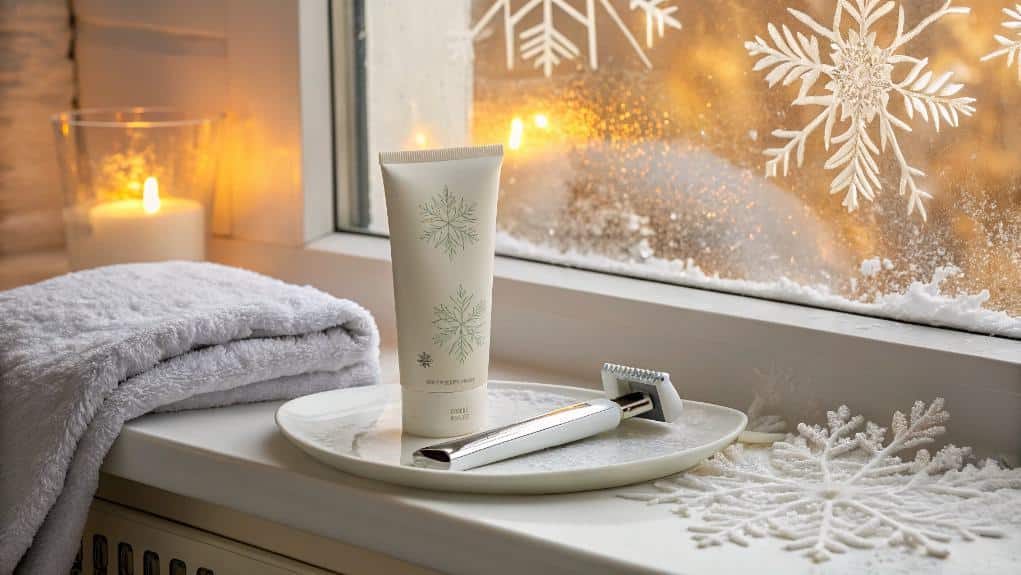
When winter arrives, your skin faces a perfect storm of challenges that can make shaving particularly troublesome. The cold, dry air actively strips moisture from your skin while disrupting its natural protective barrier, leading to increased skin sensitivity and irritation.
Your skin's ability to maintain moisture retention becomes compromised as winter's harsh conditions break down its natural elasticity. The use of hyaluronic acid can help restore essential hydration during these dry months. Regular use of non-comedogenic products can prevent pore clogging while maintaining necessary moisture levels. A daily retinol serum can help improve skin texture and elasticity during harsh winter conditions. This makes your face more susceptible to nicks, cuts, and razor burn during shaving.
The combination of low humidity and cold temperatures also throws off your skin's natural pH balance, typically around 5.5, making it more reactive to shaving products and environmental stressors. Patch testing new skincare products becomes especially crucial during winter months to avoid adverse reactions to changing skin conditions.
These winter-specific challenges create a situation where your skin becomes more vulnerable to irritation, requiring extra attention to prevent uncomfortable razor burn and related issues.
Using products with natural ingredients like aloe vera, chamomile, and calendula can help soothe winter-irritated skin and reduce redness from shaving.
Essential Pre-Shave Preparation Steps
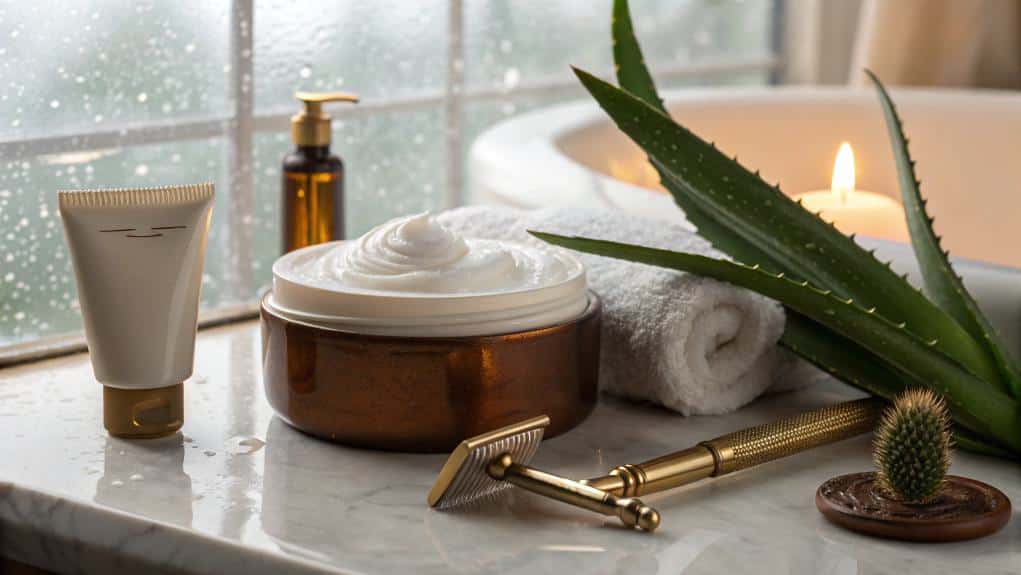
To combat winter's harsh effects on your skin, proper pre-shave preparation makes the difference between a smooth shave and painful razor burn.
Start by gently exfoliating 1-2 times weekly using exfoliation techniques like AHA/BHA products or a soft washcloth to remove dead skin cells, focusing on your neck and jawline.
Using a precision trimmer blade helps tackle difficult areas around the jawline before your main shave.
Cleanse your face with lukewarm water and a mild cleanser, then pat dry.
Apply moisturizing products like pre-shave oil or cream containing aloe vera or chamomile, letting it absorb for 1-2 minutes.
Before reaching for your razor, warm up your skin using a damp, warm towel for 2-3 minutes or take a brief shower to soften your beard.
Don't use hot water, as it'll strip away natural oils that protect your skin during shaving.
Pre-shave oils are essential for creating a protective layer that enhances razor glide and minimizes irritation.
Natural oils like jojoba and grapeseed are particularly effective for dry skin during winter months, creating a protective barrier that locks in moisture.
For optimal protection, apply hemp seed oil to moisturize and soothe sensitive areas before starting your shaving routine.
Using collagen cream after shaving helps repair and rejuvenate your skin's natural moisture barrier.
Choosing the Right Razor
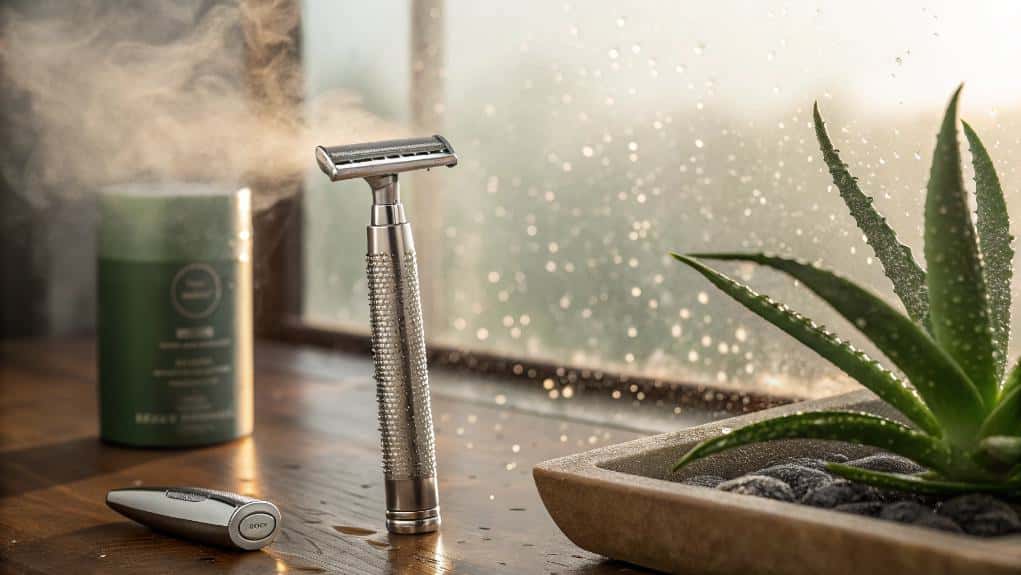
Selecting the right razor plays an essential role in preventing razor burn, especially during dry winter months. When evaluating razor types, consider your skin sensitivity and shaving experience.
Double-edge razors offer an excellent balance between closeness and gentleness, while cartridge razors provide more forgiveness for beginners. For optimal results during winter shaving, consider using Cremo shaving cream to enhance blade glide and minimize irritation. Using PureScience formulas can provide additional protection for sensitive winter skin. Many razors now feature chromium-coated blades for enhanced comfort and durability. Holding the razor at a 30-degree angle helps ensure smooth, irritation-free shaving results. Blade materials also matter considerably – high-carbon stainless steel with chromium coating reduces friction and helps prevent irritation.
Look for these features to combat winter dryness:
- Moisturizing strips that help soothe and protect dry skin
- Anti-friction coatings to minimize irritation
- Adjustable blade angles for customized aggressiveness
- Ergonomic handles with textured grips for better control
Choose a razor with a comfortable handle material that suits your needs. Metal handles offer durability, while lightweight plastic options work well for travel and everyday use. The VIKINGS BLADE razor combines premium Swedish steel with superior durability for consistently smooth winter shaves.
Smart Shaving Techniques
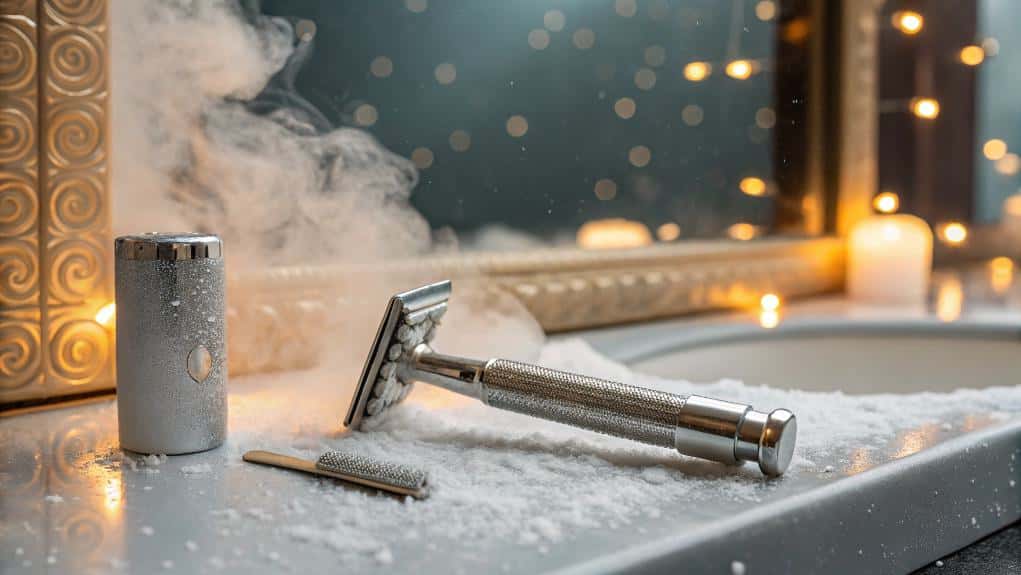
Four key shaving techniques can dramatically reduce your risk of razor burn and irritation.
Start by exfoliating before using your shaving tools, as this removes dead skin cells and helps your razor glide more smoothly. Using a double-edge razor provides better control and a more precise shave than disposable razors.
When you're ready to shave, always go in the direction of hair growth to prevent ingrown hairs and minimize inflammation.
Among technique variations, using light strokes is essential – it gives you better control and reduces the chance of nicks and cuts. You'll also maintain a more consistent angle with your razor this way.
Finally, resist the urge to repeatedly shave over the same area. Multiple passes can damage your skin's protective barrier and lead to irritation. Instead, focus on making each stroke count with proper preparation and careful attention to your technique.
Using quality shaving cream helps create a protective barrier between your razor and skin while providing essential lubrication for a smoother shave.
For sensitive skin, consider applying aloe vera gel before your moisturizer to soothe and calm any post-shave irritation.
Applying vitamin E products immediately after shaving can provide instant cooling and hydration while reducing redness and irritation.
Replace your blades every 5-7 shaves to maintain optimal performance and prevent skin irritation from dull blades.
Post-Shave Skin Care

Effective post-shave care begins immediately after you put down your razor. Your skin recovery process requires gentle treatment and proper post-shave techniques. Start by patting your face dry and applying a cold compress to reduce inflammation. Era Organics aftershave provides excellent plant-based moisturizing for all skin types.
Then, use products containing soothing ingredients like aloe vera or witch hazel. Using facial SPF protection helps prevent skin damage and irritation during winter months. Retinol products can help reduce the appearance of razor-induced skin irritation while promoting cell turnover. A proper skin care routine helps maintain healthy, resilient skin throughout the year.
For ideal results, follow these essential steps:
- Apply a fragrance-free, alcohol-free post-shave balm rich in moisturizers
- Keep your skin hydrated with glycerin-based products
- Use a humidifier in your room to maintain moisture levels
- Exfoliate gently 1-2 times weekly to prevent ingrown hairs
Consider switching to an electric shaver if you experience persistent irritation.
Remember to avoid hot water and tight clothing that can aggravate your skin. For severe razor burn, apply hydrocortisone cream and consult a skincare professional for personalized advice.
Modern electric razors like the Philips Norelco 7300 feature advanced SenseIQ technology that adapts to your skin's needs while shaving.
Winter Hydration Methods
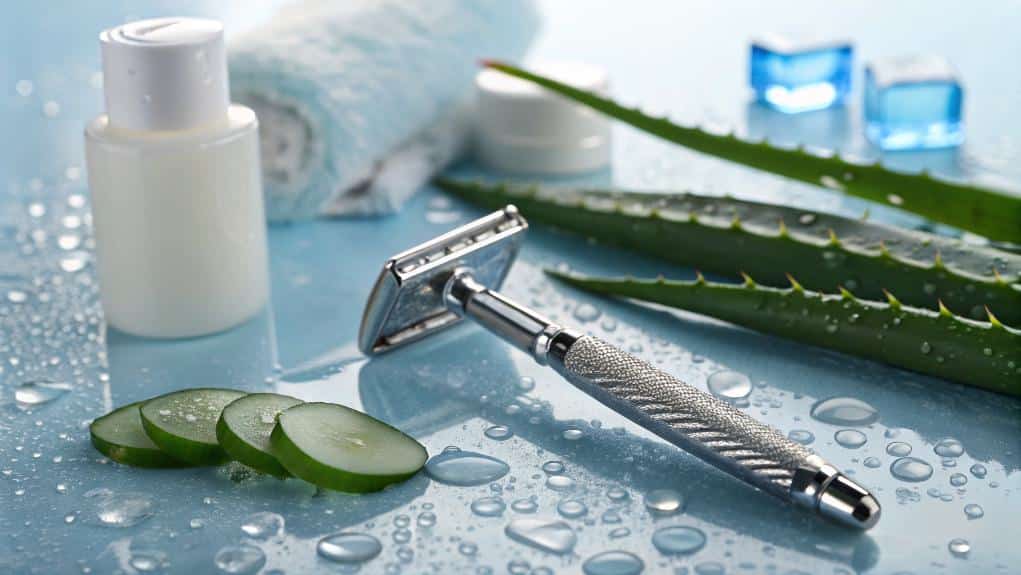
Maintaining healthy skin during winter requires specific hydration strategies to combat the harsh effects of cold weather and dry indoor heating. To maximize hydration benefits, you'll need to drink 8-10 glasses of water daily and use a humidifier in your living space.
Focus on moisture retention by applying a rich, non-comedogenic moisturizer to damp skin, especially after showering. Using a broad-spectrum sunscreen helps protect skin from winter sun damage while maintaining hydration levels. Apply water-resistant sunscreen to maintain consistent protection during outdoor winter activities. Consider products containing Pro-Retinol ingredients for added anti-aging benefits while moisturizing. For optimal absorption, choose moisturizers with microgel technology that penetrate the skin within 15-30 seconds.
Your diet plays an essential role in skin health during winter months. Include hydrating foods like cucumbers and watermelon, while boosting your intake of omega-3 fatty acids and antioxidants.
Avoid excessive caffeine and processed foods that can dehydrate your skin. For best results, use moisturizers containing hyaluronic acid or ceramides, and don't forget to protect your lips with an SPF-enhanced balm throughout the day.
Look for products containing three essential ceramides to help restore and maintain your skin's natural protective barrier during harsh winter conditions.
Product Selection Guide
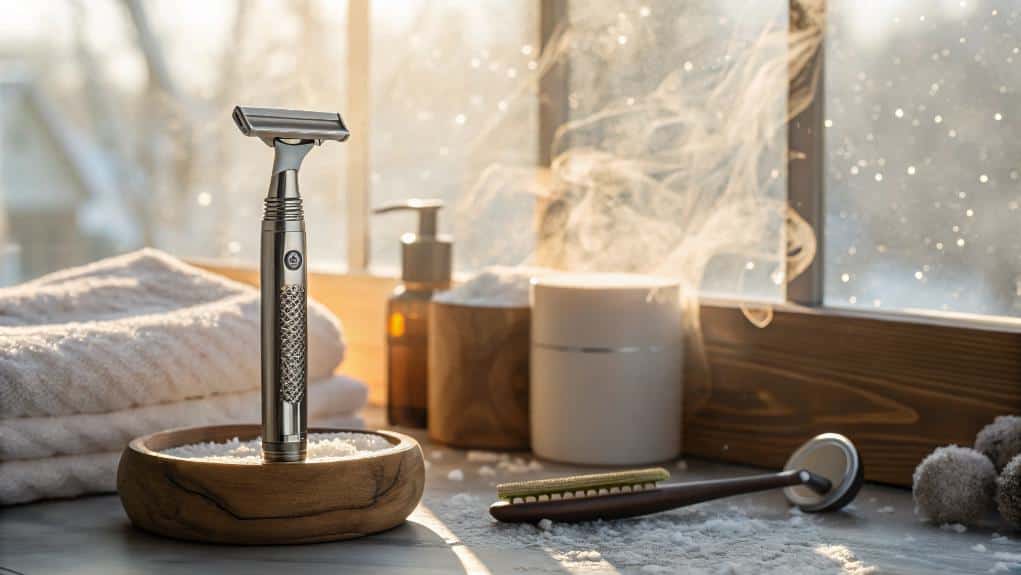
Selecting the right shaving products can dramatically reduce your risk of razor burn and skin irritation. When evaluating product recommendations, focus on ingredient benefits that protect and nourish your skin. Look for moisturizing elements like glycerin and shea butter, combined with soothing agents such as aloe vera and chamomile. Bee pollen extracts provide natural nourishment while fighting skin irritation and ingrown hairs. Shaving soaps offer a luxurious and effective alternative to traditional creams. Classic aftershaves can add a sophisticated finishing touch to your grooming routine.
- Choose pH-balanced shaving creams or gels with natural lubricants to minimize friction.
- Consider safety razors or single-blade options if you're prone to irritation.
- Select aftershave products containing witch hazel or tea tree oil to reduce inflammation.
- Invest in alcohol-free balms with vitamin E and antioxidants for post-shave protection.
For winter shaving, opt for heavy-duty creams if you have coarse hair, or aloe-based formulas for sensitive skin. Water-resistant dopp kits help keep your grooming essentials protected from moisture during travel.
Natural and organic options can provide excellent results while avoiding harsh chemicals that might trigger irritation.
Safety razor kits provide superior results while minimizing skin irritation compared to traditional cartridge razors.
Common Mistakes to Avoid
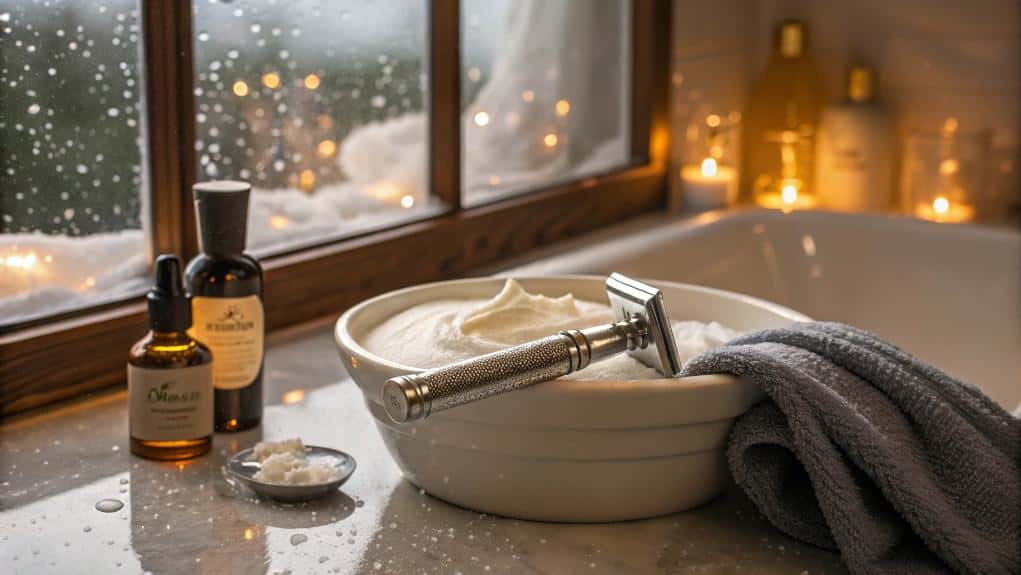
Even with the right products in hand, understanding what not to do can make the difference between a smooth shave and painful razor burn. Common shaving myths often lead to practices that increase skin sensitivity and irritation.
Don't rush your pre-shave routine – skipping warm water preparation or failing to cleanse your pores properly sets you up for problems. Building a complete shaving kit is essential for proper pre-shave preparation. Modern wet and dry shavers provide versatile options for both traditional and foam-based shaving routines.
When shaving, avoid applying excessive pressure or repeatedly going over the same area. Using trimmers with SkinSafe technology can significantly reduce the risk of nicks and cuts during grooming. Investing in hypoallergenic blades can minimize skin irritation during your grooming routine. You'll also want to follow the direction of your hair growth rather than against it.
After shaving, resist the urge to rinse with hot water or rub your face with a towel. Instead, splash with cool water and pat dry gently.
Finally, don't neglect post-shave care – moisturizing and protecting your skin from environmental elements is essential for preventing irritation.
Those with sensitive skin should consider using products with skin-friendly ingredients like allantoin, which helps soothe and protect irritated skin.
Healing Irritated Skin
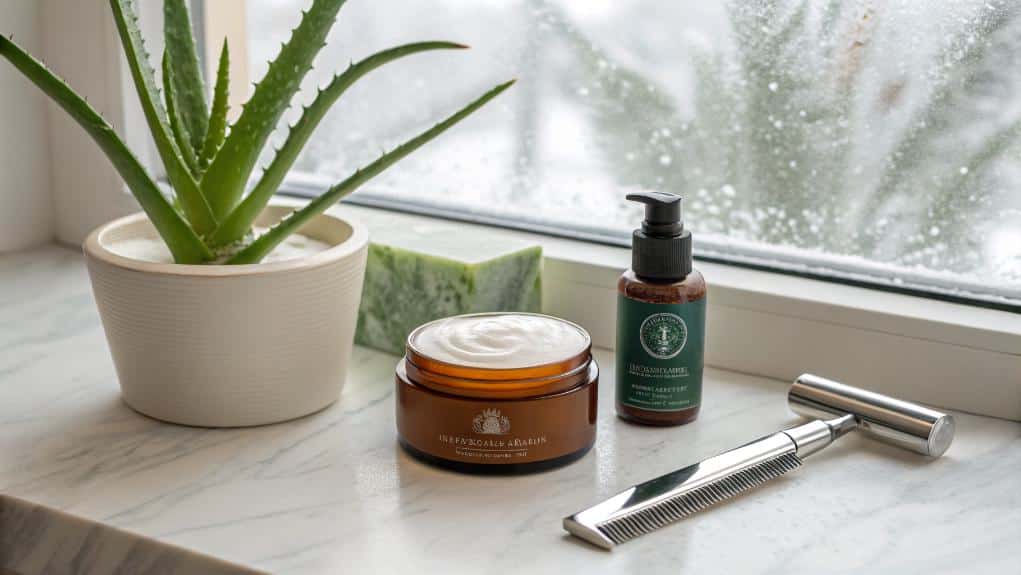
Despite your best prevention efforts, razor burn can sometimes occur, leaving your skin red, inflamed, and uncomfortable. When this happens, focus on applying soothing remedies immediately to calm your irritated skin. Apply cool compresses and hydrocortisone cream to reduce inflammation, followed by natural healers like aloe vera gel or witch hazel. Just like with UV skin protection, consistent daily care helps maintain healthy skin barriers. Using retinol products can help repair and rejuvenate irritated skin overnight. Peptide complexes work beneath the surface to improve skin firmness and elasticity.
Hyaluronic acid serum has become increasingly popular in men's skincare routines for its powerful hydrating properties. Some vitamin C serums contain L-ascorbic acid, which helps brighten and heal irritated skin while promoting collagen production.
For effective skin protection and healing, remember these essential steps:
- Apply a non-comedogenic moisturizer with hyaluronic acid to lock in hydration
- Use broad-spectrum SPF 30+ sunscreen to prevent further irritation
- Wear loose-fitting clothes to minimize friction against affected areas
- Avoid harsh skincare products that could worsen the condition
Keep the affected area clean and avoid touching it frequently. Consider using tea tree oil for its antibacterial properties, and always follow up with a gentle, fragrance-free moisturizer to support healing.