
The 3 Best Beard Oils for Healthy Shine and Growth in 2025
The 3 Best Beard Oils for Healthy Shine and Growth in 2025
Best Beard Oils for Sharp, Confident Men This Holiday Season
- Product Roundup:
- Every Man Jack Beard Oil: Vitamin E and argan blend softens wiry hair, hydrates dry, flaky skin, and features a subtle vanilla-cedar scent.
- Beard Club Growth Serum: Castor, cedarwood, and avocado oils nourish follicles overnight, relieve itch, and absorb without greasiness.
- Viking Revolution Sandalwood: Fast-absorbing jojoba and argan deliver a healthy shine with an authentic woodsy sandalwood profile.
Buying Guide: How to Choose the Right Beard Oil
- Skin first, then beard: Prioritize oils that hydrate the skin beneath (jojoba, argan, squalane) to prevent itch and flakes.
- Hair texture match: Coarse/wiry beards benefit from richer blends (castor, argan); fine or short beards prefer lighter oils (jojoba, grapeseed).
- Scent profile: Choose subtle, natural fragrances (cedar, sandalwood, vanilla) for daily wear; avoid overpowering synthetics if you have sensitive skin.
- Absorption and finish: Look for fast-absorbing formulas for daytime; thicker oils can be reserved for night repair.
- Ingredients to seek/avoid: Seek cold-pressed plant oils and vitamin E; avoid heavy silicones and harsh synthetic fragrances if irritation-prone.
- Routine compatibility: Ensure it layers well with your wash, balm, or butter; droppers help control dosage.
Pros & Cons Summary
- Every Man Jack Beard Oil
- Pros: Softens wiry hair; excellent skin hydration; subtle vanilla-cedar scent; good daily wear.
- Cons: Scent may be too light for those wanting stronger fragrance.
- Beard Club Growth Serum
- Pros: Nightly nourishment; itch relief; non-greasy feel; follicle-supportive castor oil.
- Cons: Best used at night—may be richer than some prefer for daytime.
- Viking Revolution Sandalwood
- Pros: Fast absorption; clean woodsy scent; boosts shine without heaviness.
- Cons: Scent-forward sandalwood may not suit fragrance-sensitive users.
Frequently Asked Questions About Men’s Grooming
- How many drops should I use?
- Typically 3–5 drops for short to medium beards; 6–10 for longer or denser beards.
- When should I apply beard oil?
- Post-shower on slightly damp beard for best absorption and even distribution.
- Can beard oil help growth?
- Oils don’t create new follicles but can optimize conditions for growth by hydrating skin, reducing breakage, and minimizing itch.
- Oil vs balm—what’s the difference?
- Oil hydrates and softens; balm adds light hold and extra conditioning. Many men use both.
- Will it make my beard look greasy?
- Not if you use the right amount and fast-absorbing oils like jojoba and argan.
Final Verdict & Pro Tips
- Verdict:
- Best for daily softness and skin health: Every Man Jack Beard Oil.
- Best for overnight nourishment and itch relief: Beard Club Growth Serum.
- Best for fast absorption and classic woodsy scent: Viking Revolution Sandalwood.
- Pro Tips:
- Warm 3–5 drops between palms, massage to the roots and skin, then work through lengths; finish with a comb for even coverage and lasting shine.
- Trim split ends monthly to maintain fuller appearance.
- Wash beard 2–3 times weekly with a gentle cleanser; avoid stripping daily shampoos.
- Adjust dosage with the seasons—more in dry winter air, less in humid months.
Main Points
Introduction
Best Beard Oils for Sharp, Confident Men This Holiday Season
Product Roundup:
- Every Man Jack Beard Oil: Combines vitamin E, argan oil, and borage to soften beard hair and calm flaky, dry skin underneath.
- Beard Club Growth Serum: Castor, cedarwood, and avocado oils nourish follicles, relieve itch, and support healthier, fuller beard growth.
- Viking Revolution Sandalwood Beard Oil: Argan and jojoba oils absorb quickly for shine and softness, with an authentic woodsy, masculine scent.
Buying Guide: How to Choose the Right Beard Oils
- Skin type match: Jojoba mimics natural sebum for balance; grapeseed is great for oily or acne‑prone skin; argan adds vitamin E-rich softness for dry or coarse beards.
- Scent profile: Woodsy notes (sandalwood, cedarwood) feel classic; choose unscented if you’re sensitive or layer cologne.
- Absorption and finish: Look for lightweight carriers (jojoba, argan) for non-greasy feel and healthy shine.
- Growth support: Castor and avocado oils can help condition follicles and reduce breakage for a fuller look.
- Ingredients to avoid: Heavy synthetic fragrances or drying alcohols if you have irritation-prone skin.
Pros & Cons Summary
- Every Man Jack Beard Oil
- Pros: Softens coarse hair; soothes dry, flaky skin; vitamin E and argan for shine.
- Cons: Light scent may be too subtle for those who want a stronger fragrance.
- Beard Club Growth Serum
- Pros: Castor and avocado oils support thicker-looking growth; reduces itch.
- Cons: Richer texture may feel heavy on very oily skin.
- Viking Revolution Sandalwood Beard Oil
- Pros: Fast absorption; clean shine; crowd-pleasing sandalwood scent.
- Cons: Scented formula may not suit fragrance-sensitive users.
Frequently Asked Questions About Men’s Grooming
- How much beard oil should I use?
- Use 2–8 drops depending on beard length and density.
- When should I apply it?
- Post-shower on a damp (not dripping) beard for best absorption.
- How do I distribute it evenly?
- Warm drops in palms, work from skin outward, then use a brush or comb to distribute.
- Can beard oil help with acne?
- Grapeseed and jojoba can suit oily or acne-prone skin; avoid heavy, comedogenic blends.
- Will it make my beard grow faster?
- Oils don’t change growth rate but can reduce breakage, itch, and dandruff for a fuller, healthier appearance.
Final Verdict & Pro Tips
- Choose Every Man Jack for dry skin relief and everyday softness.
- Pick Beard Club Growth Serum if you want conditioning focused on thicker-looking growth and itch reduction.
- Go with Viking Revolution for quick absorption, clean shine, and a classic sandalwood scent.
- Pro tips: Start small (3–4 drops), apply daily, and use a boar-bristle brush to train hairs and boost distribution. Trim split ends regularly and wash with a gentle beard wash 2–3 times per week to prevent buildup.
Every Man Jack Mens Beard Oil – Vanilla + Cedar Fragrance (1 fl oz)
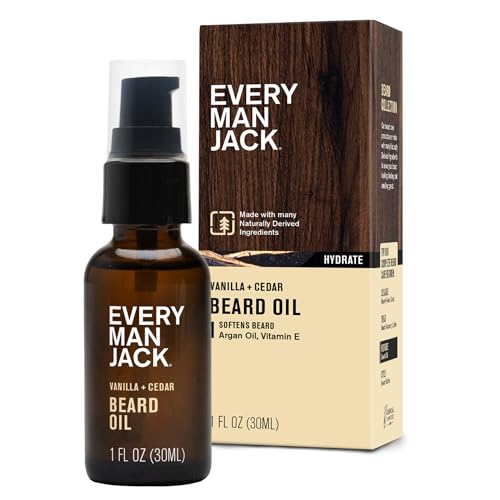
Every Man Jack Mens Beard Oil - Vanilla + Cedar Fragrance - Deeply Moisturizes and Softens Your Beard and Adds a Natural Shine - Naturally Derived with Shea Butter and Argan Oil - 1 fl oz
- LOOK LIKE A LUMBERJACK. FEEL LIKE SILK: You don’t have to suffer to look like a boss. Rub in our beard oil to soften your beard and nourish your skin and you’ll be feeling as good as you look.
- SMELL WARM AND WOODY: A bold yet balanced blend of warm vanilla and rich cedar. Smooth with a hint of ruggedness—fresh, woodsy, and effortlessly confident.
- NATURALLY DERIVED INGREDIENTS: Rub in our blend of Naturally Derived Vitamin E, Argan, and Borage to soften, nourish, and finish with a healthy shine.
Men's Grooming Pro earns from qualifying purchases. Last updated February 23, 2026.
Introduction
Best Beard Oil Picks for Sharp, Confident Men This Holiday Season
– Product Roundup: Every Man Jack Men’s Beard Oil – Vanilla + Cedar (1 fl oz)
Buying Guide: How to Choose the Right Beard Oil
- Look for multi-benefit formulas: Seek oils that address both beard softness and the skin underneath (flakiness, itch).
- Key ingredients: Vitamin E for antioxidant support, argan oil for softness and shine, borage for soothing and moisture balance.
- Texture matters: Non-greasy, fast-absorbing oils keep your beard touchable without residue.
- Scent profile: Vanilla + cedar offers a warm, woodsy-sweet vibe. Choose based on your fragrance preference or go unscented if sensitive.
- Size and usage: 1 fl oz is travel-friendly; longer or thicker beards may need larger bottles or more frequent repurchases.
- System compatibility: Pairing with a matching beard wash and balm can boost results and simplify routines.
Pros & Cons Summary
- Pros:
- Tackles beard texture and underlying skin health with vitamin E, argan oil, and borage
- Non-greasy, fast-absorbing feel with visible softness and shine after one use
- Works seamlessly with Every Man Jack’s beard wash, styling balm, and moisturizing butter for layered care
- Cons:
- Small 1 fl oz size may run out quickly for fuller beards
- Vanilla + cedar scent won’t suit everyone
- Best results may encourage buying additional products from the same line
Frequently Asked Questions About Men’s Grooming
– How much beard oil should I use?
Start with 2–4 drops for short beards, 5–8 for medium, and up to 10+ for long/thick beards. Adjust based on feel.
– When should I apply beard oil?
After a shower on towel-damp skin and hair for optimal absorption.
– Can beard oil help with beard dandruff?
Yes—formulas with hydrating and soothing ingredients like argan, vitamin E, and borage can reduce dryness and flaking.
– Will it make my beard look greasy?
Lightweight blends like this absorb quickly; avoid over-application for a clean finish.
– Do I need a balm too?
Use oil for hydration and softness; add balm for light hold, shaping, and extra moisture.
Final Verdict & Pro Tips
- Verdict: A strong, non-greasy pick that softens coarse beard hair while addressing flaky, dry skin underneath. The warm vanilla + cedar scent is holiday-ready and crowd-pleasing for many.
- Pro Tips:
- Comb oil through with a beard comb to distribute evenly to skin and ends.
- Layer with Every Man Jack’s beard wash and styling balm for a simple, synergistic routine.
- In winter, use a touch more oil or add a balm to lock in moisture and prevent cold-weather dryness.
Beard Club – Beard Growth Serum with Natural Oils

Beard Club - Beard Growth Serum with Natural Castor, Coconut and Avocado to Grow a Thicker, Fuller Beard, Fill in Patches and Stimulate Healthier Facial Hair Growth
- FORMULATED FOR GROWTH - A blend of healthy natural oils, Castor, Cedar and Avocado to help support healthy facial or scalp hair growth, help strengthen roots, thicken hair, and soothe itch while softening skin
- FILL IN PATCHES - Contains the ingredients necessary to help kick-start your growth journey. With the proper biological building blocks in supply, you can achieve the thicker, fuller, healthier beard and hair that you desire
- MINIMIZE BEARD ITCH - Helps keep the skin on the scalp and face hydrated, soft, and smooth while stimulating growth. No more beard itch or beard irritation
Men's Grooming Pro earns from qualifying purchases. Last updated February 23, 2026.
Introduction
Best Beard Growth Picks for Sharp, Confident Men This Holiday Season
- Product Roundup:
- Beard Club – Beard Growth Serum with Natural Oils
Buying Guide: How to Choose the Right Beard Growth Product
- Ingredients that matter: Look for castor oil (follicle support), cedarwood oil (circulation and soothing), and avocado oil (deep hydration). Avoid heavy silicones if you’re prone to clogged pores.
- Texture and finish: Opt for fast-absorbing formulas that soften hair without greasy residue—especially important for daily or nighttime use.
- Targeted concerns: If you have patchy growth or itch in early growth stages, choose serums that hydrate skin and deliver nutrients to follicles.
- Versatility: Products that work on both beard and scalp can help fill in patches wherever you need thickness.
- Scent tolerance: If you’re sensitive to essential oils (like cedar), look for fragrance details or unscented options.
- Consistency and timeline: Expect nightly use for several weeks to see meaningful change in patchy areas.
Pros & Cons Summary
- Pros:
- Combines castor, cedar, and avocado oils to support growth and hydrate skin simultaneously
- Fast-acting itch relief and softening without greasy residue for comfortable daily wear
- Works on beard and scalp for versatile patch-filling where needed
- Cons:
- Requires consistent nightly use for about three weeks to notice patchy-area results
- Results vary by genetics and causes of patchiness
- Scent details aren’t specified; cedar oil may be noticeable for scent-sensitive users
Frequently Asked Questions About Men’s Grooming
– How do I reduce beard itch in early growth?
Hydrate the skin beneath your beard daily with a non-greasy serum or oil and cleanse gently to prevent dryness.
– Will a growth serum fix patchy areas completely?
It can improve coverage and thickness, but outcomes depend on genetics and consistent use.
– Can I use beard serum on my scalp?
Yes—this formula is suitable for both beard and scalp to address thin patches.
– How long before I see results?
Many notice itch relief within days; fuller-looking coverage typically appears after about three weeks of nightly application.
– Will it make my beard greasy?
This serum is designed to absorb quickly and soften hair without a greasy finish.
Final Verdict & Pro Tips
If you’re battling patchy growth and early-stage itch, Beard Club’s Growth Serum offers a clean, fast-absorbing blend of castor, cedar, and avocado oils that hydrates skin, soothes irritation, and supports fuller-looking coverage with consistent use. Apply nightly to problem zones on your beard or scalp for at least three weeks.
Pro tips:
- Use after a warm shower when pores are open.
- Massage into skin beneath the hair for 30–60 seconds to boost absorption.
- Pair with a gentle cleanser and a boar-bristle brush to distribute oils evenly and encourage uniform growth.
Viking Revolution Sandalwood Beard Oil for Men (1 Pack)
Introduction
Best Beard Oils for Sharp, Confident Men This Holiday Season
– Product Roundup: Viking Revolution Sandalwood Beard Oil for Men (1 Pack)
Buying Guide: How to Choose the Right Beard Oil
- Ingredients matter: Look for natural carrier oils like argan and jojoba to soften hair and hydrate skin without residue.
- Scent profile: Choose fragrances that match your style; woodsy notes like sandalwood feel masculine and refined. If you’re sensitive, consider unscented options.
- Skin and beard type: Coarse, dry, or itchy beards benefit from richer blends; lighter oils suit fine hair or oily skin.
- Absorption and finish: A good oil should absorb quickly and leave a non-greasy finish.
- Brand guarantee: Look for satisfaction promises or easy returns for peace of mind.
Pros & Cons Summary
Pros:
- 100% natural blend with argan and jojoba softens wiry hair and hydrates skin without greasiness
- Authentic sandalwood delivers hours of woodsy, masculine scent without synthetic cologne notes
- Supported by The Viking Promise for customer satisfaction
Cons:
- Only available in sandalwood; no unscented or alternate scents in this pack
- Single-pack format may be less cost-effective for daily long-term use
- Requires consistent daily use to help with thin patches and fullness
Frequently Asked Questions About Men’s Grooming
– How much beard oil should I use?
Start with 3–5 drops for short to medium beards; longer or thicker beards may need up to 7–10 drops. Adjust based on length and dryness.
– When should I apply beard oil?
After a warm shower on a damp beard for best absorption, then comb through to distribute evenly.
– Can beard oil help with itch and beardruff?
Yes. Regular use of nourishing oils like argan and jojoba hydrates skin, reduces flaking, and soothes itch.
– Will it make my beard look greasy?
Quality oils absorb quickly. Use the right amount for your beard length to avoid a heavy finish.
Final Verdict & Pro Tips
Viking Revolution’s Sandalwood Beard Oil is a no-nonsense, 100% natural conditioner that tackles itch and beardruff while keeping coarse, unruly beards soft and manageable. The authentic sandalwood scent is masculine and long-lasting without smelling synthetic. Apply a few drops to a damp beard post-shower, warm between palms, and work from skin to tips. Comb to distribute, and use daily for best results. The Viking Promise backs every bottle, making it a solid holiday pick for men who want simple, effective grooming with a classic woodsy finish.
Factors to Consider When Choosing Beard Oils for Healthy Shine and Growth
Introduction
Best Beard Oil Picks for Sharp, Confident Men This Holiday Season
- Product Roundup:
- Lightweight daily oils with fast absorption
- Deep-conditioning blends for coarse or long beards
- Fragrance-free options for sensitive skin
- Natural, growth-supportive formulas with vitamins and botanical extracts
- Premium, cologne-inspired scents that last all day
Buying Guide: How to Choose the Right Beard Oil
Choosing the right beard oil comes down to five core factors that separate premium products from overpriced nonsense. Evaluate the carrier oils (like jojoba, argan, squalane, grapeseed) for absorption and skin benefits, and essential oils for scent and potential irritation. Assess how the fragrance wears throughout your day—does it fade gracefully or turn overpowering? Verify the formula truly delivers moisture, reduces itch and flakes, and supports healthier-looking growth. Match the blend to your skin type: oily skin prefers lighter, non-comedogenic carriers; dry or coarse beards benefit from richer oils. Finally, check transparency: clear ingredient lists, cruelty-free claims, and reputable reviews keep you from wasting money on products that end up unused in your bathroom drawer.
Pros & Cons Summary
- Pros:
- Softer beard feel and healthier-looking shine
- Reduced itch, flakes, and beardruff
- Smoother styling and fewer tangles
- Scents that can subtly enhance your routine
- Cons:
- Some essential oils can irritate sensitive skin
- Heavier blends may feel greasy or clog pores
- Premium fragrances can raise the price
Frequently Asked Questions About Men’s Grooming
- How often should I apply beard oil? 1–2 times daily, adjusting for climate and beard length.
- Can beard oil help with growth? It supports the environment for growth by moisturizing skin and reducing breakage, but it doesn’t change genetics.
- Oil vs. balm? Oil for hydration and shine; balm for light hold and flyaway control—many use both.
- Fragrance-free or scented? Choose fragrance-free for sensitive skin; otherwise pick a scent that complements your cologne, not competes with it.
Final Verdict & Pro Tips
Focus on high-quality carrier oils, minimal irritants, and a scent profile you actually enjoy wearing all day. Patch test new formulas, start with 3–5 drops after a warm shower, and comb through to distribute evenly. Trim split ends regularly, and use a gentle beard wash to keep your skin and hair in top condition.
Natural Oil Ingredient Quality
Introduction
Best Natural Oil Ingredient Quality Picks for Sharp, Confident Men This Holiday Season
Upgrade your beard game with clean, effective oils that condition hair, nourish skin, and absorb fast—without greasiness or irritation.
- Product Roundup:
- Argan oil: Rich in vitamin E and essential fatty acids; softens beard hair and boosts shine without clogging pores.
- Jojoba oil: Skin-mimicking wax ester; balances sebum, reduces itch, and absorbs lightweight.
- Sweet almond oil: Vitamin-rich moisture; great for dry, coarse beards.
- Grapeseed oil: Ultra-light, fast-absorbing; ideal for acne-prone or oily skin.
- Vitamin E (tocopherol): Antioxidant support that helps lock in moisture and protect skin barrier.
- Essential oils (sparingly): For scent and targeted benefits—opt for skin-safe dilutions and avoid irritants.
Buying Guide: How to Choose the Right Natural Oil Ingredient Quality
- Prioritize naturally derived carrier oils with clear labeling of oil types and concentrations.
- Seek lightweight absorption to moisturize without a greasy finish.
- Look for vitamin E and essential fatty acids to lock in moisture and support skin health.
- Avoid harsh synthetic additives, heavy fragrances, and drying alcohols that can irritate skin and damage beard hair.
- Choose transparent brands—vague ingredient lists are a red flag for inconsistency.
- Match oil to skin type:
- Oily/acne-prone: Grapeseed, jojoba.
- Normal/combination: Jojoba, argan.
- Dry/sensitive: Sweet almond, argan, small dose of squalane.
Pros & Cons Summary
- Pros:
- Proven conditioning without clogging pores.
- Healthier skin under the beard; reduced itch and flaking.
- Fast absorption; non-greasy finish when balanced correctly.
- Antioxidant protection from vitamin E.
- Cons:
- Poorly balanced blends can feel heavy or cause breakouts.
- Fragrance and certain essential oils may irritate sensitive skin.
- Lack of transparency in labeling makes quality hard to verify.
Frequently Asked Questions About Men’s Grooming
– Do natural oils clog pores?
High-quality carriers like jojoba and argan are generally non-comedogenic when used properly.
– Can I use beard oil on short stubble?
Yes—it reduces itch and hydrates skin from day one.
– How much beard oil should I use?
Start with 2–4 drops for short beards, 5–8 for medium, more as needed for long beards.
– Fragrance or fragrance-free?
Sensitive or acne-prone skin often does best fragrance-free or with very low essential oil dilution.
– How often should I apply?
Once daily after showering; twice in dry climates or winter.
Final Verdict & Pro Tips
Choose beard oils with clearly listed, naturally derived carriers like jojoba and argan, fortified with vitamin E and essential fatty acids. Skip harsh synthetics and drying alcohols. Aim for lightweight blends that absorb cleanly and keep both beard and skin healthy.
Pro tips:
- Apply to damp, towel-dried beard for better spread and absorption.
- Use a boar-bristle brush or comb to distribute evenly to the skin underneath.
- Patch test new oils, especially those with fragrance or essential oils.
- Store in a cool, dark place to preserve potency.
- If a brand hides behind vague ingredient lists, move on—transparency equals consistency.
Scent Profile and Longevity
Introduction
Best Beard Oil Picks for Sharp, Confident Men This Holiday Season
- Product Roundup:
- Warm Vanilla & Cedar: Cozy, approachable, and versatile for day-to-night wear.
- Sandalwood: Smooth, classic, and refined; pairs well with most winter fragrances.
- Light Citrus/Herbal Blends: Fresh, gym-to-office friendly; less likely to clash with cologne.
- Unscented Base Oils: Zero-conflict option that won’t interfere with your signature scent.
Buying Guide: How to Choose the Right Beard Oil
- Scent profile: From warm vanilla and cedar to sandalwood, pick a note that complements your cologne or body wash to avoid clashes.
- Longevity: Heavier base oils and richer essential oils linger longer on skin and beard for extended wear time.
- Daily wearability: Subtle, low-intensity aromas typically outperform overpowering options for all-day comfort.
- Skin health: Better moisture retention boosts scent longevity by preventing dryness-related fade.
Pros & Cons Summary
- Pros:
- Heavier oils = longer-lasting scent and softer beard feel
- Subtle profiles layer well with cologne and body wash
- Improved skin hydration extends fragrance life
- Cons:
- Strong scents can clash with other grooming products
- Rich bases may feel heavy on very fine or oily beards
- Light, fresh blends may fade faster without proper hydration
Frequently Asked Questions About Men’s Grooming
- How do I make beard oil scent last longer?
- Apply after a warm shower on slightly damp skin and beard; use a nourishing formula with heavier base oils.
- Will beard oil clash with my cologne?
- It can. Choose complementary or unscented oils if you regularly wear fragrance.
- Is stronger always better for scent?
- Not for daily use. Subtle, balanced aromas are more wearable and less likely to overwhelm.
Final Verdict & Pro Tips
- Choose scents that match your routine: subtle blends for daily use, richer woods for evening.
- Layer smart: If you wear cologne, pick complementary notes or go unscented.
- Hydrate first: Well-moisturized skin retains fragrance longer, reducing scent fade throughout the day.
Moisturizing and Hydration Properties
Introduction
Best Moisturizing and Hydration Properties Picks for Sharp, Confident Men This Holiday Season
- Product Roundup:
- Argan Oil: Deeply penetrates to combat dryness and flakiness at the root.
- Jojoba Oil: Biomimetic to skin’s natural sebum; balances and hydrates without greasiness.
- Vitamin E: Supports sustained hydration and barrier resilience.
- Borage Seed Oil: Rich in essential fatty acids (especially GLA) to lock in moisture and improve softness.
Buying Guide: How to Choose the Right Moisturizing and Hydration Properties
- Look for lightweight, fast-absorbing oils (argan, jojoba) to reduce itch without clogging pores.
- Prioritize barrier-supporting antioxidants (vitamin E) and EFAs (borage seed) for long-lasting softness.
- Consider skin type: choose non-comedogenic blends if you’re acne-prone; richer formulas for very dry skin.
- Scent matters: opt for subtle or unscented if you’re sensitive to fragrance.
Pros & Cons Summary
- Pros:
- Reduces beard itch by keeping skin hydrated and calming irritation from coarse hairs.
- Enhances shine and smoothness for a polished, non-patchy look.
- Locks in moisture and improves softness with essential fatty acids.
- Cons:
- Heavier oils may feel greasy on oily or acne-prone skin.
- Fragranced blends can irritate sensitive skin.
Frequently Asked Questions About Men’s Grooming
- How often should I apply beard oil?
- Daily, and adjust amount seasonally; use more in dry, cold weather.
- Should I apply on wet or dry hair?
- Apply to a slightly damp beard post-shower for better absorption and moisture retention.
- Will beard oil clog pores?
- Non-comedogenic oils like jojoba and argan are less likely to clog pores when used sparingly.
Final Verdict & Pro Tips
- For all-day hydration and itch relief, choose a blend featuring argan, jojoba, vitamin E, and borage seed oil.
- Pro tip: Warm a few drops between your palms, work into a slightly damp beard and down to the skin, then finish with a comb to distribute evenly and boost shine.
Growth-Supporting Formulation Benefits
Introduction
Best Beard Oil Picks for Sharp, Confident Men This Holiday Season
Upgrade from basic softening to growth-supporting beard oils engineered to fuel healthy development from the follicle up. These blends combine nutrient-dense botanicals to nourish roots, reduce irritation, and maintain density—so your beard grows thicker, fuller, and more comfortable over time.
- Product Roundup:
- Castor-Rich Growth Oils: High in ricinoleic acid to support follicles, reduce breakage, and add density.
- Cedarwood-Infused Blends: Help balance sebum, calm irritation, and create a healthier growth environment.
- Avocado & Vitamin-E Formulas: Deeply condition, reinforce the hair shaft, and improve softness for daily manageability.
- Multi-Botanical Serums: Combine castor, jojoba, argan, and cedar for an all-in-one growth and conditioning routine.
- Lightweight Day Wear Oils: Fast-absorbing options that won’t feel greasy—ideal for consistent, everyday use.
Buying Guide: How to Choose the Right Beard Oil
- Prioritize Growth-Supporting Actives: Look for castor oil, cedarwood, peppermint, and avocado or vitamin E to nourish follicles and soothe skin.
- Check Carrier Oil Balance: Jojoba and argan mimic natural sebum and improve absorption; castor adds thickness—aim for a balanced blend.
- Consider Skin Type: Choose lighter oils (jojoba, grapeseed) for oily/ acne-prone skin; richer oils (avocado, castor) for dry or coarse beards.
- Scent and Wearability: Opt for subtle, natural fragrances and fast-absorbing textures for daily use.
- Transparency and Quality: Cold-pressed, minimally processed oils with clear ingredient lists; avoid unnecessary silicones and heavy synthetic fragrances.
- Packaging Matters: Dark glass bottles with droppers help preserve potency and make consistent dosing easy.
Pros & Cons Summary
- Pros:
- Nourishes follicles for thicker, fuller appearance over time
- Soothes skin and reduces inflammation, helping minimize itch and patchiness
- Strengthens roots and reduces breakage to maintain length and density
- Improves softness and manageability, encouraging daily consistency
- Cons:
- Results require regular use over weeks, not days
- Heavier blends can feel oily on fine hair or oily skin
- Scented formulas may not suit sensitive users
- Quality options can be pricier than basic conditioners
Frequently Asked Questions About Men’s Grooming
– How often should I apply growth-supporting beard oil?
Daily, ideally after cleansing when hair is slightly damp to maximize absorption.
– Will beard oil grow new hair where there are no follicles?
No. It supports healthier growth from existing follicles, improving thickness and coverage.
– Can it help with patchy areas?
Yes. By nourishing follicles and calming skin, consistent use can improve the look of patchiness over time.
– What’s the best time to apply?
Morning and/or evening. A lighter oil is great for daytime; richer blends can be used at night.
– Can I combine with a derma roller or balm?
Yes. Many pair weekly microneedling and daily oil; finish with a light balm for hold if needed.
Final Verdict & Pro Tips
Choose a beard oil that balances growth-supporting actives with everyday wearability. Castor, cedarwood, and avocado oils nourish follicles, reduce irritation, and strengthen hair to promote fuller, denser growth. Consistency is key—apply daily, distribute to the skin beneath the beard, and adjust viscosity to your skin type. Pro tip: Warm a few drops between your palms and massage into the skin first, then pull through the beard to minimize breakage and lock in a growth-focused routine.
Skin Sensitivity and Compatibility
Introduction
Best Beard Oil Picks for Sharp, Confident Men This Holiday Season
- Product Roundup:
- Argan- and jojoba-based, non-comedogenic beard oils for acne-prone skin
- Fragrance-free, hypoallergenic formulas for sensitive or reactive skin
- Vitamin E–fortified blends for antioxidant support with low irritation risk
- Dermatologist-tested options that hydrate skin and soften beard without clogging pores
Buying Guide: How to Choose the Right Beard Oil
- Patch test first: Apply a small amount to a discreet area and wait 24 hours to spot any redness, tightness, or breakouts before full use.
- Go non-comedogenic: Look for oils like argan, jojoba, and borage to avoid clogged pores and reduce acne risk.
- Minimize irritants: If you’re sensitive, skip added fragrances and essential oils—they’re common triggers for redness and itching.
- Check labels: “Hypoallergenic” and “dermatologist-tested” can be meaningful indicators for reactive skin when backed by transparent ingredients.
- Skin + beard benefits: The best formulas hydrate both your beard and the skin beneath to prevent dryness, flaking, and itch.
Pros & Cons Summary
- Pros:
- Non-comedogenic oils reduce breakouts
- Vitamin E offers antioxidant support with low irritation potential
- Fragrance-free, hypoallergenic options suit sensitive skin
- Dermatologist-tested formulas can improve confidence in compatibility
- Cons:
- Essential oil–scented blends can irritate sensitive skin
- Some “natural” oils still clog pores if not non-comedogenic
- Hypoallergenic labels vary by brand—always patch test
Frequently Asked Questions About Men’s Grooming
– Do I really need to patch test beard oil?
Yes. A 24-hour patch test helps catch reactions like redness, tightness, or breakouts before they spread.
– Which oils are least likely to clog pores?
Argan, jojoba, and borage are reliable non-comedogenic choices.
– Are fragrances always bad?
Not always, but added fragrances and many essential oils commonly irritate sensitive skin. Choose fragrance-free if you’re reactive.
– What does “dermatologist-tested” mean?
It indicates testing under dermatological supervision; still verify ingredients and patch test for your unique skin.
– Will beard oil help with beard itch and flakes?
Yes. A well-formulated oil moisturizes the skin underneath, reducing dryness, flaking, and itch.
Final Verdict & Pro Tips
- Choose non-comedogenic, fragrance-free formulas with argan, jojoba, or borage oil and vitamin E for balanced hydration and low irritation risk.
- Always patch test for 24 hours before full application.
- Apply sparingly to a damp beard, starting with 2–4 drops and adjusting as needed.
- Reassess if you notice redness, tightness, or breakouts—switch to a simpler, hypoallergenic, dermatologist-tested option.
Absorption Rate and Texture
Best Beard Oil Picks for Sharp, Confident Men This Holiday Season
- Product Roundup:
- Lightweight blends (e.g., argan-forward oils) for quick absorption and natural shine without grease
- Balanced blends combining light and mid-weight carriers for all-day softness and control
- Rich, occlusive options (e.g., castor-heavy formulas) for coarse or very dry beards needing moisture lock
Buying Guide: How to Choose the Right Beard Oil
- Absorption rate: Lighter carrier oils like argan absorb quickly, delivering nutrients without leaving a greasy residue. Thicker oils like castor sit longer on the surface, sealing in moisture but can feel heavy.
- Texture and feel: Look for smooth, non-greasy formulations that distribute evenly and don’t weigh down your beard.
- Skin and hair needs: Fatty acid profiles and vitamins influence how fast oils soak into follicles and skin—better absorption supports healthier growth and comfort.
- Layering strategy: Avoid applying occlusives (like balm) immediately after oil; let oil penetrate first.
Pros & Cons Summary
- Pros:
- Lightweight oils: fast absorption, natural shine, minimal residue
- Thicker oils: stronger moisture sealing for coarse or dry beards
- Even, smooth textures improve distribution and feel
- Cons:
- Lightweight oils may require reapplication on very dry beards
- Thicker oils can feel heavy or greasy if overapplied
- Poor layering traps oil on the surface and reduces benefits
Frequently Asked Questions About Men’s Grooming
- How do I know if a beard oil absorbs well?
- It should soak in within minutes, leave minimal residue, and provide soft feel without tackiness.
- Can I mix beard oil and balm?
- Yes—apply oil first, wait a few minutes for absorption, then add balm to seal.
- Which oils are best for coarse beards?
- Castor-forward or richer blends help lock in moisture; use sparingly to avoid heaviness.
- Will a lighter oil still add shine?
- Yes—quick-absorbing oils like argan give natural, non-greasy luster.
Final Verdict & Pro Tips
- Choose absorption and texture based on your beard’s density and dryness: lighter for quick nourishment and daily wear, richer for deep moisture on coarse or very dry beards.
- Pro tip: Warm a few drops between your palms, work from skin outward, then comb through. Wait before applying balm to avoid trapping oil on the surface and wasting its benefits.
Bottle Size and Value
Introduction
Best Beard Oil Picks for Sharp, Confident Men This Holiday Season
- Product Roundup:
- Best Value: 2 oz bottles — lower cost per ounce, fewer reorders
- Best Bulk Buy: 4 oz bottles — best cost per application for daily users
- Best for Travel: 0.5–1 oz — convenient for trips, not ideal for everyday use
Buying Guide: How to Choose the Right Beard Oil Size
- Match size to usage: Daily users with full beards go through 1 oz in 3–4 weeks; 2–4 oz makes more sense long-term.
- Calculate your monthly usage:
- Short beards: 3–4 drops/day
- Full beards: 6–8 drops/day
- Cost per ounce > sticker price: Larger bottles typically deliver a lower cost per application.
- Reorder frequency: Bigger bottles cut down on constant restocking; use travel sizes only for short trips.
- Typical yield: A 2 oz bottle gives roughly 60–80 applications, or about two months for most users.
Pros & Cons Summary
- 1 oz bottles
- Pros: Lower upfront cost; travel-friendly
- Cons: Runs out in 3–4 weeks with daily use; higher cost per ounce
- 2 oz bottles
- Pros: Better value; about two months of coverage; fewer reorders
- Cons: Slightly higher upfront cost
- 4 oz bottles
- Pros: Lowest cost per application; ideal for consistent, daily routines
- Cons: Highest upfront cost; less portable
Frequently Asked Questions About Men’s Grooming
- How do I know what size to buy?
- Estimate drops per day (3–4 short, 6–8 full) and multiply by 30 days; choose 2–4 oz if you’re a daily user.
- Is travel size worth it?
- Yes for trips; no for everyday use due to higher cost per ounce.
- Will beard length change how long a bottle lasts?
- Yes. Fuller beards need more drops, so smaller bottles empty faster.
Final Verdict & Pro Tips
- Go 2 oz for best overall value; 4 oz if you’re committed to daily use and want the lowest cost per application.
- Keep a 1 oz bottle for your Dopp kit; refill from your larger bottle to save money.
- Track your monthly usage once, then set a smart reorder schedule to never run out.
Brand Certification and Standards
Introduction
Best Brand Certification and Standards Picks for Sharp, Confident Men This Holiday Season
- Product Roundup:
- B Corp Certified brands for verified social and environmental accountability
- USDA Organic and Non-GMO Project Verified grooming lines for ingredient integrity
- Leaping Bunny–certified (cruelty-free) products for ethical grooming
- US-made or regionally sourced oils with stricter oversight and quality control
- Brands with transparent GMP-like processes and published test results (COAs)
Buying Guide: How to Choose the Right Brand Certification and Standards
- Prioritize third-party verification: B Corp, USDA Organic, Non-GMO Project Verified, Leaping Bunny.
- Verify transparency: look for sourcing details, GMP-like manufacturing disclosures, and accessible lab results.
- Prefer regional/US-made oils for tighter regulatory controls and consistency.
- Check labels and websites: reputable brands display certifications clearly and link to audits or COAs.
- Avoid vague claims like “natural” without certification or sourcing proof.
Pros & Cons Summary
- Pros:
- Audited proof of ingredient integrity and safety
- Lower risk of irritants and contaminants
- Consistent performance and quality control
- Ethical and sustainable practices verified
- Cons:
- Certified products can cost more
- Not all high-quality brands pursue certification due to fees/time
- Certifications vary in scope; may not cover every aspect you care about
Frequently Asked Questions About Men’s Grooming
– Do certifications really matter?
Yes. Independent audits validate safety, sourcing, and manufacturing practices beyond marketing claims.
– Which certifications should I look for first?
B Corp for overall accountability; USDA Organic and Non-GMO for ingredient standards; Leaping Bunny for cruelty-free.
– How can I verify a brand’s certification?
Check official databases (B Corp, USDA Organic, Non-GMO Project, Leaping Bunny) and request COAs or test results.
– Are US-made products always better?
Not always, but US-made or regionally sourced oils often face stricter oversight and clearer traceability.
Final Verdict & Pro Tips
- Choose brands that openly publish certifications, sourcing, GMP-like processes, and test results.
- If a brand hides its sourcing or certification details, skip it—legitimate companies display standards on labels and websites.
- Certifications typically translate to safer formulations, fewer irritants, and reliable performance that delivers real results.
Frequently Asked Questions
How Often Should I Apply Beard Oil Daily?
Introduction
Keeping your beard healthy and well-groomed starts with a consistent routine. Beard oil is a simple, effective step that keeps your facial hair soft, hydrated, and itch-free.
Best Grooming Picks for Sharp, Confident Men This Holiday Season
- Product Roundup:
- Daily Nourish Beard Oil: Lightweight, fast-absorbing oil ideal for everyday use after a shower.
- Deep Hydration Beard Serum: Richer formula for very dry beards or cold-weather care.
- Refresh & Tame Beard Balm: Complements oil for extra hold and moisture sealing.
- Boar Bristle Beard Brush: Helps distribute oil evenly and train the beard.
- Sandalwood Beard Comb: Gentle detangling and even application without static.
Buying Guide: How to Choose the Right Grooming Products
- Skin type:
- Oily: Choose lightweight, non-greasy oils like grapeseed or jojoba.
- Dry/sensitive: Look for argan, avocado, or marula oils and fragrance-free options.
- Beard length/thickness: Longer, coarser beards may need richer formulas and slightly more product.
- Scent profile: Opt for subtle, natural scents for daily wear or unscented for sensitive skin.
- Ingredients: Prioritize natural oils; avoid heavy silicones if you prefer a natural finish.
- Tools: Use a beard brush or comb to distribute oil evenly and reduce tangles.
Pros & Cons Summary
- Pros:
- Hydrates hair and skin, reduces itch and dandruff.
- Softens beard, improves manageability and appearance.
- Helps prevent split ends and breakage.
- Cons:
- Overuse can make beard look greasy.
- Fragrances may irritate sensitive skin.
- Heavier oils may feel too rich for oily skin types.
Frequently Asked Questions About Men’s Grooming
- How often should I apply beard oil daily?
- Apply beard oil once daily, preferably right after showering while your beard is still slightly damp to lock in moisture and distribute evenly. If your beard is particularly dry or you live in a cold, dry climate, you can apply it twice daily.
- How much beard oil should I use?
- Stubble/short: 2–3 drops. Medium: 3–5 drops. Long/thick: 6–10 drops. Adjust based on feel and shine.
- Should I use beard oil or balm?
- Oil for hydration and softness; balm for added hold and sealing in moisture. Many men use both.
- Can I apply beard oil to the skin?
- Yes—massage down to the skin beneath the beard to prevent dryness and flakes.
Final Verdict & Pro Tips
- Use beard oil once daily after a warm shower for best absorption; go twice daily if your beard or climate is very dry.
- Warm the oil between your palms and work from skin to ends, then brush to distribute.
- Start with fewer drops and add as needed to avoid greasiness.
- Reassess with seasons: lighter oils in summer, richer formulas in winter.
Can Beard Oil Cause Acne or Skin Breakouts?
Introduction
Beard oil can contribute to acne or skin breakouts if you’re using comedogenic oils or applying too much product. Opt for non-comedogenic, lightweight oils and use a conservative amount to keep pores clear and skin balanced.
Best Beard Oil Picks for Sharp, Confident Men This Holiday Season
- Product Roundup:
- Jojoba-Based Beard Oil: Lightweight, skin-mimicking oil that moisturizes without clogging pores.
- Argan Blend Beard Oil: Fast-absorbing, rich in vitamin E, ideal for softening coarse beards.
- Squalane Beard Serum: Ultra-light, non-greasy hydration for acne-prone or oily skin.
- Hemp Seed & Grapeseed Oil Mix: Non-comedogenic duo that reduces irritation and adds shine.
- Fragrance-Free Sensitive Skin Formula: Minimizes potential irritation and breakouts.
Buying Guide: How to Choose the Right Beard Oil
- Look for “non-comedogenic” on the label and prioritize lightweight oils like jojoba, argan, squalane, grapeseed, and hemp seed.
- Avoid heavier, potentially comedogenic oils (e.g., coconut oil) if you’re acne-prone.
- Choose fragrance-free or naturally scented options if you have sensitive skin.
- Check for added skin soothers: vitamin E, aloe, or chamomile.
- Packaging matters: dropper bottles help control dosage and prevent over-application.
- Test first: patch test on the jawline for 24 hours before full use.
Pros & Cons Summary
- Pros:
- Softens beard hair and reduces itchiness and flaking.
- Helps tame flyaways and adds a healthy shine.
- Can support skin barrier with the right non-comedogenic oils.
- Cons:
- Over-application can clog pores and trigger breakouts.
- Heavier or comedogenic oils may exacerbate acne.
- Fragrances and essential oils can irritate sensitive skin.
Frequently Asked Questions About Men’s Grooming
- Can beard oil cause acne?
- Yes, if you use comedogenic oils or apply too much. Stick to lightweight, non-comedogenic formulas and use sparingly.
- How much beard oil should I use?
- Start with 2–3 drops for short beards, 4–6 for medium, and 6–8 for long beards. Adjust based on your skin’s response.
- When should I apply beard oil?
- After cleansing, on slightly damp beard and skin to lock in moisture.
- Can I use beard oil with acne treatments?
- Yes, but choose gentle, fragrance-free formulas and apply after water-based treatments. Monitor for irritation.
Final Verdict & Pro Tips
- Verdict: Beard oil doesn’t have to cause acne—choose non-comedogenic, lightweight oils and avoid heavy-handed application.
- Pro Tips:
- Wash your face and beard daily with a gentle cleanser to remove buildup.
- Exfoliate 1–2 times a week to prevent clogged pores.
- Distribute oil evenly by massaging into the skin beneath the beard, not just the hair.
- If breakouts persist, pause use and consult a dermatologist or switch to a lighter serum like squalane.
What’s the Difference Between Beard Oil and Beard Balm?
Introduction
Best Beard Care Picks for Sharp, Confident Men This Holiday Season
- Product Roundup:
- Beard Oil: Lightweight liquid that moisturizes skin, softens whiskers, and reduces itch and dandruff.
- Beard Balm: Thicker, butter-and-beeswax-based formula that conditions while providing light-to-medium styling hold and shape.
Buying Guide: How to Choose the Right Beard Care Product
- Choose beard oil if:
- Your skin feels dry or itchy under the beard.
- You want a soft, natural finish with no hold.
- Your beard is short to medium length or you prefer daily conditioning.
- Choose beard balm if:
- You need control, flyaway taming, and light styling.
- Your beard is medium to long and needs shape.
- You want conditioning plus a subtle, groomed look.
- Key ingredients to look for:
- Oils: jojoba, argan, sweet almond (hydrate and soften).
- Butters: shea, cocoa, mango (nourish and add body).
- Waxes: beeswax or plant wax (hold and structure).
- Scent: pick subtle, natural fragrances if you’re sensitive.
- Application tips:
- Oil: 3–6 drops after showering; work into skin, then through beard.
- Balm: Pea-sized amount; warm between palms and apply, then comb to shape.
Pros & Cons Summary
- Beard Oil
- Pros: Deeply moisturizes skin, softens beard, reduces itch and flakes, non-greasy feel when used correctly.
- Cons: No styling hold; can feel oily if overapplied.
- Beard Balm
- Pros: Adds light-to-medium hold, tames flyaways, conditions over time, great for shaping longer beards.
- Cons: Heavier texture; can build up if overused or not washed out regularly.
Frequently Asked Questions About Men’s Grooming
- Can I use both oil and balm together?
- Yes. Apply oil first to hydrate skin and hair, then balm to lock in moisture and add hold.
- How often should I apply?
- Daily for oil; balm as needed for control—often daily for longer beards.
- Will balm replace oil?
- Not entirely. Balm conditions and shapes, but oil is best for direct skin hydration underneath the beard.
Final Verdict & Pro Tips
- Use beard oil for primary conditioning and skin health; reach for beard balm when you need control and structure.
- Pro tips:
- Start with less product and add as needed.
- Use a boar bristle brush or wide-tooth comb to distribute evenly.
- Wash with a gentle beard wash 2–4 times per week to prevent buildup.
How Long Does One Bottle of Beard Oil Typically Last?
Introduction
Best Beard Oil Picks for Sharp, Confident Men This Holiday Season
- Product Roundup:
- Lightweight daily beard oil for short beards (absorbs fast, non-greasy)
- Conditioning oil for medium beards (adds softness and shine)
- Intensive nourishment for long/thick beards (higher viscosity, stronger scent options)
- Fragrance-free option for sensitive skin
- Travel-size sampler kits for testing scents and viscosities
Buying Guide: How to Choose the Right Beard Oil
- Size and longevity: A 1-ounce bottle typically lasts 1–3 months. Short beards use a few drops daily; longer/thicker beards need more per application.
- Beard length and density: Short stubble requires 2–3 drops; medium beards 3–6 drops; long/thick beards 6–10+ drops.
- Skin type: Choose lighter carrier oils (grapeseed, squalane) for oily skin; richer oils (argan, jojoba, avocado) for dry skin.
- Scent profile: Consider subtle vs bold scents, cologne layering, or fragrance-free.
- Absorption and finish: Look for non-greasy formulas if you style daily; richer oils for night conditioning.
- Ingredients: Prioritize natural carrier oils, vitamin E, and avoid potential irritants if sensitive.
Pros & Cons Summary
- Pros:
- Small daily amount goes a long way; 1 oz can last 1–3 months
- Softens beard, reduces itch and dandruff, tames flyaways
- Versatile: works for short stubble to long beards
- Cons:
- Longer/thicker beards consume more product
- Strong scents may clash with cologne
- Trial-and-error to find ideal viscosity and fragrance
Frequently Asked Questions About Men’s Grooming
- How long does a 1 oz bottle of beard oil last?
- Typically 1–3 months, depending on beard length, thickness, and daily usage.
- How many drops should I use?
- Short: 2–3 drops; medium: 3–6; long/thick: 6–10+.
- How often should I apply?
- Daily after showering or washing your face; adjust based on dryness and climate.
Final Verdict & Pro Tips
- Expect a 1-ounce bottle to last 1–3 months. Use fewer drops for short beards and more for longer or thicker beards.
- Pro tips:
- Apply to slightly damp beard for better spread.
- Warm oil between palms before massaging into skin and beard.
- Comb through to distribute evenly and reduce tangles.
- Start with less; add a drop at a time to avoid greasiness.
Can Women Use Beard Oil for Facial Hair or Eyebrows?
Introduction
Yes—women can use beard oil on facial hair or eyebrows. These lightweight oils moisturize skin and hair, reduce itch and flaking, add shine, tame flyaways, and can support a healthier-looking brow or upper-lip line. The nourishing ingredients (like jojoba, argan, and vitamin E) work on any facial hair, regardless of gender.
Best Grooming Oil Picks for Sharp, Confident Men This Holiday Season
- Versatile: Jojoba- and argan-based beard oil (unscented) for sensitive skin
- Conditioning: Beard oil with vitamin E and squalane for added softness
- Natural scent: Cedarwood and citrus blend for a fresh, clean finish
- Lightweight: Fast-absorbing formula to avoid greasiness on brows or fine hair
- Budget-friendly: Basic carrier oil blend with minimal fragrance
Buying Guide: How to Choose the Right Grooming Oil
- Ingredients: Look for non-comedogenic oils (jojoba, argan, grapeseed) and avoid heavy, pore-clogging oils if you’re acne-prone.
- Scent: Unscented or lightly scented is best for use near the eyes or upper lip.
- Absorption: Lightweight, fast-absorbing formulas are ideal for fine facial hair and eyebrows.
- Skin sensitivity: Patch-test along the jawline or behind the ear; choose alcohol-free, dye-free formulas.
- Applicator: Dropper bottles offer control—use a tiny amount (1 drop per brow).
- Extras: Vitamin E, squalane, and antioxidants can boost softness and shine.
Pros & Cons Summary
- Pros:
- Moisturizes hair and underlying skin
- Tames frizz and adds natural sheen
- Can reduce itch, flaking, and breakage
- Works for any facial hair, regardless of gender
- Cons:
- Overuse may look greasy, especially on eyebrows
- Fragrance can irritate sensitive skin or eyes
- Not a hair-growth drug; supports hair health but won’t create new follicles
- Heavier oils may clog pores for acne-prone skin
Frequently Asked Questions About Men’s Grooming
- Will beard oil make eyebrows grow faster?
- It can improve hair and skin condition, reducing breakage and supporting fuller-looking brows, but it isn’t a medical growth treatment.
- Is it safe around the eyes?
- Yes, with care. Use 1 small drop, avoid the waterline, and choose unscented formulas.
- Can women use it on upper-lip hair?
- Yes. It softens coarse hairs and soothes skin, especially after trimming.
- How often should I apply?
- 3–5 times per week for brows; daily for beards if dry. Start with minimal amounts.
- What if I have acne-prone skin?
- Choose non-comedogenic oils and patch-test. Avoid heavy fragrances.
Final Verdict & Pro Tips
- Verdict: Beard oil is a simple, effective way for anyone—women included—to condition facial hair and eyebrows for a healthier, more groomed look.
- Pro tips:
- Use the least possible amount: 1 drop per brow, 2–3 drops for facial hair.
- Brush brows after application to distribute evenly.
- Prefer unscented, lightweight formulas; patch-test first.
- For true growth concerns, consult a dermatologist about clinically proven options like minoxidil for brows.
Conclusion
Best Beard Oil Picks for Sharp, Confident Men This Holiday Season
- Product Roundup:
- Every Man Jack Beard Oil: Daily nourishment with a clean, subtle scent; ideal for softening and taming.
- The Beard Club Growth Oil: Targets patchiness with active botanicals to support fuller-looking growth.
- Viking Revolution Sandalwood Beard Oil: Premium sandalwood aroma with standout value for hydration and shine.
Buying Guide: How to Choose the Right Beard Oil
- Match to your goal:
- Hydration/softness: Look for jojoba, argan, or grapeseed oils (Every Man Jack, Viking Revolution).
- Appearance of growth/filling patches: Seek formulas with botanicals like castor oil, caffeine, or biotin complexes (The Beard Club).
- Scent profile:
- Clean/light for daily office wear (Every Man Jack).
- Classic woodsy for a bolder signature (Viking Revolution Sandalwood).
- Unscented options if you’re sensitive or layer cologne.
- Skin type:
- Oily/acne-prone: Lightweight, non-comedogenic oils (jojoba, grapeseed).
- Dry/itchy: Richer blends with argan or castor.
- Ingredients to favor: Cold-pressed carrier oils; minimal synthetic fragrance.
- Routine fit: Dropper or pump you’ll actually use daily; travel size if you’re on the go.
Pros & Cons Summary
- Every Man Jack
- Pros: Clean scent, daily softness, easy to apply.
- Cons: Not targeted for patchy growth.
- The Beard Club Growth Oil
- Pros: Supports fuller-looking beard in sparse areas; active botanicals.
- Cons: Scent and feel can be richer; results require consistency.
- Viking Revolution Sandalwood
- Pros: Premium sandalwood scent, excellent value, strong hydration and shine.
- Cons: Scent may be strong if you prefer subtle or unscented.
Frequently Asked Questions About Men’s Grooming
- How much beard oil should I use?
- Short beards: 2–3 drops. Medium: 3–6 drops. Long: 6–10+ drops as needed.
- When should I apply it?
- After a warm shower on damp (not dripping) facial hair to lock in moisture.
- Do beard oils help growth?
- They don’t change genetics, but they can reduce breakage, dryness, and itch, creating a healthier environment that supports the appearance of fuller growth.
- Can I use it with a beard balm?
- Yes. Apply oil first to condition the skin and hair, then balm to shape and seal.
- Will it clog pores?
- Choose non-comedogenic oils and avoid over-applying, especially if you’re acne-prone.
Final Verdict & Pro Tips
- Choose based on your beard’s current priority:
- Hydration and daily polish: Every Man Jack.
- Fuller-looking coverage for patchy areas: The Beard Club Growth Oil.
- Classic scent and value with strong shine: Viking Revolution Sandalwood.
- Pro tips:
- Warm the oil between your palms, massage to the skin beneath, then comb through.
- Be consistent—daily use typically shows healthier shine within two weeks.
- Trim split ends monthly and wash 2–3x/week with a beard-friendly cleanser to avoid stripping natural oils.